Health Ministry reviews national preparedness against Ebola virus
Source:The Hindu ↗
Why It Matters
Highlights India's institutional framework for epidemic preparedness, particularly the roles of the NCDC, ICMR, and IDSP, and underscores the global health risks posed by emerging strains of viral haemorrhagic fevers that lack medical countermeasures.
Summary
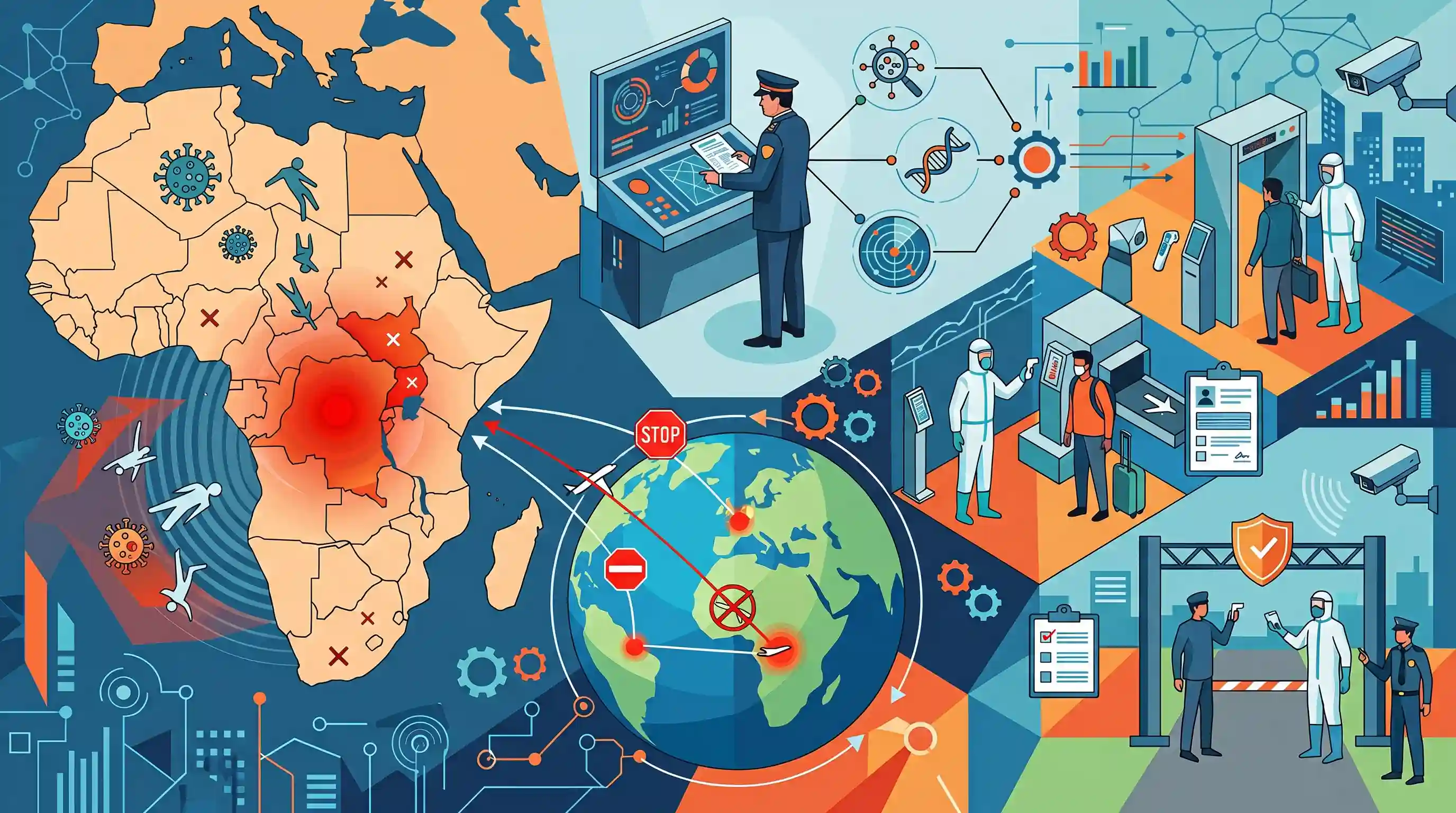
Amid an outbreak of the Bundibugyo Ebola virus strain in Africa, Union Health Minister J.P. Nadda reviewed India's public health preparedness and surveillance measures. While no cases have been reported in India, the Health Ministry has intensified vigilance in coordination with the National Centre for Disease Control (NCDC), Indian Council of Medical Research (ICMR), and the Integrated Disease Surveillance Programme (IDSP). A travel advisory has been issued advising against non-essential travel to the Democratic Republic of the Congo, Uganda, and South Sudan. The Bundibugyo strain, known to cause severe viral haemorrhagic fever with a high mortality rate, currently lacks approved vaccines or targeted therapies, underscoring the importance of proactive containment at borders and airports.
Key Points
- Union Health Minister J.P. Nadda reviewed India's preparedness and surveillance measures against the Bundibugyo Ebola virus strain following an outbreak in Africa.
- India has not reported any cases of the virus to date and has issued a travel advisory for the DRC, Uganda, and South Sudan.
- The Health Ministry is coordinating with the NCDC, ICMR, and IDSP to ensure constant readiness, tracking, testing, and surveillance at borders and airports.
- The Bundibugyo Ebola strain causes severe viral haemorrhagic fever and currently has no approved vaccines or specific treatments.
Important Terms
Bundibugyo Ebola virus strain

A rare species of Ebolavirus causing severe viral haemorrhagic fever. The 2026 outbreak in Central Africa is significant due to its 30-50% mortality rate and the lack of approved vaccines.
UPSC context
GS Paper II & III: Public Health and Science & Technology. Tests knowledge of emerging infectious diseases and global health security.
Integrated Disease Surveillance Programme (IDSP)
A decentralized, IT-enabled surveillance system under the Ministry of Health (launched 2004) to detect and respond to disease outbreaks early through state and district-level units and Rapid Response Teams.
UPSC context
GS Paper II: Governance and Health. Tests understanding of India’s institutional framework for epidemic management and data-driven policymaking.
National Centre for Disease Control (NCDC)
The nodal agency under the Ministry of Health responsible for disease surveillance, outbreak investigation, and control of communicable diseases. It operates the IDSP and advises states on public health.
UPSC context
GS Paper II & III: Health and Disaster Management. Important for institutional roles in pandemic preparedness and biosecurity.
Indian Council of Medical Research (ICMR)
India's apex body for the formulation, coordination, and promotion of biomedical research. It translates scientific research into public health action, including vaccine development and diagnostic protocols.
UPSC context
GS Paper II & III: Science & Tech and Health. Crucial for understanding India’s R&D response to health crises.
Airport Health Organisations (APHO)
Subordinate offices of the Directorate General of Health Services located at international airports to implement International Health Regulations (IHR 2005) and prevent the transborder spread of infectious diseases.
UPSC context
GS Paper II & III: Border Management and Health. Relevant for measures at Points of Entry (PoE) during global outbreaks.
Public Health Emergency of International Concern (PHEIC)
A formal declaration by the WHO of an extraordinary event that constitutes a public health risk to other states through international spread and requires a coordinated international response.
UPSC context
GS Paper II: International Relations and Health. Tests awareness of global health governance and the role of the WHO.
Prelims Trap
The globally approved Ebola vaccine provides immunity against all strains, including the Bundibugyo virus.
The globally approved vaccine (Ervebo) targets only the Zaire strain. The Bundibugyo and Sudan strains currently lack approved vaccines or specific targeted treatments.
Static Concepts Connected
What is the Integrated Disease Surveillance Programme (IDSP)?
- Nodal Ministry: Functions under the Ministry of Health and Family Welfare, specifically within the National Health Mission (NHM).
- Reporting Formats: Utilizes an IT-enabled network to collect weekly data via three formats: S (Suspected), P (Presumptive), and L (Laboratory confirmed) cases.
- Rapid Response Teams: Relies on district-level Rapid Response Teams (RRTs) to detect, investigate, and manage epidemic-prone diseases early.
What are the core characteristics of Ebola Virus Disease (EVD)?
- Natural Reservoir: It is a zoonotic disease. Fruit bats of the Pteropodidae family are considered the natural, unaffected hosts.
- Transmission Method: Spreads through direct contact with blood, secretions, organs, or other bodily fluids of infected people or animals. It is not an airborne disease.
- Pathology: Causes severe viral haemorrhagic fever, leading to internal and external bleeding, with a very high case fatality rate.
Cross-Topic Patterns
Equatorial Africa map & zoonotic emergence
Places like DRC, Uganda, and South Sudan are frequent UPSC map targets, increasingly linked to zoonotic emergences (Ebola, Mpox) due to human encroachment into equatorial rainforests.
Zoonosis and the One Health Model
The recurrence of bat-borne viral outbreaks reinforces the 'One Health' framework, connecting human health surveillance (IDSP) with wildlife pathology and environmental degradation.

Expect a 2026 prelims question mixing IDSP reporting formats (S/P/L) with the transmission mechanisms of emerging viral haemorrhagic fevers.
Linked PYQs · 3
Linked PYQs · 3
- 2015PrelimsGS1
H1N1 virus is sometimes mentioned in the news with reference to which one of the following diseases?
- 2023PrelimsGS1
'Wolbachia method' is sometimes talked about with reference to which one of the following?
- 2024MainsGS2
In a crucial domain like the public healthcare system the Indian State should play a vital role to contain the adverse impact of marketisation of the system. Suggest some measures through which the State can enhance the reach of public healthcare at the grassroots level.
