NGT Notice to Tirunelveli Collector on Tamirabharani Fish Threats
Source:The Hindu ↗
Why It Matters
This case illustrates the role of the National Green Tribunal (NGT) in protecting freshwater ecosystems and endemic biodiversity from localized industrial and human pressures, aligning with GS3 syllabus topics on environmental degradation and conservation.
Summary
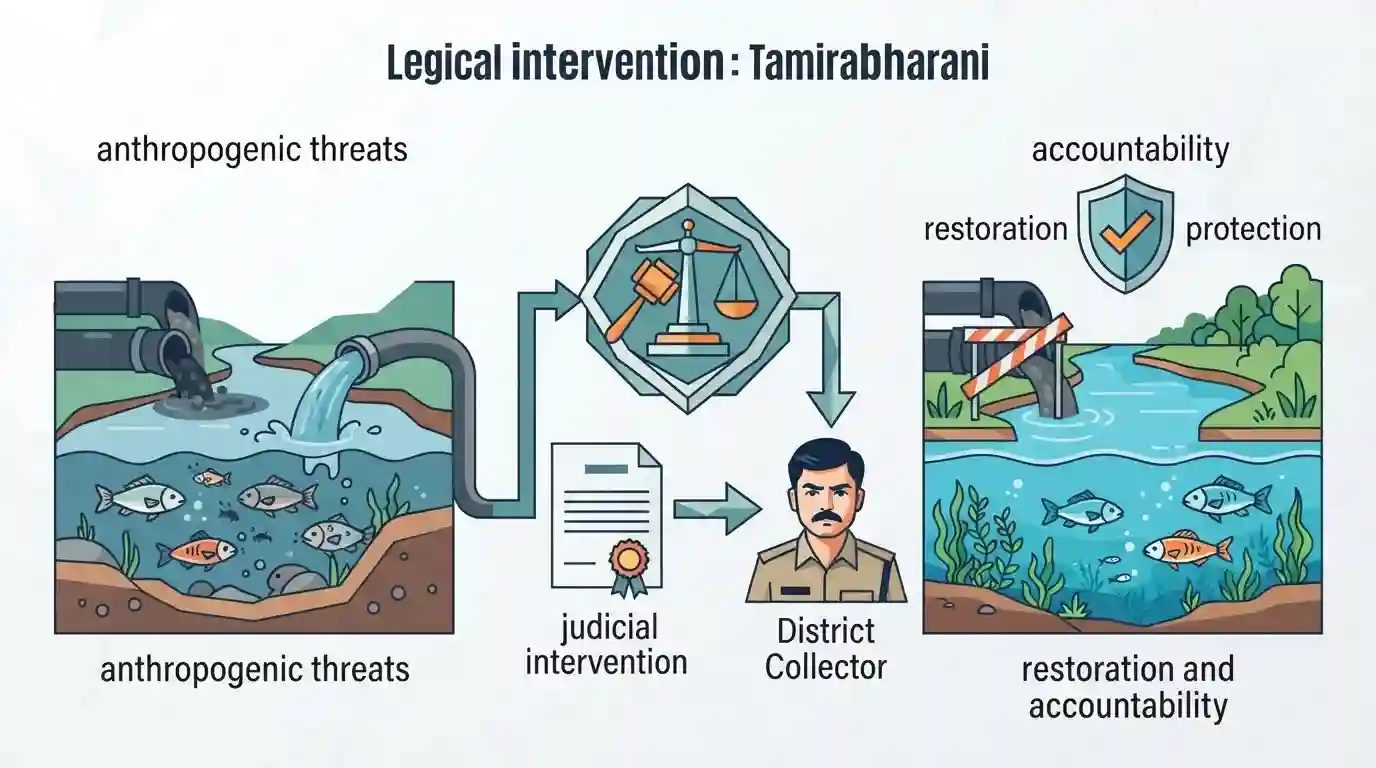
The National Green Tribunal (NGT) took suo motu cognizance and issued a notice to the Tirunelveli District Collector over anthropogenic threats—such as pollution and illegal extraction—endangering endemic fish species in the Tamirabharani river. The case highlights the vulnerability of freshwater biodiversity and the role of judicial bodies in enforcing environmental accountability at the district level.
Key Points
- The National Green Tribunal (NGT) has issued a notice to the Tirunelveli District Collector regarding severe threats facing native fish species in the Tamirabharani river ecosystem.
- The intervention highlights concerns over illegal sand mining, industrial pollution, and sewage discharge degrading aquatic biodiversity in the region.
- Emphasizes the judicial role of specialized environmental tribunals in enforcing environmental jurisprudence and protecting freshwater ecosystems in India.
Important Terms
National Green Tribunal

A statutory specialized judicial body established in 2010 for effective and expeditious disposal of cases relating to environmental protection and conservation of natural resources.
UPSC context
UPSC GS Paper III (Environment & Biodiversity). Tests understanding of environmental governance, judicial accountability, and statutory bodies in India.
National Green Tribunal Act 2010
The legislation enacted by Parliament in 2010 under which the National Green Tribunal was created to enforce environmental legal rights and provide relief for environmental damages.
UPSC context
UPSC GS Paper II (Polity & Governance) and Paper III (Environment). Tests statutory frameworks governing environmental jurisprudence.
Static Concepts Connected
What are the core jurisdictional features and powers of the National Green Tribunal (NGT)?
- Statutory Basis: Statutory origin established under the National Green Tribunal Act, 2010 for effective and expeditious disposal of environmental cases.
- Powers & Scope: Civil court powers vested with the NGT to hear matters relating to multi-disciplinary environmental issues and implementation of green statutes.
- Suo Motu Cognizance: Suo motu power affirmed by the Supreme Court (Ankita Sinha case), allowing the Tribunal to take direct cognizance of environmental degradation.
- Key Exclusions: Exclusion of Wildlife Protection Act 1972 and Scheduled Tribes and Traditional Forest Dwellers Act 2006 from NGT's direct statutory mandate.
Cross-Topic Patterns
NGT Jurisdiction & District Administration Accountability
The National Green Tribunal's suo motu powers link judicial activism with decentralized district-level administrative accountability, bridging environmental jurisprudence and administrative law.
Western Ghats Biodiversity & River Basin Management
Endemic species vulnerability in the Western Ghats highlights the friction between regional infrastructure expansion, sand mining, and statutory biodiversity conservation mandates.

NGT's suo motu powers and statutory jurisdiction under the NGT Act 2010 frequently appear in conceptual prelims statements.
Linked PYQs · 2
Linked PYQs · 2
- 2023PrelimsGS1
Consider the following statements: 1. In India, the Biodiversity Management Committees are key to the realization of the objectives of the Nagoya Protocol. 2. The Biodiversity Management Committees have important functions in determining access and benefit sharing, including the power to levy collection fees on the access of biological resources within its jurisdiction. Which of the statements given above is/are correct?
- 2024MainsGS3
Industrial pollution of river water is a significant environmental issue in India. Discuss the various mitigation measures to deal with this problem and also the government's initiatives in this regard.
