Ganga Tent City NGT penalty for environmental violations in UP
Source:aninews ↗
Why It Matters
Important for understanding judicial and regulatory mechanisms like the NGT and state pollution boards in enforcing environmental laws and protecting river floodplains from commercial exploitation in Uttar Pradesh.
Summary
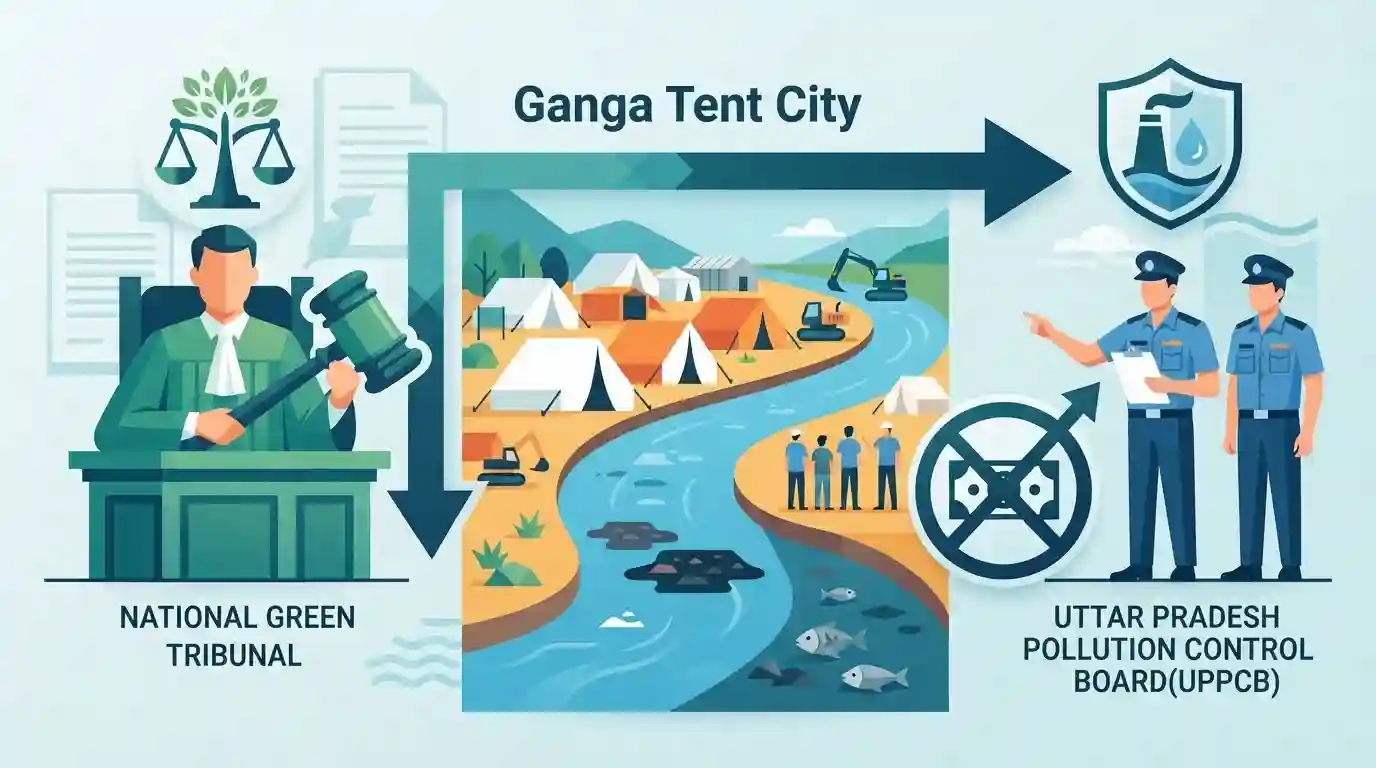
The National Green Tribunal (NGT) has issued strict directions to the Uttar Pradesh Pollution Control Board (UPPCB) to enforce environmental penalties against the developers of the Ganga Tent City over environmental violations and damage to river ecosystems.
Key Points
- The National Green Tribunal (NGT) directed the Uttar Pradesh Pollution Control Board (UPPCB) to enforce environmental compensation penalties against developers of the Ganga Tent City.
- The case highlights issues regarding environmental violations, waste management, and unauthorized commercial activities on river floodplains.
- Emphasizes statutory bodies' roles, such as NGT and state pollution control boards, in protecting river ecosystems like the Ganga.
Important Terms
National Green Tribunal (NGT)

A specialized statutory body established in 2010 under the National Green Tribunal Act for effective and expeditious disposal of cases relating to environmental protection, conservation of forests, and enforcement of legal environmental rights.
UPSC context
Crucial for UPPSC General Studies Paper III (Environment, Pollution, and Statutory Bodies). Tests understanding of environmental jurisprudence and judicial mechanisms.
Uttar Pradesh Pollution Control Board (UPPCB)
A statutory body constituted under the Water (Prevention and Control of Pollution) Act, 1974, tasked with implementing environmental regulations, granting consents, and monitoring pollution levels across Uttar Pradesh.
UPSC context
Important for UPPSC GS Paper V and General Studies Paper III (State-specific environmental governance, pollution control, and institutional mechanisms).
Water (Prevention and Control of Pollution) Act, 1974
Comprehensive central legislation enacted in 1974 to provide for the prevention and control of water pollution and the maintenance or restoration of the wholesomeness of water bodies.
UPSC context
Essential for UPPSC General Studies Paper III (Environmental Pollution, Acts, and Legal Frameworks). Tests statutory provisions for water conservation.
Prelims Trap
UPPCB enforces penalties solely through its own suo motu executive powers without judicial intervention.
Aspirants often assume State Pollution Control Boards are autonomous bodies with independent penalty-framing powers without NGT judicial oversight or Central directives.
Static Concepts Connected
What are the key powers and constitutional status of the National Green Tribunal (NGT)?
- Statutory Origin: Statutory Body established under the National Green Tribunal Act, 2010 for effective and expeditious disposal of environmental cases.
- Civil Jurisdiction: Empowered to provide relief and compensation for damages to persons and property and restitution of damaged property/environment.
- Procedure: Bound by natural justice, not procedure under the Code of Civil Procedure, 1908, but has powers of a civil court.
Cross-Topic Patterns
River Tourism vs. Ecological Conservation
Unregulated tourism infrastructure in riverine floodplains frequently violates both National Green Tribunal norms and National Mission for Clean Ganga guidelines.
NGT Jurisprudence and Statutory Enforcement
The National Green Tribunal acts as the primary appellate and penal enforcing authority under major environmental statutes like the Water Act, 1974.

NGT powers under Section 16 of the NGT Act and NMCG clearance mandates for floodplain projects are high-yield for UPPSC statements.
Linked PYQs · 2
Linked PYQs · 2
- 2023UPPSC_PRELIMSGS1
When did the Water (Prevention and Control of Pollution) Act was enacted in which of the following year?
- 2022UPPSC_PRELIMSGS1
The main purpose of 'Ganga Action Plan' project, launched in 1985, was
