Integrating AI with Digital Public Infrastructure
Source:Indian Express ↗
આ શા માટે મહત્વનું છે
This topic is vital for GS-2 (e-governance models, transparency, citizen delivery) and GS-3 (AI applications in economy and governance, DPI development) as India positions itself as a global leader in DPI and AI-driven public tech.
સારાંશ
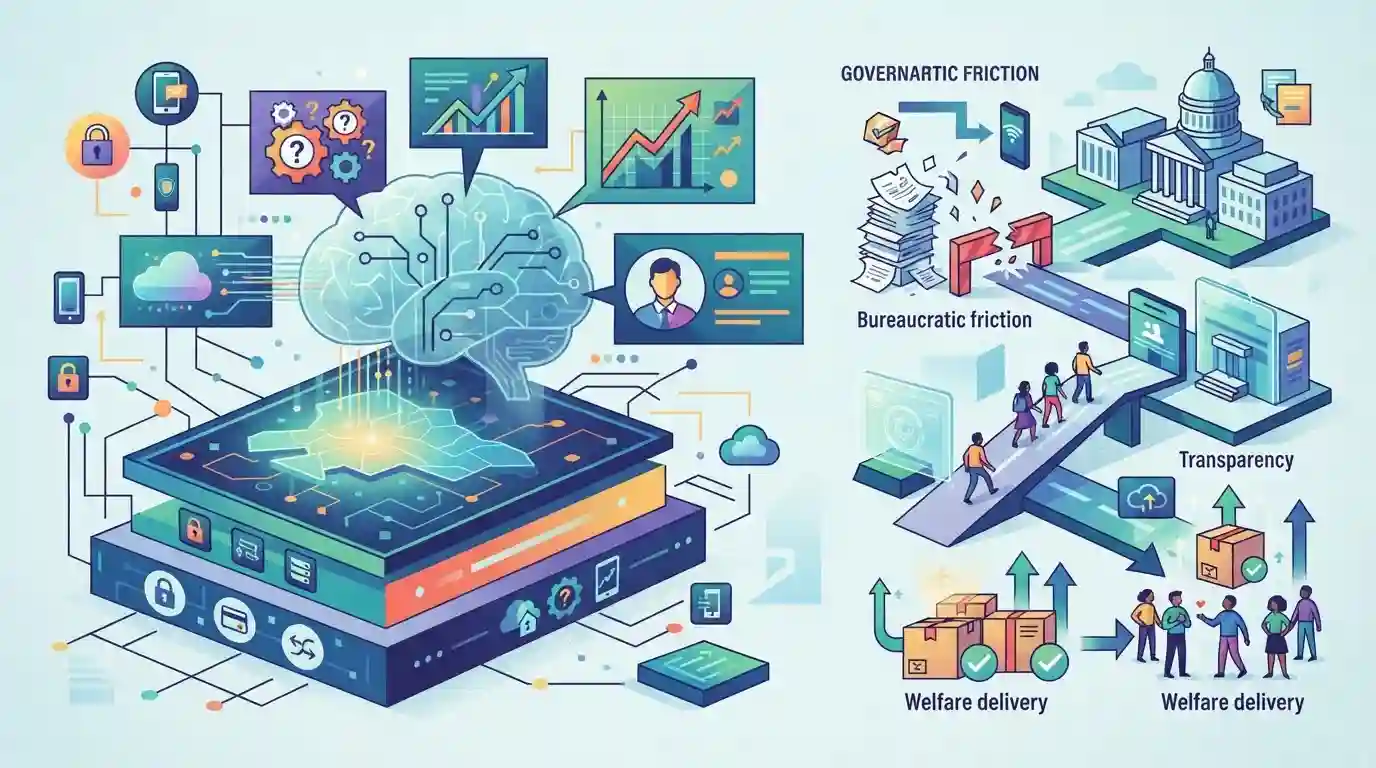
The article discusses how combining Artificial Intelligence (AI) with Digital Public Infrastructure (DPI) can transform governance. By leveraging India's robust DPI as a foundational layer and integrating AI for cognitive processing, predictive analytics, and personalized service delivery, governments can overcome traditional bureaucratic friction, bridge digital divides, and enhance transparency and welfare delivery.
મુખ્ય મુદ્દા
- The integration of Artificial Intelligence (AI) with Digital Public Infrastructure (DPI) represents the next frontier for governance, moving beyond basic digitisation to predictive, personalized, and efficient service delivery.
- India's DPI (India Stack) provides a trusted, open foundation layer, while AI can act as the cognitive layer that scales governance and bridges language, literacy, and accessibility gaps.
- Synergising AI and DPI enables proactive social welfare delivery, real-time grievance redressal, and localized citizen engagement while managing challenges like data privacy, bias, and digital exclusion.
- Ethical governance frameworks, safeguarding user data, and building sovereign or open-source AI models tailored to public good are essential to prevent digital monopolies and ensure equity.
મહત્વપૂર્ણ શબ્દો
Digital Public Infrastructure

A foundational set of digital rails—such as identity, payment, and data sharing systems—built on open standards to deliver public and private services at population scale.
UPSC context
Mains GS Paper III/II: Important for questions on e-governance, digital economy, public service delivery, and technology-led inclusion.
India Stack
A set of open APIs and digital public goods (including Aadhaar, UPI, and DigiLocker) designed to unlock the economic and social potential of paperless and cashless governance in India.
UPSC context
Mains GS Paper II/III: Essential for topics like e-governance models, applications, transparency, accountability, and the role of IT in governance.
પ્રિલિમ્સ ટ્રેપ
Digital Public Infrastructure is a closed, state-owned database of citizen records operated exclusively by central ministries.
Aspirants often assume DPI refers only to government databases. In reality, India Stack is built on open APIs and consent-based architectures, not closed state silos.
સંલગ્ન સ્થિર ખ્યાલો
What are the core foundational layers comprising India's Digital Public Infrastructure (DPI) / India Stack?
- Identity Layer:: Identity layer anchored by Aadhaar providing unique biometric and demographic authentication.
- Payments Layer:: Payments layer featuring UPI, Aadhaar Enabled Payment System (AePS), and Bharat Bill Payment System.
- Data Layer:: Data layer enabled by DigiLocker and the Account Aggregator framework for consent-based sharing.
આંતર-વિષય પેટર્ન
Digital Public Infrastructure + Data Governance Act
India Stack forms the baseline of both financial inclusion initiatives and emerging public AI frameworks, intersecting with data protection laws and sovereign tech policies.

AI + DPI convergence will likely be tested via a multi-statement Mains/Prelims question on governance models and techno-legal frameworks.
સંલગ્ન PYQ · 3
સંલગ્ન PYQ · 3
- 2023MainsGS3
What is the status of digitalization in the Indian economy? Examine the problems faced in this regard and suggest improvements.
- 2023MainsGS2
e-governance, as a critical tool of governance, has ushered in effectiveness, transparency and accountability in governments. What inadequacies hamper the enhancement of these features ?
- 2024MainsGS2
e-governance is not just about the routine application of digital technology in service delivery process. It is as much about multifarious interactions for ensuring transparency and accountability. In this context evaluate the role of the 'Interactive Service Model' of e-governance.
