भारत और जापान के बीच हाई-स्पीड रेल सहयोग
स्रोत:इंडियन एक्सप्रेस ↗
क्यों मायने रखता है
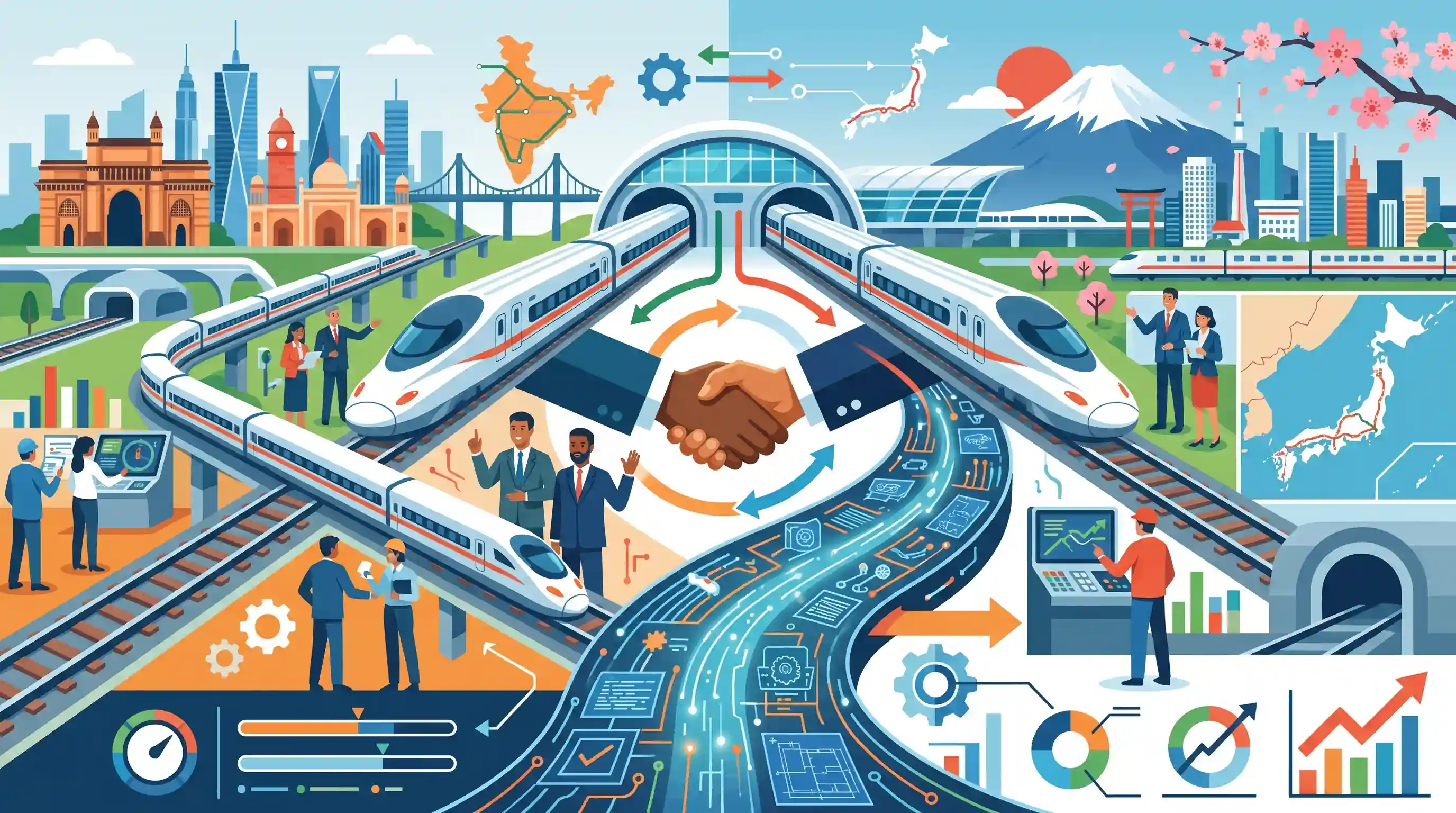
High-speed rail is a transformative infrastructure milestone for India. The simultaneous debut of next-generation trains with Japan highlights India's push for global technological parity and showcases the tangible outcomes of bilateral strategic partnerships in achieving rapid infrastructural modernization.
सारांश
According to the Indian Railways, the next-generation bullet train is set to make its debut simultaneously in both India and Japan. This simultaneous launch underscores that India will be adopting the latest, cutting-edge Shinkansen high-speed rail technology rather than older, phased-out models. The development highlights the deepening technological collaboration and strategic partnership between India and Japan, specifically concerning the Mumbai-Ahmedabad High-Speed Rail (MAHSR) project, which is being heavily supported by the Japan International Cooperation Agency (JICA). It represents a major leap in India's transport infrastructure modernization.
मुख्य बिंदु
- The Indian Railways has announced that the next-generation bullet train will debut simultaneously in India and Japan, ensuring India receives the latest high-speed rail technology.
- इन उन्नत ट्रेनों को भारत की प्रमुख बुलेट ट्रेन परियोजना, मुंबई-अहमदाबाद हाई-स्पीड रेल (MAHSR) कॉरिडोर पर संचालित किया जाएगा।
- This simultaneous rollout highlights a significant technological leap for India, avoiding the adoption of outdated railway technology and matching global standards.
- The development underscores the depth of the India-Japan Special Strategic and Global Partnership, featuring critical technology transfer and financial assistance through JICA.
महत्वपूर्ण शब्द
Mumbai-Ahmedabad High-Speed Rail (MAHSR) project

A 508-km high-speed rail project connecting Mumbai and Ahmedabad using Japanese Shinkansen technology, aiming to revolutionize Indian rail transport with speeds up to 320 km/h.
UPSC context
GS3 (Infrastructure) and GS2 (Bilateral Relations). Tests knowledge of mega-infrastructure projects, technology transfer, and bilateral economic cooperation.
India-Japan Special Strategic and Global Partnership
A high-level bilateral framework elevated in 2014, emphasizing deep cooperation in defense, infrastructure, and technology, central to regional stability in the Indo-Pacific.
UPSC context
GS2 (International Relations). Crucial for questions on India’s foreign policy, "Act East" engagement, and the strategic importance of the Indo-Pacific.
Japan International Cooperation Agency (JICA)
A Japanese governmental agency providing soft loans and technical expertise for major Indian infrastructure projects like bullet trains and the Delhi-Mumbai Industrial Corridor.
UPSC context
GS2 (Bilateral Relations). Tests understanding of international developmental aid, Japan's role in India's growth, and "Quality Infrastructure" initiatives.
National High Speed Rail Corporation Limited (NHSRCL)
A Special Purpose Vehicle under the Ministry of Railways, responsible for the planning, execution, and management of high-speed rail corridors across India.
UPSC context
GS3 (Infrastructure). Relevant for topics on statutory bodies, project management in transport, and institutional frameworks for high-speed connectivity.
Indian Railways
The state-owned national carrier responsible for India's rail network, currently spearheading modernization efforts through projects like the Diamond Quadrilateral and High-Speed Rail.
UPSC context
GS3 (Infrastructure). Key for discussing transport logistics, economic growth, and the National Rail Plan 2030.
प्रारंभिक ट्रैप
NHSRCL is a wholly-owned enterprise of the Ministry of Railways.
NHSRCL is a Special Purpose Vehicle (SPV) with joint equity participation from the Central Government AND the state governments of Gujarat and Maharashtra, not just the Centre.
संबंधित अवधारणाएँ
What characterizes ODA soft loans like JICA's funding for the MAHSR project?
- Concessional Rates: Offered at near-zero interest rates (e.g., 0.1% for MAHSR) compared to much higher commercial market borrowing costs.
- Long Tenures: Features extended repayment periods (e.g., 50 years) and significant grace periods (e.g., 15 years) before principal repayment begins.
- Tied Aid: Often mandates the recipient to procure specific technology, equipment, or consulting directly from the donor country (e.g., Japan's Shinkansen technology).
How does a Special Purpose Vehicle (SPV) like NHSRCL function?
- Ring-fenced Risk: Created as an independent legal entity for a single project, isolating its financial and operational risks from the parent bodies.
- Equity Pooling: Allows multiple stakeholders (like the Union government and various state governments) to formally pool capital, land, and share ownership.
अंतर-विषय पैटर्न
ODA countering China's BRI
Japan leverages JICA's highly concessional infrastructure financing as a strategic tool in the Indo-Pacific, offering viable, high-quality alternatives to China's debt-heavy Belt and Road Initiative (BRI).
Undersea engineering marvels
MAHSR's 7-km undersea tunnel reflects a growing trend in complex Indian civil engineering, paralleling Kolkata's underwater metro and the Chenab rail bridge, which are high-yield Prelims targets.

2026 Prelims में NHSRCL की साझा इक्विटी संरचना (shared equity structure), JICA के सॉफ्ट लोन की शर्तों और समुद्र के नीचे सुरंग (undersea tunnel) के तथ्यों को मिलाकर एक बहु-कथनीय प्रश्न (multi-statement question) की उम्मीद करें।
संबद्ध PYQ · 3
संबद्ध PYQ · 3
- 2019MainsGS2
‘The time has come for India and Japan to build a strong contemporary relationship, one involving global and strategic partnership that will have a great significance for Asia and the world as a whole.’ Comment.
- 2022MainsGS3
Why is Public Private Partnership (PPP) required in infrastructural projects ? Examine the role of PPP model in the redevelopment of Railway Stations in India.
- 2021MainsGS3
“Investment in infrastructure is essential for more rapid and inclusive economic growth.” Discuss in the light of India's experience.
