Immunological Differences Cause Chronic Pain to Last Longer in Women
Source:The Hindu ↗
Why It Matters
The article is highly relevant for GS3 (Science and Technology) due to its focus on immunology, endocrinology, and biology, as well as GS2 (Social Justice/Health) for highlighting systemic gender bias in clinical trials. It provides scientific backing for women's health issues and emphasizes the need for equitable, sex-adapted healthcare policies.
Summary
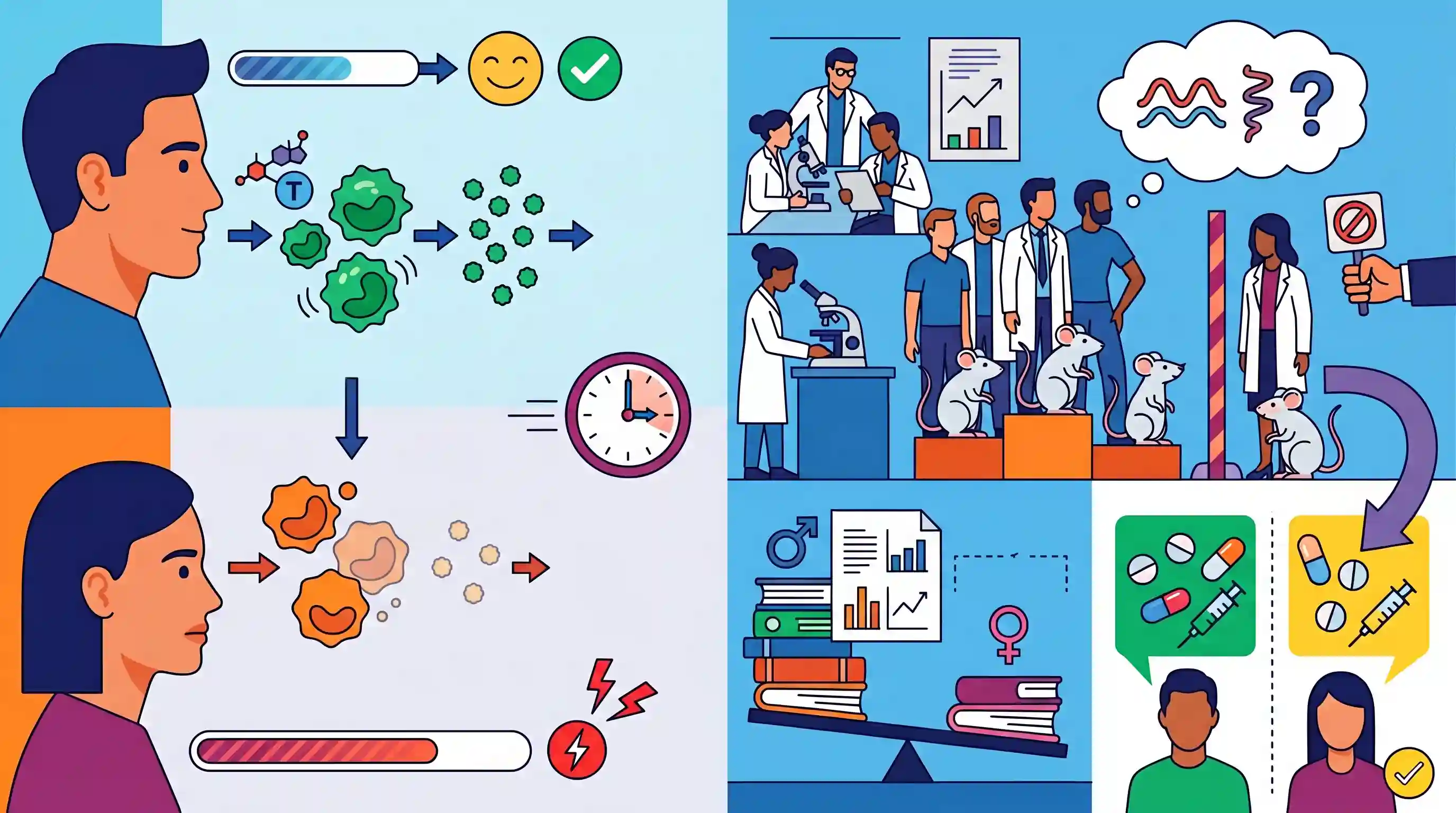
A recent study published in Science Immunology reveals that chronic pain lasts longer in women due to biological differences in the immune system rather than emotional or psychological factors. The research shows that hormone-regulated immune cells called monocytes are less active in females, slowing the production of the anti-inflammatory protein interleukin-10 (IL-10) which resolves pain. In males, testosterone drives higher IL-10 production, allowing pain to subside more quickly. The study also highlights a systemic gender bias in medical research, noting that women and female animals were historically excluded from clinical trials due to concerns over hormonal variability, resulting in pain treatments tailored primarily for men.
Key Points
- Chronic pain persists longer in women due to biological differences in the immune system, specifically the activity of hormone-regulated immune cells called monocytes.
- In males, testosterone stimulates monocytes to produce the anti-inflammatory protein interleukin-10 (IL-10), which shuts down pain-sensing neurons and resolves pain faster.
- Female monocytes are less active in producing IL-10, resulting in delayed pain recovery and exacerbated chronic pain.
- Historically, clinical trials and animal pain studies focused exclusively on males because researchers incorrectly assumed female hormones introduced excessive variability.
- This long-standing gender bias in medical research has led to standard pain treatments that are less effective for women, underscoring the need for sex-adapted healthcare.
- Topical testosterone is being explored as a potential short-term treatment option to alleviate localized chronic pain.
Important Terms
Gender Bias in Medical Research

Systematic preference for male subjects in clinical trials, leading to a lack of sex-specific data and resulting in health disparities or misdiagnosis for women.
UPSC context
GS Paper 1 (Social Issues) & GS Paper 2 (Health); tests understanding of systemic inequalities in healthcare and policy.
Interleukin-10 (IL-10)
A potent anti-inflammatory cytokine that acts as a biological "off-switch" for pain by signaling sensory neurons to suppress pain signals.
UPSC context
GS Paper 3 (Science and Technology - Biology); relevant for immunology and therapeutic advancements.
Monocytes
A type of white blood cell (leukocyte) that can differentiate into macrophages; in this study, they are identified as hormone-regulated producers of pain-resolving proteins.
UPSC context
GS Paper 3 (Science and Technology); tests foundational knowledge of human biology and the immune system.
Chronic Pain
Persistent or recurring pain lasting beyond the typical healing period (usually three months), often caused by maladaptive immune-neural interactions.
UPSC context
GS Paper 2 (Issues Relating to Health); tests awareness of major public health burdens and non-communicable diseases.
Sexual Dimorphism
The occurrence of distinct biological characteristics (e.g., immune response, pain processing) between males and females of the same species.
UPSC context
GS Paper 3 (Science and Technology - Biology); understanding biological diversity and the need for precision medicine.
Prelims Trap
"Interleukin-10 (IL-10) is a pro-inflammatory cytokine responsible for prolonging chronic pain in females."
IL-10 is actually an anti-inflammatory protein. Chronic pain lasts longer in women because their monocytes produce less IL-10, delaying pain resolution, not because IL-10 causes pain.
Static Concepts Connected
What are the primary types of White Blood Cells (Leukocytes) and their functions?
- Neutrophils: Most abundant WBCs; act as the first responders to bacterial or fungal infections.
- Lymphocytes: Includes B-cells (produce antibodies) and T-cells (destroy compromised cells), driving the body's adaptive immunity.
- Monocytes: Innate immune cells that mature into macrophages to engulf pathogens, clear dead cells, and regulate inflammation.
What are cytokines and how do they regulate inflammation?
- Definition: Small signaling proteins (like interleukins and interferons) secreted by immune cells to mediate immunity and inflammation.
- Pro-inflammatory: Trigger inflammation to contain infections or injuries (e.g., IL-1, TNF-alpha).
- Anti-inflammatory: Suppress the immune response to resolve inflammation, promote healing, and stop pain (e.g., IL-10).
Cross-Topic Patterns
Gender Bias in Clinical Trials
Connects specific biological mechanisms to GS-2 Social Justice and GS-4 Bioethics, highlighting the systemic health disparities caused by historical 'male-default' clinical research.
Endocrine-Immune Crosstalk
The testosterone-monocyte link demonstrates how the endocrine and immune systems interact, fitting UPSC’s recent focus on applied, interdisciplinary human biology over rote facts.

Expect a 2026 Prelims statement testing IL-10's anti-inflammatory role, alongside a GS2 Mains question on gender bias in clinical trials.
Linked PYQs · 3
Linked PYQs · 3
- 2022PrelimsGS1
Which one of the following statements best describes the role of B cells and T cells in the human body?
- 2020MainsGS2
In order to enhance the prospects of social development, sound and adequate health care policies are needed particularly in the fields of geriatric and maternal health care. Discuss.
- 2024MainsGS1
Distinguish between gender equality, gender equity and women's empowerment. Why is it important to take gender concerns into account in programme design and implementation?
