Central Vista Project and Executive Infrastructure Relocation
Source:Indian Express ↗
Why It Matters
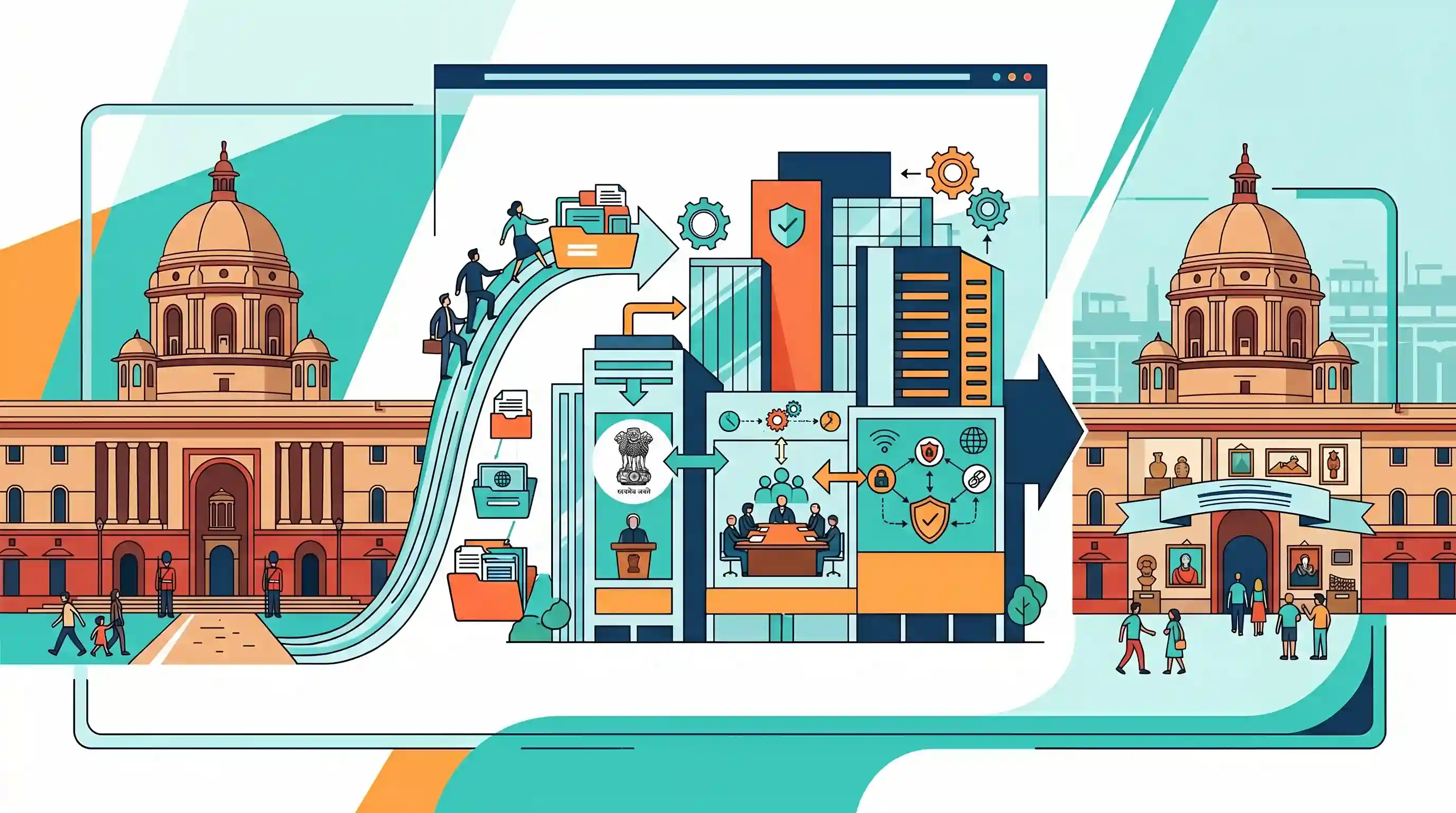
The relocation of the PMO highlights a major shift in India's administrative infrastructure under the Central Vista project. It represents both an effort to improve executive efficiency by centralizing key offices and a symbolic departure from colonial heritage, with historical buildings being repurposed for public and cultural use.
Summary
The Prime Minister's Office (PMO) is preparing to relocate from the historic, colonial-era South Block to a newly constructed Executive Enclave named 'Seva Teerth' as part of the Central Vista Redevelopment Project. Expected to take place after January 14, the move will also bring the Cabinet Secretariat and the National Security Council Secretariat into the same modern complex, aiming to enhance administrative efficiency, security, and coordination. The iconic North and South Blocks, designed by Herbert Baker during the British Raj, will subsequently be repurposed into national museums, marking a significant symbolic and functional shift in India's governance infrastructure.
Key Points
- The PMO will relocate from the historic South Block to a newly constructed facility called 'Seva Teerth' after January 14.
- The move is a major component of the Central Vista Redevelopment Project, which seeks to modernize the central administrative area of New Delhi.
- The new Executive Enclave will also house the Cabinet Secretariat and the National Security Council Secretariat (NSCS), centralizing apex executive functions.
- The colonial-era North and South Blocks, originally designed by Herbert Baker, are slated to be converted into national museums once fully vacated.
- This transition signifies a move towards improved administrative efficiency, state-of-the-art security, and a physical departure from colonial-era administrative infrastructure.
Important Terms
Central Vista Redevelopment Project

A major urban renewal initiative in New Delhi to modernize India's central administrative area, including a new Parliament, Common Central Secretariat, and revamped executive offices.
UPSC context
GS Paper II & III: Infrastructure and Governance. Tests knowledge of institutional modernization and urban planning in India's capital.
Prime Minister's Office (PMO)
The immediate staff of the Prime Minister, providing secretarial support and acting as the nerve center for policy coordination and executive decision-making.
UPSC context
GS Paper II: Executive and Governance. Tests understanding of the highest level of administrative machinery and the PM's support structure.
Cabinet Secretariat
An administrative body under the PM that facilitates inter-ministerial coordination and ensures adherence to the Transaction/Allocation of Business Rules, 1961.
UPSC context
GS Paper II: Indian Polity. Focuses on civil services, the role of the Cabinet Secretary, and administrative efficiency.
National Security Council Secretariat (NSCS)
The specialized office assisting the National Security Council (NSC) on strategic, military, and intelligence issues, headed by the National Security Advisor (NSA).
UPSC context
GS Paper III: Internal Security. Crucial for understanding the strategic decision-making hierarchy and national security architecture.
Seva Teerth
The official name for the new 'Executive Enclave' housing the PMO and Cabinet Secretariat, signifying a shift from power-centric to service-oriented governance.
UPSC context
GS Paper II: Governance. Reflects symbolic shifts in infrastructure and the 'Satta to Seva' governance philosophy.
Central Public Works Department (CPWD)
The premier central government authority for the design and construction of public buildings, serving as the primary executor of the Central Vista project.
UPSC context
GS Paper III: Infrastructure. Relevant for its role as a key statutory body in executing large-scale public infrastructure.
Prelims Trap
"Edwin Lutyens designed the North and South Blocks, and the Prime Minister's Office functions as a statutory body."
Herbert Baker, not Lutyens, designed the Secretariat Blocks. Furthermore, the PMO is an extra-constitutional, non-statutory body, contrasting with the Cabinet Secretariat which derives its mandate from Article 77(3).
Static Concepts Connected
What defines the Indo-Saracenic architecture of the North and South Blocks?
- Indo-Saracenic blend: Created by Herbert Baker, the style merges classical European architectural proportions with traditional Indian aesthetics.
- Indian motifs: Prominently features 'Chhatris' (umbrella-shaped domes), 'Jaalis' (intricate stone lattice screens), and 'Chhajjas' (deep stone projections or eaves) for climate control.
- Strategic placement: North and South Blocks were designed to flank the Viceroy's House, emphasizing imperial power through elevated placement on Raisina Hill.
What is the administrative foundation of the Cabinet Secretariat and NSCS?
- Cabinet Secretariat: Operates directly under the PM; derives its mandate from the Allocation and Transaction of Business Rules, 1961, formulated under Article 77(3).
- PMO: A non-statutory, extra-constitutional body providing secretarial assistance and advice to the Prime Minister, distinct from the Cabinet Secretariat.
- National Security Council: The apex advisory body set up in 1998; features a three-tier framework (SPG, NSAB, Secretariat) chaired by the Prime Minister.
Cross-Topic Patterns
Decolonization of public spaces
Repurposing Baker's blocks into the 'Yuge Yugeen Bharat' museum aligns with recent UPSC themes of shedding colonial legacies, seen in the adoption of the Bharatiya Nyaya Sanhita and renaming of Rajpath.
Centralization of security apparatus
Housing the PMO, Cabinet Secretariat, and NSCS together in 'Seva Teerth' physically mirrors the strategic consolidation of apex executive and intelligence power directly under the Prime Minister over the past decade.

Expect a multi-statement question mixing Art 77(3) Cabinet Secretariat rules with Herbert Baker's architectural contributions to New Delhi.
Linked PYQs · 3
Linked PYQs · 3
- 2025MainsGS1
Trace India's consolidation process during early phase of independence in terms of polity, economy, education and international relations.
- 2020MainsGS1
The rock-cut architecture represents one of the most important sources of our knowledge of early Indian art and history. Discuss.
- 2024MainsGS2
e-governance is not just about the routine application of digital technology in service delivery process. It is as much about multifarious interactions for ensuring transparency and accountability. In this context evaluate the role of the 'Interactive Service Model' of e-governance.
