West Bengal epidemiological surveillance for vector mutation
Source:millenniumpost ↗
Why It Matters
Important for West Bengal public health policies, epidemiological surveillance, and state administrative measures against vector-borne diseases.
Summary
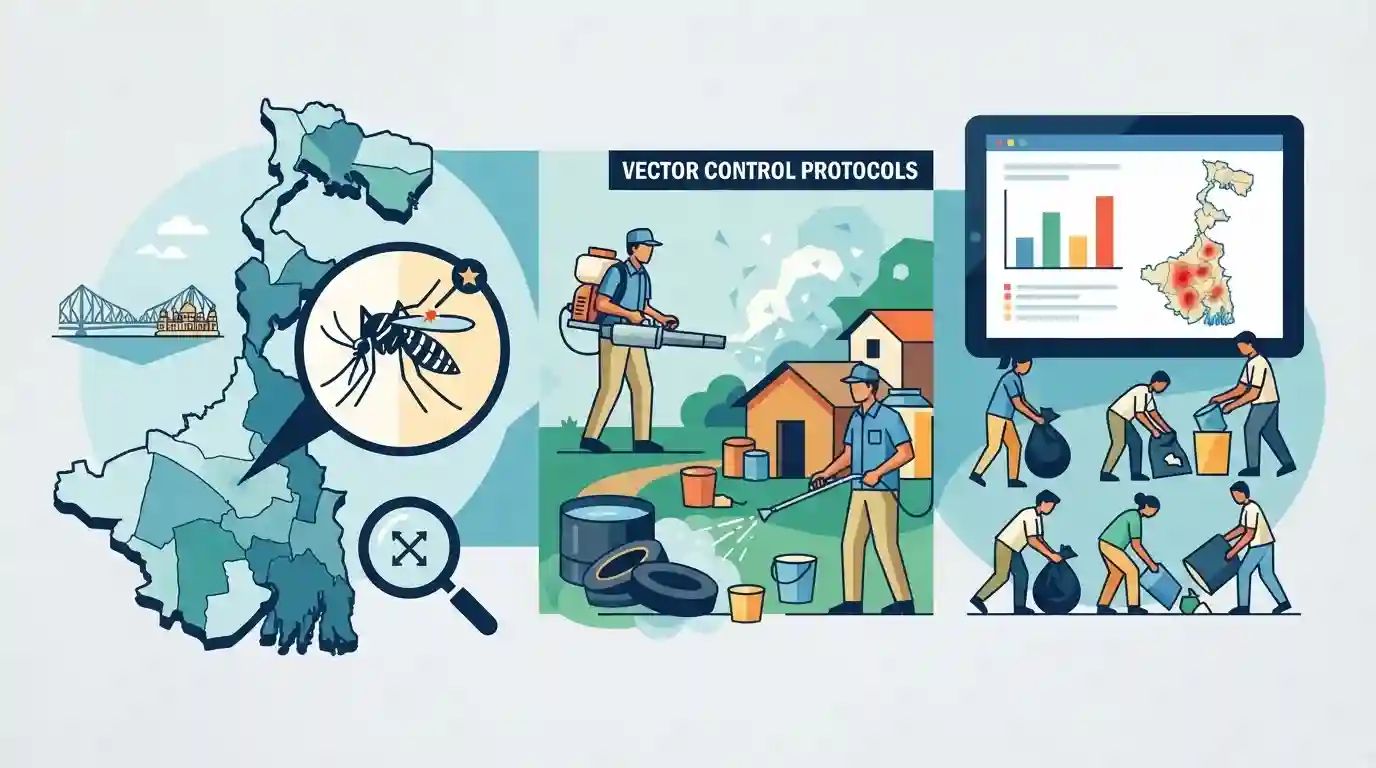
The emergence of a new Aedes mosquito variety has triggered intensive dengue surveillance and vector control protocols across West Bengal by health authorities.
Key Points
- Surveillance heightened in West Bengal following the identification of a new strain or variant of the Aedes mosquito linked to dengue transmission.
- Health authorities emphasize vector control measures, identification of breeding sites, and community awareness to curb the spread.
- Dengue outbreaks continue to pose seasonal public health challenges across urban and semi-urban regions of Bengal.
Static Concepts Connected
What are the primary vectors and transmission cycles of Dengue, Chikungunya, and Zika?
- Primary Vector: Aedes aegypti is the principal vector for transmitting dengue, chikungunya, zika, and yellow fever viruses globally.
- Biting Behavior: Female mosquitoes bite primarily during daytime hours, with peak biting periods occurring early in the morning and late afternoon.
- Viral Etiology: Dengue is caused by a single-stranded RNA virus belonging to the Flaviviridae family, featuring four distinct serotypes (DENV-1, DENV-2, DENV-3, DENV-4).
Cross-Topic Patterns
Vector-Borne Diseases and State Public Health Infrastructure
Vector-borne disease outbreaks like dengue and Japanese Encephalitis frequently strain rural and urban public health infrastructure in West Bengal, testing state-level disaster and health management capacities.

Dengue vector shifts (Aedes lineatopennis) in Bengal likely to appear as a direct statement-based question in Prelims.
Linked PYQs · 1
Linked PYQs · 1
- 2021WBCS_PRELIMSGS1
How many new Government Medical Colleges have become functional in West Bengal during the last ten years?
