Global net zero carbon emission targets and climate activism debate
Source:Indian Express ↗
આ શા માટે મહત્વનું છે
This debate directly impacts international climate negotiations, India's own long-term low-emission development strategies, and global climate policy discourse on mitigation versus carbon offsets.
સારાંશ
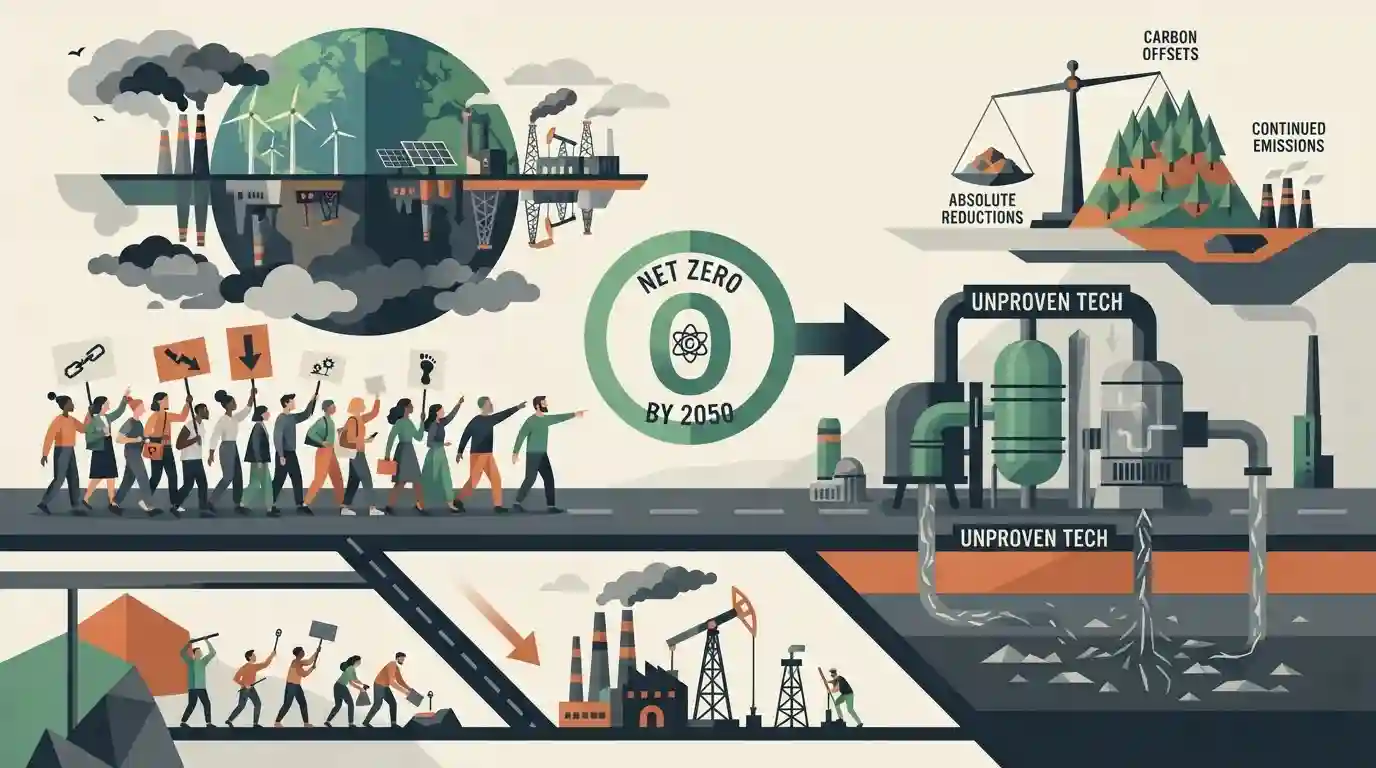
The article explores criticisms raised by climate activists and experts against the global 'Net Zero by 2050' emission framework. It highlights concerns that reliance on the term 'net' permits continued fossil fuel use through carbon offsets and unproven technologies, diverting attention from necessary absolute emissions reductions.
મુખ્ય મુદ્દા
- Climate activists and experts are increasingly questioning the global obsession with 'Net Zero by 2050' targets, arguing that 'net' emissions allow for continued fossil fuel extraction relying on unproven or risky carbon dioxide removal (CDR) technologies and carbon offsets.
- Critics highlight that Net Zero frameworks can mask delays in absolute emission reductions and disproportionately burden developing nations or future generations while deferring real action.
- The debate underscores the tension between absolute greenhouse gas elimination versus balancing remaining emissions with offsets, with experts advocating for more immediate, deep decarbonization rather than distant net-zero anchors.
મહત્વપૂર્ણ શબ્દો
Paris Agreement

A legally binding international treaty on climate change adopted in 2015, aiming to limit global temperature rise to well below 2°C, preferably to 1.5°C, above pre-industrial levels.
UPSC context
GS Paper III: Conservation, environmental pollution and degradation. Essential for questions on international climate negotiations, NDCs, and global warming targets.
Net Zero 2050
A global climate goal to balance greenhouse gas emissions produced with emissions removed from the atmosphere by 2050, often critiqued for relying on carbon offsets and unproven technologies.
UPSC context
GS Paper III: Environmental impact assessment and climate change mitigation strategies, testing the trade-offs between absolute emission cuts and offset mechanisms.
UNFCCC
The United Nations Framework Convention on Climate Change, a supreme body and international environmental treaty addressing climate change through annual Conferences of the Parties (COPs).
UPSC context
GS Paper III: Environmental governance and international conventions, frequently tested in Prelims and Mains regarding global climate architecture.
સંલગ્ન સ્થિર ખ્યાલો
What is the distinction between carbon neutrality and net-zero emissions under UNFCCC frameworks?
- Net-Zero Definition: Offsets allowed; permits residual greenhouse gas emissions to be neutralized through carbon offsets or unproven CDR technologies.
- Carbon Neutrality: Broader scope; often refers specifically to carbon dioxide emissions balance within a specific entity or region without relying heavily on external offsets.
- UNFCCC Context: Paris Agreement; anchors long-term temperature goals but operational definitions of 'net' remain contested among developing and developed nations.
આંતર-વિષય પેટર્ન
Climate Targets + International Trade (CBAM)
Carbon pricing instruments like CBAM and Article 6 markets link global climate mitigation targets directly to export competitiveness and trade protectionism.

Net Zero vs Absolute Decarbonization and CDR viability are high-yield areas for GS Paper III environment questions.
સંલગ્ન PYQ · 2
સંલગ્ન PYQ · 2
- 2021MainsGS3
Describe the major outcomes of the 26th session of the Conference of the Parties (COP) to the United Nations Framework Convention on Climate Change (UNFCCC). What are the commitments made by India in this conference?
- 2022MainsGS3
Do you think India will meet 50 percent of its energy needs from renewable energy by 2030 ? Justify your answer. How will the shift of subsidies from fossil fuels to renewables help achieve the above objective ? Explain.
