Uttarakhand Governor Stresses Wildlife Coexistence Over Conflict
Source:garhwalpost ↗
Why It Matters
Human-wildlife conflict is a critical socio-environmental challenge in hill states like Uttarakhand, directly affecting rural livelihoods, local safety, and wildlife conservation policies.
Summary
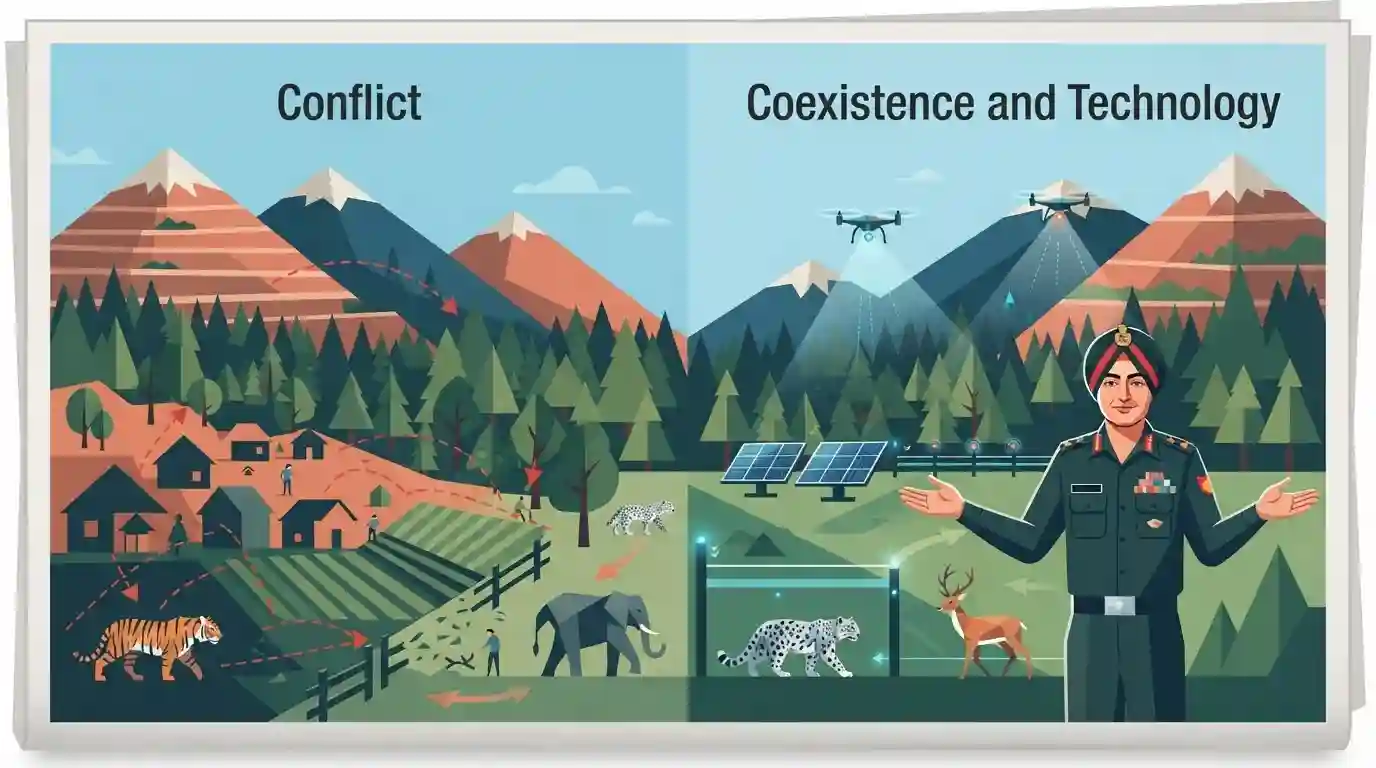
Uttarakhand Governor Lt Gen Gurmit Singh addressed the pressing issue of human-wildlife conflict in the state, advocating for strategies centered on coexistence, harmony, and modern technological solutions rather than conflict, keeping the state's fragile Himalayan ecology and rich biodiversity in focus.
Key Points
- Governor Lt Gen Gurmit Singh emphasized focusing on coexistence and harmony with wildlife rather than conflict, noting that human-wildlife conflict is a major challenge in Uttarakhand.
- Stressed the need for community awareness, modern technological interventions, and proactive management to protect both human lives and wild animals.
- Highlighted Uttarakhand's rich biodiversity and forest cover, requiring sustainable strategies to balance ecological preservation with local livelihood safety.
Static Concepts Connected
What are the key legal and institutional mechanisms for wildlife protection in India?
- Wildlife Protection Act: Enacted in 1972, providing legal protection to wild animals, birds, and plants through various schedules (Schedule I to VI).
- National Tiger Conservation Authority: Statutory body under the MoEFCC, providing technical and administrative support for tiger conservation across tiger reserves.
- National Biodiversity Authority: Autonomous statutory body established in 2007 under the Biological Diversity Act, 2002, for conservation and sustainable use of biological resources.
Cross-Topic Patterns
Wildlife Conflict vs State Disaster Management
Human-wildlife conflict mitigation intersects directly with disaster management frameworks when states classify wildlife attacks as local disasters, integrating rapid response teams with district administration.
Himalayan Ecology and Sustainable Livelihoods
Balancing fragile Himalayan ecology with livelihood safety requires integrating traditional bio-fencing and community awareness programs with modern technological interventions like solar fencing.

UKPSC frequently tests state-specific biodiversity policies; expect matching questions on Uttarakhand's ex-gratia relief amounts and bio-fencing.
Linked PYQs · 2
Linked PYQs · 2
- 2025UKPSC_PRELIMSGS1
Consider the following statements with reference to animal husbandry in Uttarakhand. Select the correct answer from the codes given below : 1. Animal husbandry is a supplementary occupation of agriculture. 2. Sheep rearing in the mountainous areas has been affected by environmental degradation.
- 2025UKPSC_PRELIMSGS1
Consider the following statements and select the correct answer from the options given below : Statement 1 : Uttarakhand is highly vulnerable to climate change. Statement 2 : Climate change is causing water stress and depleting biodiversity in Uttarakhand.
