Biological Weapons Convention implementation and bioterrorism risks
Source:The Hindu ↗
Why It Matters
Bioterrorism and the weaponization of biological agents represent a critical emerging dimension of internal and global security. Understanding the limitations of international non-proliferation treaties like the BWC and the dual-use nature of modern biotechnology is essential for analyzing non-state actor threats in GS Paper 3.
Summary
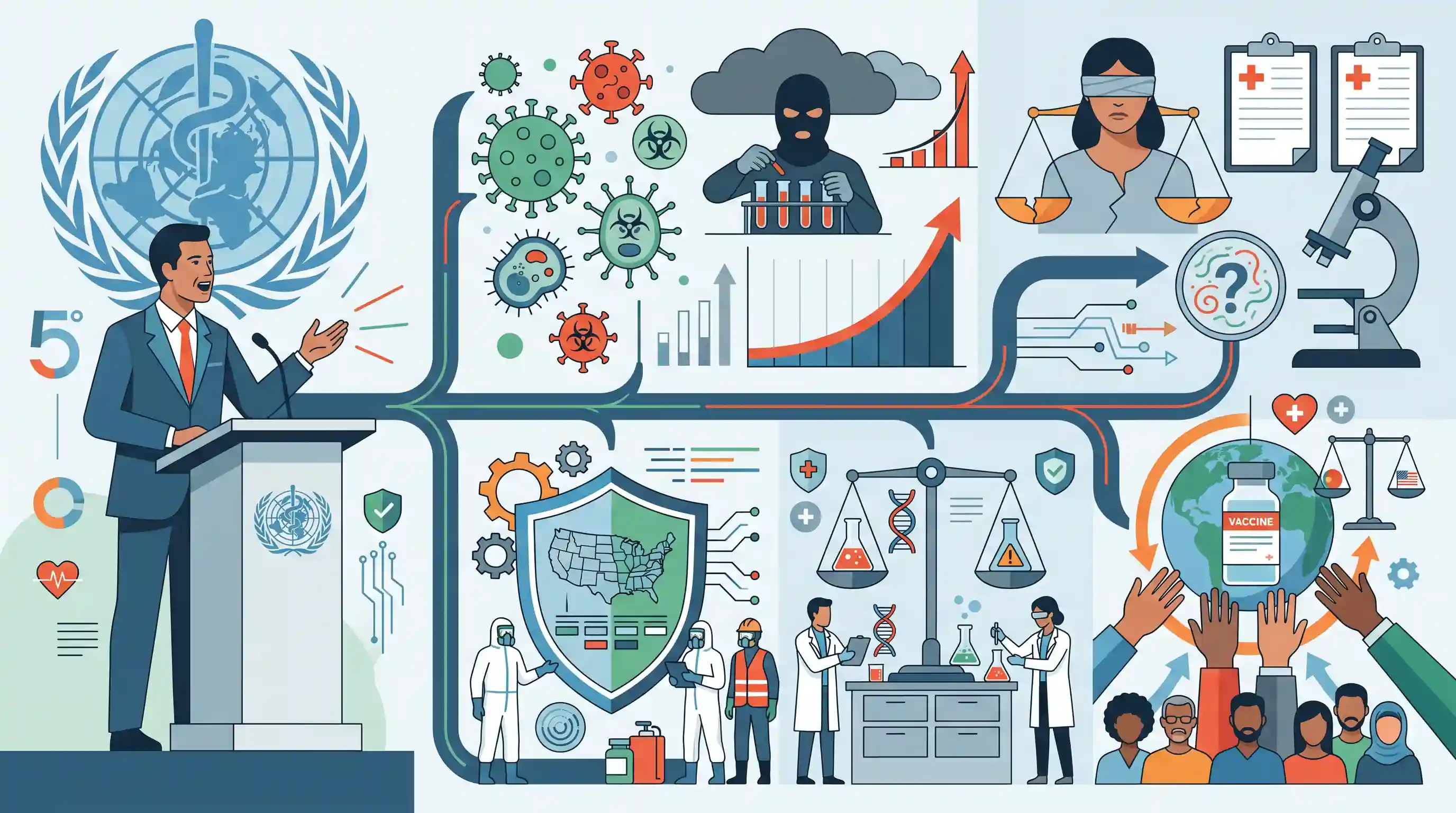
External Affairs Minister S. Jaishankar highlighted the severe and growing threat of bioterrorism, warning that global preparedness is dangerously inadequate. Speaking at an event marking 50 years of the Biological Weapons Convention (BWC), he stressed the need for a comprehensive framework to combat the misuse of biological agents, especially by non-state actors. The minister pointed out critical gaps in the BWC, including the absence of a compliance verification mechanism and a technical body to monitor emerging science. He called for a robust National Implementation Framework covering dual-use research and incident management, while also emphasizing the vulnerability of the Global South and the necessity of equitable access to vaccines and medical countermeasures.
Key Points
- External Affairs Minister S. Jaishankar warned that the world is unprepared for bioterrorism, highlighting the risk of non-state actors exploiting biological agents.
- He criticized the Biological Weapons Convention (BWC) for lacking a comprehensive compliance system, a permanent technical body, and a mechanism to track scientific advancements.
- Jaishankar advocated for an overarching National Implementation Framework to manage high-risk agents, dual-use research, domestic reporting, and incident management.
- He emphasized the disproportionate vulnerability of the Global South to such threats, pointing to unequal access to vaccines and medicines during past global health crises.
Important Terms
Biological Weapons Convention (BWC)

The first multilateral disarmament treaty (1975) that comprehensively bans the development, production, acquisition, and stockpiling of an entire category of weapons of mass destruction.
UPSC context
GS II (Treaties) & GS III (Security). Tests knowledge of disarmament regimes and India's role as a founding signatory.
Bioterrorism
The deliberate release of viruses, bacteria, or toxins to cause disease, death, or social panic among humans, animals, or plants for political motives.
UPSC context
GS III (Internal Security). Focuses on non-conventional security threats and the evolution of modern warfare.
Dual-use Research
Legitimate life sciences research for public benefit (e.g., vaccine development) that could be misapplied to cause harm, such as creating more virulent pathogens.
UPSC context
GS III (Science & Technology). Highlights the ethical and security challenges in regulating advanced biotechnology.
National Implementation Framework
India's proposed policy structure for biosecurity, covering high-risk agent identification, oversight of dual-use research, incident management, and domestic reporting systems.
UPSC context
GS II/III (Governance/Security). Relevant for India’s domestic legislative response to global biosecurity gaps.
Verification Mechanism
A formal system for monitoring treaty compliance; its absence in the BWC (unlike the Chemical Weapons Convention) is a major structural weakness.
UPSC context
GS II (International Relations). Tests understanding of the limitations of international security protocols and India’s advocacy for institutional reform.
Global South
Nations primarily in Africa, Latin America, and Asia; highlighted as vulnerable to biosecurity threats and disproportionately affected by inequitable access to vaccines.
UPSC context
GS II (International Relations). Central to India's foreign policy leadership and pursuit of equitable global governance.
Prelims Trap
The Biological Weapons Convention (BWC) enforces global compliance through a strict UN-mandated verification protocol.
A frequent trap. Unlike the Chemical Weapons Convention (CWC), the BWC has no formal verification mechanism or dedicated institutional body to enforce compliance.
Static Concepts Connected
How do the Biological (BWC) and Chemical (CWC) Weapons Conventions differ on compliance?
- BWC (1975): Prohibits biological weapons but critically lacks a formal compliance verification mechanism or an international inspectorate.
- CWC (1997): Prohibits chemical weapons and established the OPCW (Organization for the Prohibition of Chemical Weapons) for strict, mandatory verification.
- Dual-use dilemma: Both face the challenge of regulating research that has legitimate peaceful purposes but could be weaponized by rogue actors.
What is the SCOMET list and how does it relate to bioterrorism?
- SCOMET Definition: Special Chemicals, Organisms, Materials, Equipment and Technologies (SCOMET) is India's framework regulating the export of dual-use items.
- Biological Agents: Category 2 specifically covers microorganisms and toxins, restricting their export to prevent potential weaponization by state or non-state actors.
- Regulating Authority: Managed by the Directorate General of Foreign Trade (DGFT) under India's Foreign Trade Policy to comply with global non-proliferation norms.
Cross-Topic Patterns
Synthetic Biology & Dual-Use Dilemma
Rapid advances in CRISPR and genetic engineering (S&T syllabus) present a dual-use threat, lowering the barrier for non-state actors to engineer novel pathogens and bypassing traditional non-proliferation frameworks.
CBRN Disasters & NDMA Framework
Bioterrorism maps directly to India's Disaster Management framework, where the National Disaster Response Force (NDRF) maintains specialized CBRN (Chemical, Biological, Radiological, and Nuclear) battalions for deliberate biological attacks.

Expect a Prelims question contrasting BWC's lack of verification against CWC's OPCW, or a Mains Q on the dual-use synthetic biology risk.
Linked PYQs · 2
Linked PYQs · 2
- 2021MainsGS3
Analyse the multidimensional challenges posed by external state and non-state actors, to the internal security of India. Also discuss measures required to be taken to combat these threats.
- 2021MainsGS3
Analyse the complexity and intensity of terrorism, its causes, linkages and obnoxious nexus. Also suggest measures required to be taken to eradicate the menace of terrorism.
