Lancet Study on Infection Linked Cancer Burden in India
Source:Indian Express ↗
কেন এটি গুরুত্বপূর্ণ
Understanding the link between infections and non-communicable diseases like cancer is crucial for shaping comprehensive public health policies, emphasizing preventive care, and implementing targeted vaccination programs in India.
সারসংক্ষেপ
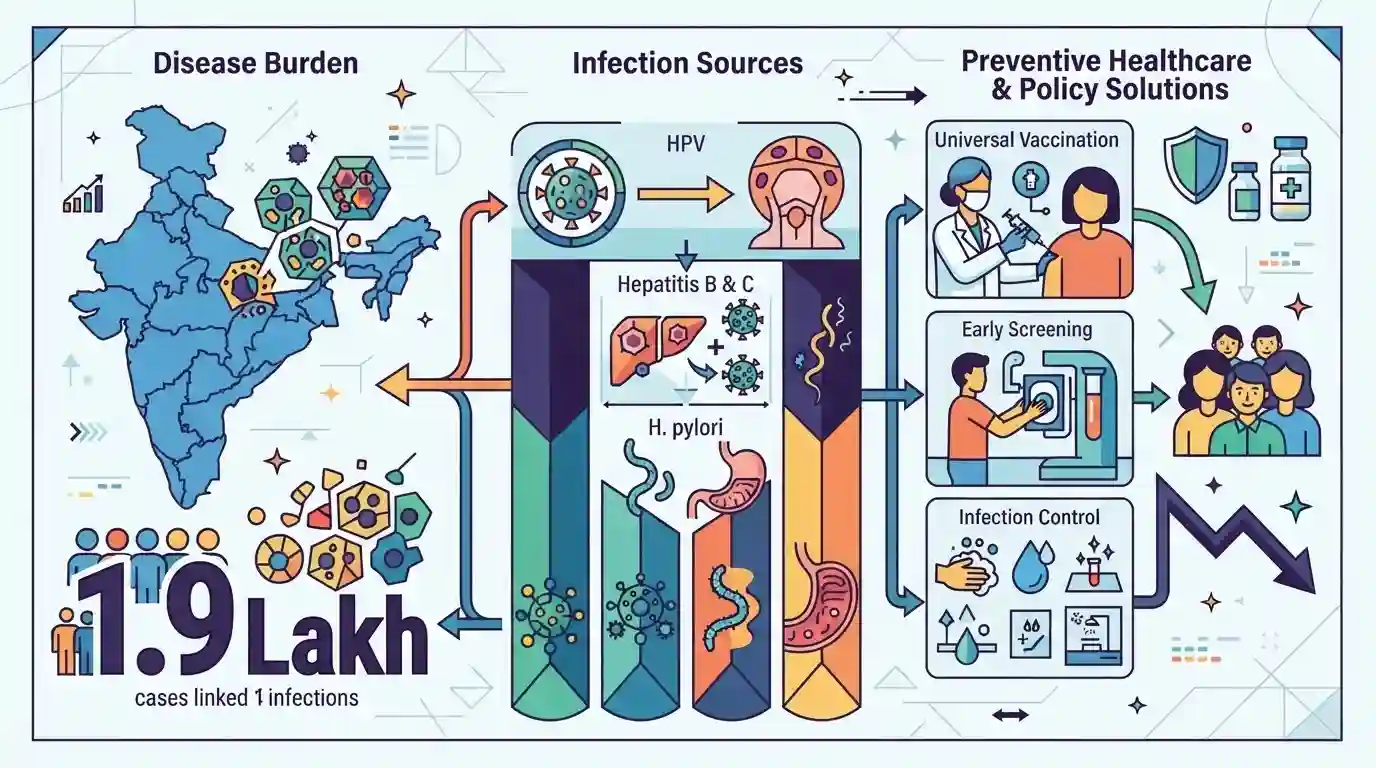
A recent Lancet study highlights that nearly 1.9 lakh cancer cases in India are linked to preventable viral and bacterial infections, such as HPV, Hepatitis B/C, and H. pylori. The findings underscore the importance of integrating public health interventions like universal vaccination, early screening, and infection control to combat the rising burden of infection-associated cancers in India.
মূল বিষয়
- A study published in The Lancet reveals that nearly 1.9 lakh cancer cases in India are linked to viral and bacterial infections.
- Infectious agents such as Human Papillomavirus (HPV), Hepatitis B and C, and Helicobacter pylori are major contributors to preventable cancers like cervical and stomach cancer.
- The findings emphasize the critical role of public health measures, routine vaccinations (such as HPV and Hepatitis B vaccines), and early screening programs in reducing the cancer burden.
- Infectious-linked cancers highlight the intersection of communicable disease control and non-communicable disease (NCD) prevention strategies.
গুরুত্বপূর্ণ শব্দ
Lancet

A prominent peer-reviewed general medical journal whose findings on disease burdens and public health frequently influence national health policies and epidemiological studies.
UPSC context
GS Paper II (Health, Social Sector): Important international journals and scientific studies reflecting health indices, disease burden, and policy frameworks in India.
World Health Organization (WHO)
A specialized agency of the United Nations responsible for international public health, setting global health standards, monitoring epidemics, and guiding national vaccination frameworks.
UPSC context
GS Paper II (Health, International Organizations): Role of UN agencies in global health governance, disease eradication, and preventive healthcare standards.
সংযুক্ত স্থির ধারণা
What are the primary biological carcinogens classified by IARC and their associated cancers in India?
- HPV & Cervical Cancer: Human Papillomavirus (HPV types 16 and 18) is the primary driver of cervical, anal, and oropharyngeal cancers.
- Hepatitis & Liver Cancer: Hepatitis B and C viruses are chronic infections leading to cirrhosis and hepatocellular carcinoma (liver cancer).
- H. pylori & Stomach Cancer: Helicobacter pylori is a spiral bacterium colonizing the gastric mucosa, strongly linked to peptic ulcers and gastric (stomach) cancer.
আন্তঃবিষয় প্যাটার্ন
Communicable vs NCD silos in public health
Infection-linked cancers bridge communicable disease control (vaccination, hygiene) with non-communicable disease strategies (cancer registries, oncology care), testing integrated health policy frameworks.
Global health equity and vaccine access
The high burden of infection-linked cancers in LMICs mirrors wider systemic inequities in global access to preventive vaccines and early diagnostic screenings.

Infection-linked cancers bridging communicable & NCD strategies will feature in a statement-based Public Health question.
সংযুক্ত PYQ · 2
সংযুক্ত PYQ · 2
- 2024MainsGS2
In a crucial domain like the public healthcare system the Indian State should play a vital role to contain the adverse impact of marketisation of the system. Suggest some measures through which the State can enhance the reach of public healthcare at the grassroots level.
- 2019PrelimsGS1
Which one of the following statements is not correct?
