नवी मुंबई अंतर्राष्ट्रीय हवाई अड्डा बुनियादी ढांचा और पर्यावरण
स्रोत:इंडियन एक्सप्रेस ↗
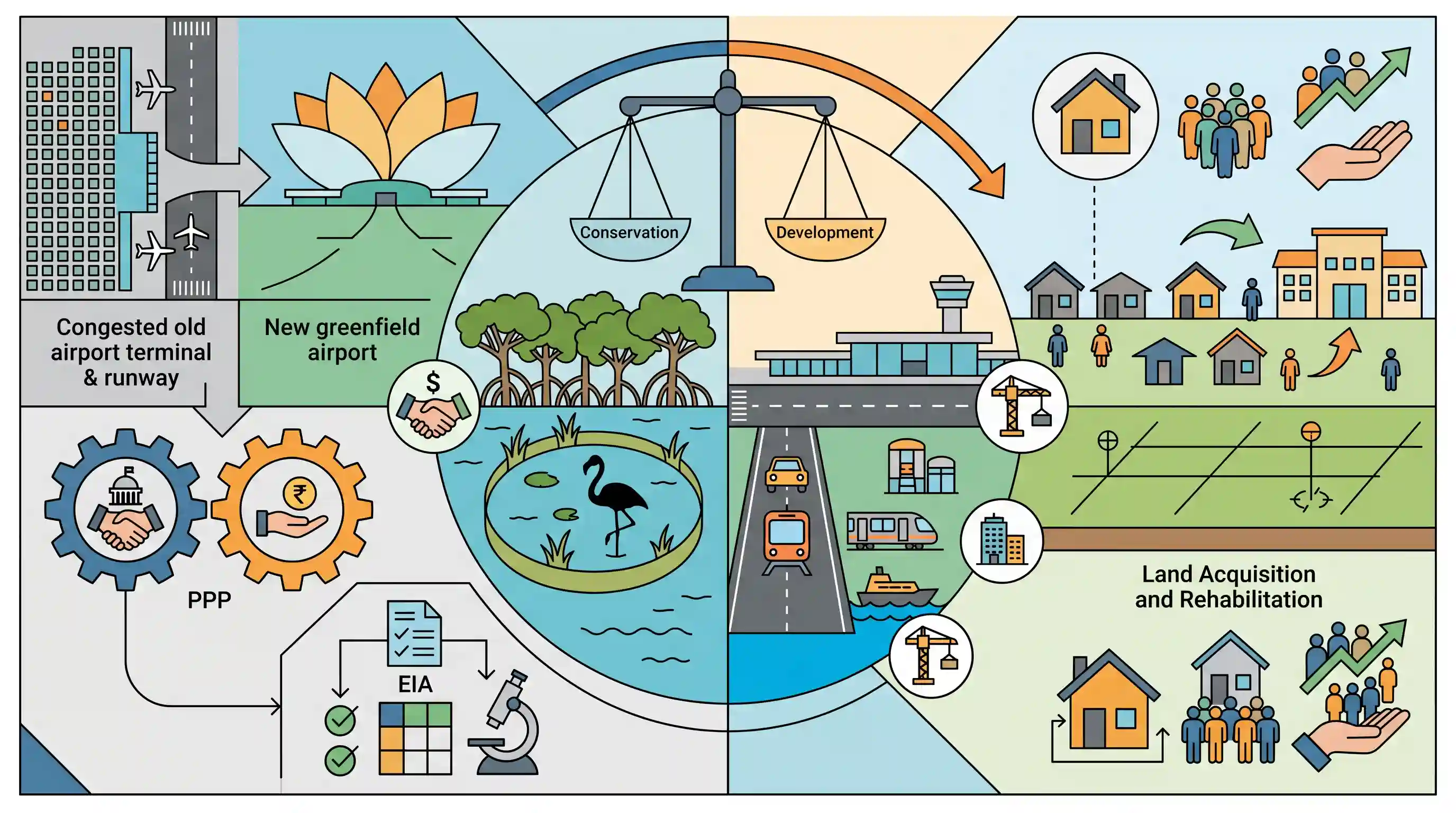
क्यों मायने रखता है
यह GS3 के विषयों जैसे विमानन में PPP मॉडल की प्रभावकारिता और चुनौतियों, मल्टी-मोडल शहरी परिवहन एकीकरण, और ग्रीनफील्ड बुनियादी ढांचा विकास तथा पारिस्थितिक संरक्षण (मैंग्रोव/वेटलैंड्स) के बीच आवश्यक महत्वपूर्ण संतुलन के लिए एक प्रमुख केस स्टडी के रूप में कार्य करता है। यह भूमि अधिग्रहण की सामाजिक-आर्थिक बाधाओं और परियोजना-प्रभावित मानवीय बस्तियों के पुनर्वास पर भी प्रकाश डालता है।
सारांश
The operationalization of the Navi Mumbai International Airport marks a significant milestone in India's aviation and urban infrastructure. Designed to alleviate massive congestion at Mumbai's primary airport, the greenfield project was developed under the Public-Private Partnership (PPP) model by the Adani Group and CIDCO. The airport emphasizes multi-modal connectivity by integrating road, metro, and water transport. However, the project's journey highlights the recurring conflict between large-scale infrastructure development and environmental conservation. Authorities had to navigate complex challenges related to mangrove destruction, wetland reclamation, and the protection of flamingo habitats. Furthermore, resolving land acquisition disputes and ensuring the rehabilitation of project-affected communities underscore the socio-economic complexities inherent in executing mega-projects.
मुख्य बिंदु
- नवी मुंबई इंटरनेशनल एयरपोर्ट (NMIA) एक प्रमुख ग्रीनफील्ड बुनियादी ढांचा परियोजना है, जिसका उद्देश्य मुंबई के मौजूदा छत्रपति शिवाजी महाराज इंटरनेशनल एयरपोर्ट (CSMIA) की भीड़भाड़ को कम करना है।
- The project is executed under a Public-Private Partnership (PPP) model involving Adani Airport Holdings Limited (AAHL) and CIDCO.
- NMIA को मल्टी-मॉडल कनेक्टिविटी को ध्यान में रखते हुए डिजाइन किया गया है, जिसमें निर्बाध पहुंच सुनिश्चित करने के लिए सड़क नेटवर्क (जैसे अटल सेतु MTHL), मेट्रो रेल और संभावित जल परिवहन विकल्पों को एकीकृत किया गया है।
- The construction faced significant environmental hurdles and scrutiny, particularly concerning the clearing of mangroves, reclamation of wetlands, and the potential disruption of local flamingo habitats.
- आसपास के गाँवों से भूमि अधिग्रहण और परियोजना-प्रभावित व्यक्तियों (PAPs) के उचित पुनर्वास और मुआवज़े ने परियोजना के विकास के दौरान महत्वपूर्ण सामाजिक-आर्थिक चुनौतियाँ पेश कीं।
महत्वपूर्ण शब्द
Public-Private Partnership (PPP) model

A collaborative funding and operational model where government agencies and private-sector companies partner to deliver public infrastructure like airports, sharing risks and resources.
UPSC context
GS Paper-3 (Infrastructure/Investment Models); essential for understanding how India finances large-scale developmental projects.
Environmental Impact Assessment (EIA)
A statutory process under the Environment (Protection) Act, 1986, evaluating the potential environmental and socio-economic impacts of a project before granting clearance.
UPSC context
GS पेपर-3 (पर्यावरण); विकासात्मक आवश्यकताओं और पारिस्थितिक संरक्षण तथा सतत विकास के बीच संतुलन बनाने की क्षमता का परीक्षण करता है।
ग्रीनफील्ड प्रोजेक्ट
A project built from the ground up on previously undeveloped land without existing infrastructure constraints, offering design flexibility but facing complex land acquisition.
UPSC context
GS Paper-3 (Infrastructure); important for distinguishing between new developments and brownfield (upgrading existing) projects.
तटीय विनियमन क्षेत्र (CRZ)
Regulated coastal areas notified under the Environment (Protection) Act, 1986, to protect fragile ecosystems like mangroves while controlling development activities near the coastline.
UPSC context
GS पेपर-3 (पर्यावरण/आपदा प्रबंधन); मुंबई जैसे तटीय शहरों में शहरी बुनियादी ढांचा परियोजनाओं के विश्लेषण के लिए महत्वपूर्ण।
सिटी एंड इंडस्ट्रियल डेवलपमेंट कॉरपोरेशन (CIDCO)
Maharashtra's premier town planning agency responsible for developing satellite towns (like Navi Mumbai) and executing mega infrastructure like airports and metros.
UPSC context
GS Paper-2 (Governance/Statutory Bodies); relevant for questions on regional planning and urban decongestion strategies.
Multi-modal Connectivity
परिवहन के विभिन्न साधनों (सड़क, रेल, जल, वायु) का एक निर्बाध नेटवर्क में एकीकरण, ताकि दक्षता में सुधार हो, यात्रा के समय में कमी आए और लागत को कम किया जा सके।
UPSC context
GS Paper-3 (Infrastructure); a core pillar of the PM Gati Shakti National Master Plan for holistic infrastructure.
Rehabilitation and Resettlement (R&R)
Legal frameworks (primarily the LARR Act, 2013) ensuring fair compensation, social security, and livelihood restoration for communities displaced by large-scale developmental projects.
UPSC context
GS Paper-3 (Infrastructure/Environment); evaluates the social ethics and justice involved in development-induced displacement.
प्रारंभिक ट्रैप
नवी मुंबई हवाई अड्डा पूरी तरह से भारतीय विमानपत्तन प्राधिकरण द्वारा विकसित एक ब्राउनफील्ड प्रोजेक्ट है।
यह एक ग्रीनफील्ड प्रोजेक्ट (विकसित न की गई भूमि पर शून्य से निर्मित) है जिसे निजी संस्थाओं की भागीदारी वाले पब्लिक-प्राइवेट पार्टनरशिप (PPP) मॉडल के तहत कार्यान्वित किया गया है, न कि AAI द्वारा किया गया कोई ब्राउनफील्ड अपग्रेड।
संबंधित अवधारणाएँ
What distinguishes Greenfield from Brownfield infrastructure projects?
- ग्रीनफील्ड: Built entirely from scratch on previously undeveloped land, lacking existing constraints or legacy infrastructure.
- Brownfield: इसमें मौजूदा बुनियादी ढांचे या सुविधाओं का उन्नयन (upgrading), संशोधन, लीजिंग या विस्तार शामिल है (जैसे, दिल्ली के IGI एयरपोर्ट का आधुनिकीकरण)।
- उड्डयन में FDI: 100% Foreign Direct Investment (FDI) is permitted under the automatic route for both greenfield and brownfield airport projects in India.
How are mangroves protected under India's environmental framework?
- CRZ-I(A) वर्गीकरण: Mangroves are classified as highly ecologically sensitive areas under Coastal Regulation Zone I(A), prohibiting most commercial and developmental activities.
- कानूनी संरक्षण: वे पर्यावरण (संरक्षण) अधिनियम, 1986 के तहत कानूनी रूप से संरक्षित हैं और अक्सर भारतीय वन अधिनियम, 1927 के दायरे में आते हैं।
- प्रतिपूरक वनीकरण: बुनियादी ढांचा परियोजनाओं, जिनमें मैंग्रोव का डायवर्जन अपरिहार्य है, के लिए पारिस्थितिक नुकसान की भरपाई हेतु कठोर प्रतिपूरक वनीकरण करना अनिवार्य है, जो आमतौर पर 1:3 या उससे अधिक के अनुपात में होता है।
अंतर-विषय पैटर्न
पीएम गति शक्ति और मल्टी-मॉडल लॉजिस्टिक्स
NMIA’s integration of the Atal Setu road link, metro rail, and coastal water transport perfectly illustrates the PM Gati Shakti master plan's goal of seamless multi-modal connectivity.
पक्षी संरक्षण बनाम मेगा-इन्फ्रास्ट्रक्चर
The ecological tussle over DPS Flamingo Lake mirrors the Great Indian Bustard power-line conflict, forcing EIAs to actively balance flight safety (bird strikes) with critical avifauna habitat protection.

Expect a multi-statement Prelims question combining Greenfield vs Brownfield airport PPP models with CRZ rules on mangrove clearances.
संबद्ध PYQ · 5
संबद्ध PYQ · 5
- 2017MainsGS3
Examine the development of Airports in India through joint ventures under Public-Private Partnership (PPP) model. What are the challenges faced by the authorities in this regard?
- 2024PrelimsGS1
Consider the following airports : 1. Donyi Polo Airport 2. Kushinagar International Airport 3. Vijayawada International Airport In the recent past, which of the above have been constructed as Greenfield projects?
- 2024MainsGS3
What role do environmental NGOs and activists play in influencing Environmental Impact Assessment (EIA) outcomes for major projects in India? Cite four examples with all important details.
- 2016MainsGS3
Rehabilitation of human settlements is one of the important environmental impacts which always attracts controversy while planning major projects. Discuss the measures to be adopted to mitigate the impact of the recent incidents of cloudbursts in many places of Uttarakhand.
- 2013MainsGS3
Adoption of PPP model for infrastructure development of the country has not been free of criticism. Critically discuss pros and cons of the model.
