Civilian Impact of West Asia Conflict and Perceptions of the West
Source:Indian Express ↗
Why It Matters
Provides a critical non-Western perspective on the geopolitical dynamics of the Middle East and the moral failings of Western foreign policy. This is highly relevant for GS Paper 2 questions on international relations and global institutions, as well as GS Paper 4 topics concerning ethics in international relations and human rights.
Summary
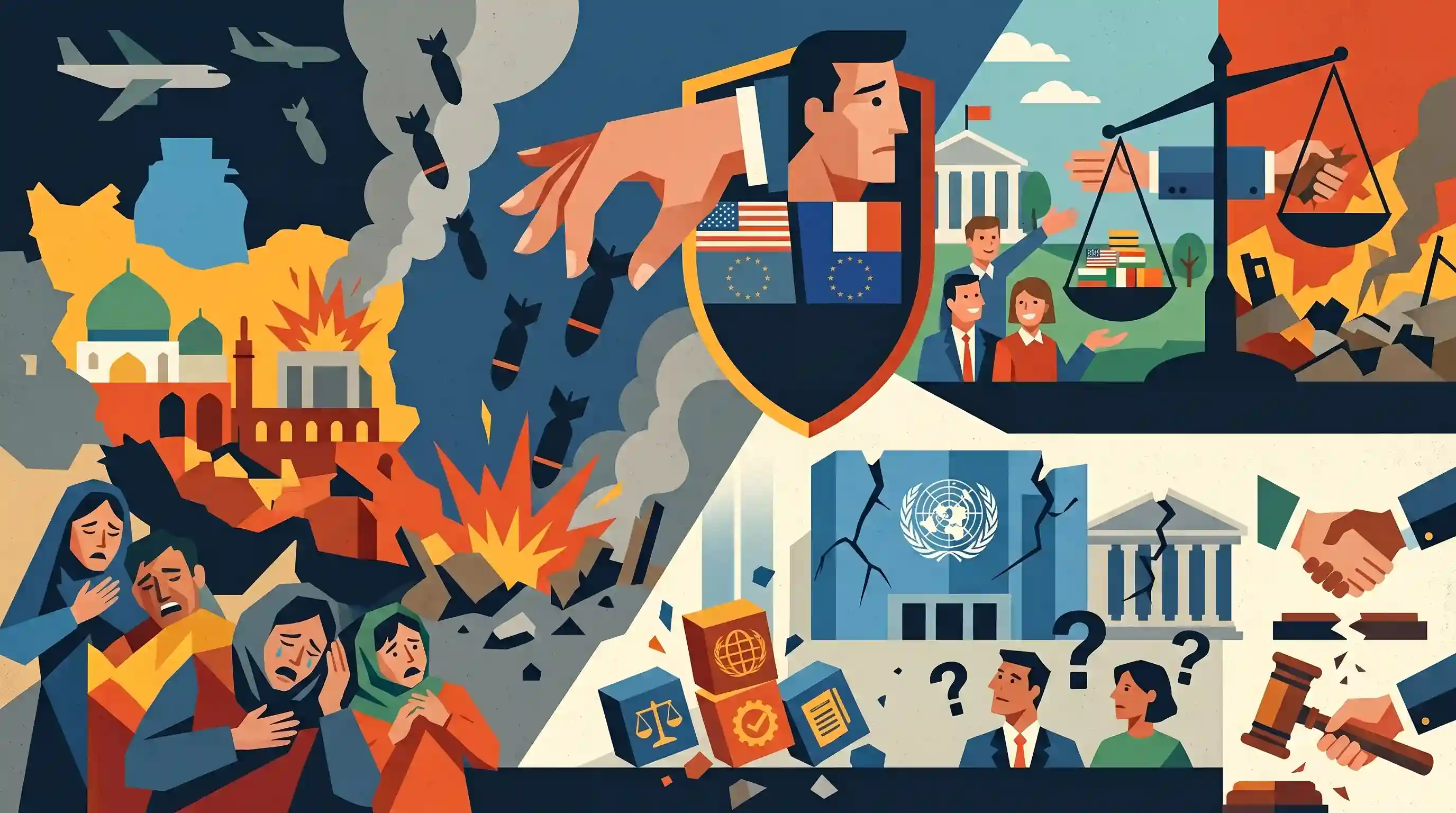
The article presents a poignant critique of the ongoing conflict in the Middle East from a civilian perspective, highlighting the immense human cost of repeated bombings in Iran. It underscores a profound sense of betrayal by Western nations, pointing to perceived hypocrisy and double standards in their foreign policy and approach to human rights. The narrative raises critical questions about international morality, the effectiveness of global institutions like the UN, and the ethical failings of the contemporary 'rules-based' world order.
Key Points
- Highlights the devastating civilian impact of ongoing conflicts in the Middle East through a personal account of surviving multiple bombings.
- Condemns the response of Western nations, accusing them of hypocrisy, double standards, and abandoning vulnerable populations while selectively championing human rights.
- Raises critical ethical questions regarding modern international relations, emphasizing that the global 'rules-based order' often fails those it is meant to protect.
- Reflects on the broader failure of international institutions to enforce peace, ensure regional stability, and hold powerful geopolitical actors accountable.
Important Terms
Rules-based International Order

A post-WWII framework of laws, norms, and institutions aimed at governing interstate conduct through multilateralism rather than raw power.
UPSC context
GS Paper II; tests challenges like unilateralism and the perceived erosion of global trust/cooperation.
Universal Declaration of Human Rights
A 1948 milestone document outlining 30 fundamental rights intended to be universally protected regardless of nationality or religion.
UPSC context
GS Paper II/IV; tests the tension between universal rights and 'Western-centric' policy double standards.
International Humanitarian Law
A set of rules, including the Geneva Conventions, that limit the effects of armed conflict by protecting civilians and restricting warfare methods.
UPSC context
GS Paper II; essential for analyzing civilian protections, war crimes, and principles of military proportionality.
Global South
A collective term for developing nations in Africa, Asia, and Latin America often highlighting perceived hypocrisy in Western-led global governance.
UPSC context
GS Paper II; relevant for India's leadership role and critiques of selective application of international rules.
Strategic Autonomy
The ability of a state to pursue its own national interests and foreign policy independently, without coercion by other powers.
UPSC context
GS Paper II; tests India's balancing act between rival powers and its neutral stance in regional conflicts.
United Nations
The primary international organization founded in 1945 to maintain global peace, security, and cooperation among 193 member states.
UPSC context
GS Paper II; focus on institutional effectiveness, UNSC reform, and the impact of the veto power.
Prelims Trap
The 'Rules-Based International Order' is a legally binding framework codified under the United Nations Charter.
The RBIO is a normative, politically constructed term used largely by Western nations, not a formally codified legal treaty or framework within the UN system.
Static Concepts Connected
What is the ethical conflict of Realpolitik vs. Morality in International Relations?
- Realpolitik: Prioritizes national interest, security, and power maximization over ideological or moral considerations.
- Morality: Emphasizes universal values, human rights, and adherence to international law frameworks like the UDHR.
- The Dilemma: Geopolitical actors often selectively apply moral standards (double standards) only when it aligns with their strategic interests.
What are India's key strategic and connectivity linkages with Iran?
- Chabahar Port: Provides India a vital sea-land route to Afghanistan and Central Asia, bypassing Pakistan entirely.
- INSTC Hub: Iran is a critical transit node in the International North-South Transport Corridor connecting India to Eurasia.
- Strategic Autonomy: Though severely disrupted by Western sanctions, Iran remains geographically pivotal to India's extended neighborhood security calculus.
Cross-Topic Patterns
Ethics of Western Realpolitik
The selective outrage over human rights ties into GS-4 Ethics in IR, demonstrating how global powers often weaponize morality for strategic gains rather than universal justice.
Chabahar and INSTC vulnerabilities
Instability in Iran directly impacts India's GS-2 connectivity goals, testing India's strategic autonomy and the viability of routes bypassing Pakistan amidst Western sanctions and regional warfare.

Expect a GS-2 Mains question analyzing the 'Rules-Based Order' as a Western construct vs. the Global South's demand for UN reform.
Linked PYQs · 4
Linked PYQs · 4
- 2025MainsGS2
"The reform process in the United Nations remains unresolved, because of the delicate imbalance of East and West and entanglement of the USA vs. Russo-Chinese alliance.” Examine and critically evaluate the East-West policy confrontations in this regard.
- 2020MainsGS4
‘The will to power exists, but it can be tamed and be guided by rationality and principles of moral duty.’ Examine this statement in the context of international relations.
- 2018MainsGS2
“India’s relations with Israel have, of late, acquired a depth and diversity, which cannot be rolled back.” Discuss.
- 2025MainsGS2
"Energy security constitutes the dominant kingpin of India's foreign policy, and is linked with India's overarching influence in Middle Eastern countries.” How would you integrate energy security with India's foreign policy trajectories in the coming years?
