Kerala High Court Directives on Munambam Land Tax Collection
Source:The Hindu ↗
Why It Matters
Highlights the administrative and legal distinction between accepting land tax (a revenue function) and acknowledging ownership rights (via mutation), specifically in the context of complex disputes involving Waqf properties and legal rights to property.
Summary
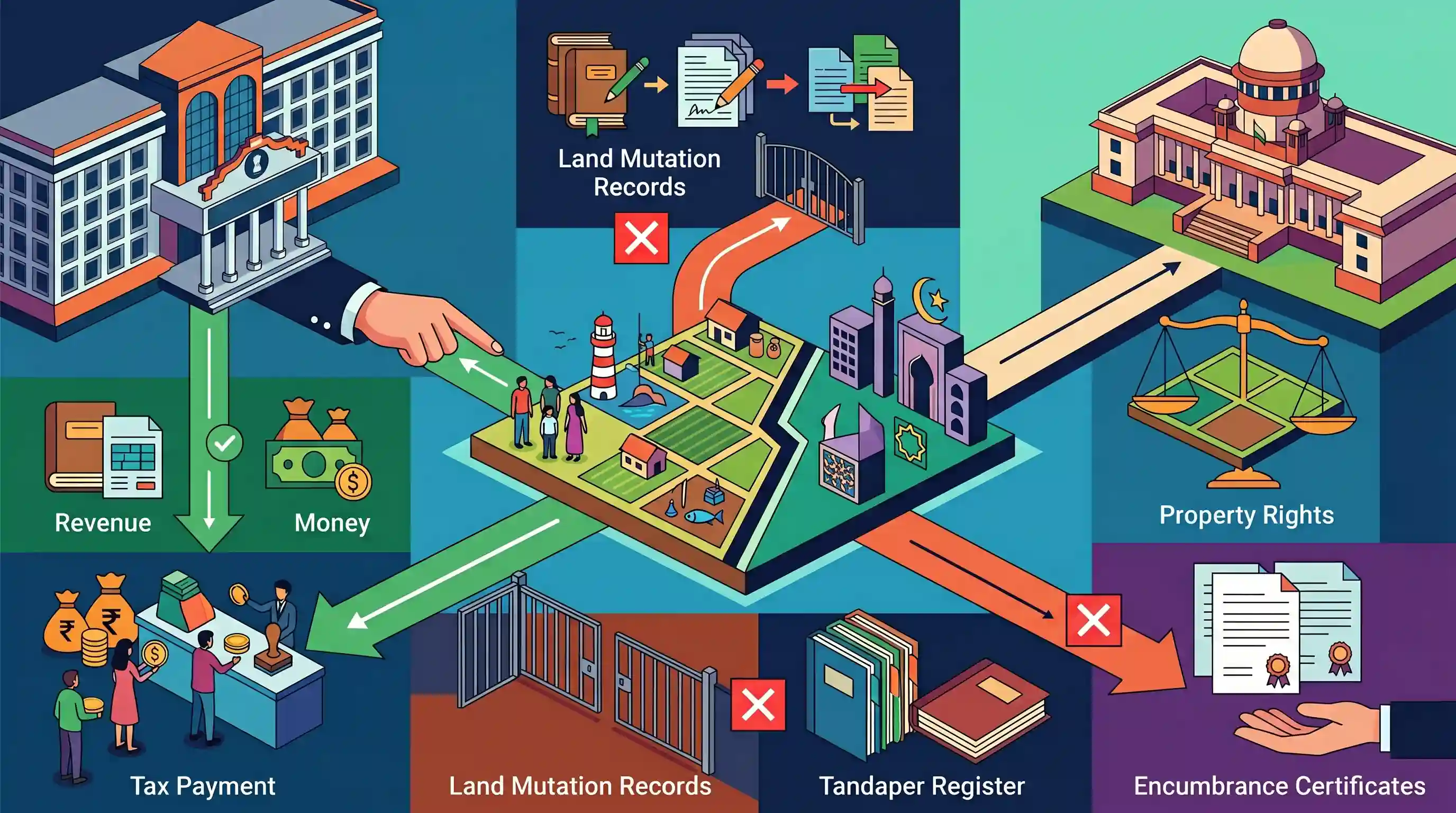
The Kerala High Court has directed Revenue department officials to strictly limit their actions to accepting land tax from residents of the disputed Munambam land. This land is currently contested, with the Waqf Board claiming ownership. The High Court clarified that a previous interim order permitting tax collection does not grant residents the right to alter land mutation records, change the Tandaper register, or obtain encumbrance certificates, as the broader property rights issue remains pending before the Supreme Court.
Key Points
- The Kerala High Court clarified that revenue officials can only collect basic land tax from over 600 families in Munambam amid an ongoing land dispute.
- The Waqf Board claims ownership of the disputed area in Munambam as Waqf property.
- The court instructed officials not to process land mutations, transfer property rights, or issue encumbrance certificates under the guise of a previous interim order.
- The broader legal battle regarding the ownership of the Munambam land is currently sub-judice before the Supreme Court.
Important Terms
Waqf Board

A statutory body under the Waqf Act, 1995, responsible for the management and protection of properties dedicated for Islamic religious or charitable purposes.
UPSC context
GS Paper II: Statutory bodies and issues related to minority rights and land management.
Land Mutation
The administrative process of updating ownership or possession details in government revenue records. It is used for tax assessment and does not conclusively prove legal title.
UPSC context
GS Paper II/III: Land revenue administration and property rights; relevant for disputes over land ownership.
Tandaper Register
A unique 13-digit revenue identification number in Kerala that links all land parcels owned by an individual to facilitate tax collection and land reform compliance.
UPSC context
GS Paper III: Land reforms and digital land record management (e-governance).
Waqf Tribunal
A specialized quasi-judicial body established under the Waqf Act to adjudicate disputes regarding Waqf properties, having the powers of a civil court.
UPSC context
GS Paper II: Dispute redressal mechanisms and the jurisdiction of specialized tribunals versus High Courts.
Encumbrance Certificate
An official document certifying that a property is free from registered legal or financial liabilities like mortgages, liens, or court-ordered attachments.
UPSC context
GS Paper III: Property rights, transparency in real estate, and consumer protection.
Revenue Department
The state executive wing managing land records, surveys, and tax collection. It acts as the primary record-keeper for administrative and fiscal land matters.
UPSC context
GS Paper II: Structure and functioning of the Executive; local and state-level administration.
Prelims Trap
"Mutation of property in revenue records confers legal title and ownership to the individual."
The Supreme Court has consistently held that mutation entries are solely for fiscal purposes (tax collection) and do not create, confer, or extinguish legal title.
Static Concepts Connected
What is the constitutional status of the Right to Property?
- Constitutional Right: Governed by Article 300A, inserted by the 44th Amendment Act, stating no person shall be deprived of property save by authority of law.
- Not Fundamental: It was removed from Part III (previously Articles 19(1)(f) and 31), meaning aggrieved citizens cannot directly approach the SC via Article 32 writs.
What is the legal validity of property mutation?
- Fiscal Purpose: Mutation merely updates local revenue records to identify who is liable to pay property or land tax to the government.
- No Title Conferred: It does not grant, transfer, or extinguish legal ownership. Title disputes must be resolved by civil courts, not revenue authorities.
Cross-Topic Patterns
Waqf Act & Statutory Bodies
The Waqf Board's extensive land claims tie into ongoing parliamentary debates on amending the Waqf Act, 1995, intersecting religious property administration with secular state land laws.
Federal Distribution of Land Subjects
While 'Land' and 'Land Revenue' are strict State List subjects (Entries 18 & 45), 'Transfer of Property' is in the Concurrent List, creating jurisdictional overlaps during title disputes.

Expect a 2026 prelims statement testing if property mutation or tax receipts confer legal ownership, perhaps paired with Article 300A.
Linked PYQs · 2
Linked PYQs · 2
- 2021PrelimsGS1
What is the position of the Right to Property in India?
- 2005PrelimsGS1
Consider the following statements: 1. Article 301 pertains to the Right to Property. 2. Right to Property is a legal right but not a fundamental right. 3. Article 300 A was inserted in the Constitution of India by the Congress Government at the Center by the 44th Constitutional Amendment. Which of the above statements are true?
