Mumbai Metro Line 4 Receives First Driverless Metropolis Trainset
Source:swarajyamag ↗
Why It Matters
Important for MPSC aspirants tracking major infrastructural upgrades, public transport expansion, and regional transit developments within the Mumbai Metropolitan Region (MMR).
Summary
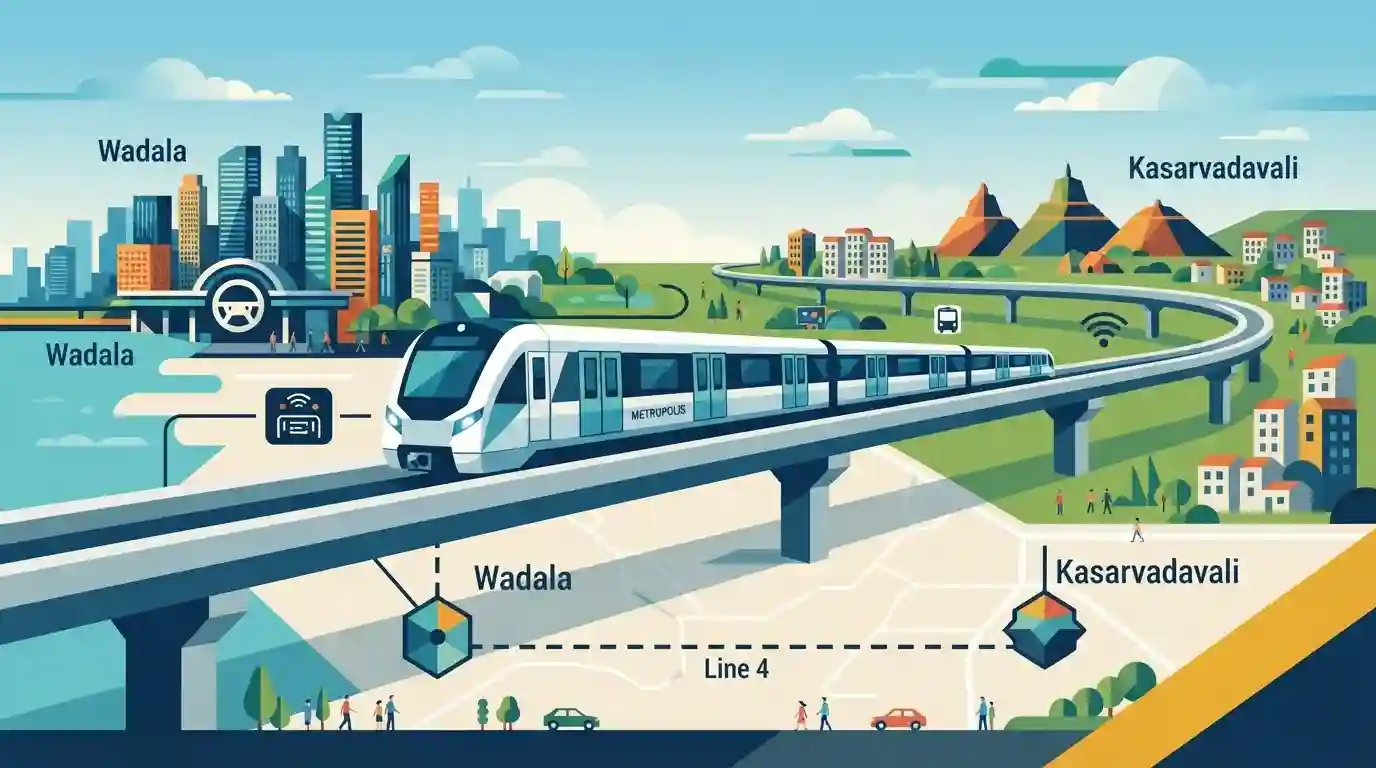
Alstom has rolled out the first of 39 driverless Metropolis trainsets for Mumbai Metro Line 4, connecting Wadala to Kasarvadavali, marking a significant milestone in expanding the urban mass rapid transit infrastructure of the Mumbai Metropolitan Region (MMR).
Key Points
- Alstom rolled out the first of 39 Metropolis trainsets for Mumbai Metro Line 4 (Wadala-Kasarvadavali).
- Mumbai Metro Line 4 is a major upcoming urban mass rapid transit corridor designed to enhance connectivity in the Mumbai Metropolitan Region (MMR).
- The trainsets feature modern driverless (Unattended Train Operation - UTO) capabilities, energy efficiency, and modern passenger safety standards.
Important Terms
Mumbai Metro Line 4

A 32.32 km elevated mass rapid transit corridor connecting Wadala in Mumbai to Kasarvadavali in Thane, designed to ease regional congestion with driverless trainsets.
UPSC context
Important for MPSC (Maharashtra Geography & Urban Infrastructure) focusing on Mumbai Metropolitan Region (MMR) transport development projects.
Mumbai Metropolitan Region Development Authority (MMRDA)
A premier public planning and infrastructure development body responsible for implementing major urban transit projects, including metro lines, across the Mumbai Metropolitan Region.
UPSC context
Crucial for MPSC governance and state administration topics regarding regional urban planning bodies in Maharashtra.
Alstom
A global leader in rail transport manufacturing that rolled out the first of 39 driverless Metropolis trainsets for Mumbai Metro Line 4 under the Make in India initiative.
UPSC context
Relevant for MPSC current affairs and economy sections testing industrial partnerships, public-private investments, and manufacturing infrastructure.
Prelims Trap
Mumbai Metro Line 4 is a fully underground corridor executed directly by the Central Railway.
Aspirants often confuse MMRDA execution agencies or assume all Mumbai Metro lines are underground; Line 4 is an elevated corridor.
Static Concepts Connected
What are the key institutional bodies involved in Mumbai Metropolitan Region (MMR) infrastructure planning?
- MMRDA Role: Established under the Mumbai Metropolitan Region Development Authority Act, 1945/1974, MMRDA coordinates regional development and major transport corridors like Metro projects.
- MahaMetro JV: MahaMetro (Maharashtra Metro Rail Corporation Limited) is a joint venture of GoI and Govt of Maharashtra executing metro projects in Pune and Nagpur.
Cross-Topic Patterns
Urban Transit + MMRDA Regional Planning
Mumbai Metro Line 4 highlights decentralized urban mobility expansion across MMR, linking core transport hubs like Wadala to Thane via MMRDA execution.
Make in India + Rolling Stock Localisation
The manufacturing of UTO trainsets at Sri City under Make in India mirrors defence and electronics localisation push across state corridors.

Mumbai Metro Line 4 (Wadala-Kasarvadavali) route details, length, and UTO technology are high-yield MPSC prelims facts.
Linked PYQs · 3
Linked PYQs · 3
- 2021MPSC_PRELIMSGS1
The Mumbai Metropolitan Region spread over 6,328 sq.km. consists of ________ Municipal Corporations.
- 2019MPSC_PRELIMSGS1
Match the following and choose the correct option. | Column A | Column B | |---|---| | a. 1st Satellite communication centre in Maharashtra. | I. Wardha | | b. District having complete electrification in Maharashtra. | II. Gangapur (Nashik) | | c. 1st earthen dam in Maharashtra. | III. Arvi | | d. 1st hydroelectric project in Maharashtra. | IV. Khopoli (Raigad) | Code: a b c d
- 2022MPSC_PRELIMSGS1
Given the importance of supply side factors in determination of inflation in India, following long-term policies are likely to help. (a) Changing production patterns (b) Calibrated import policy (c) Focus on transportation (d) Storage infrastructure for perishable commodities
