B28 Trainsets and Technology Transfer in Bullet Train Project
Source:Indian Express ↗
Why It Matters
Highlights the execution challenges of mega-infrastructure projects in India, the intricacies of technology transfer from foreign partners, and the strategic importance of the India-Japan bilateral relationship in modernizing India's transit infrastructure.
Summary
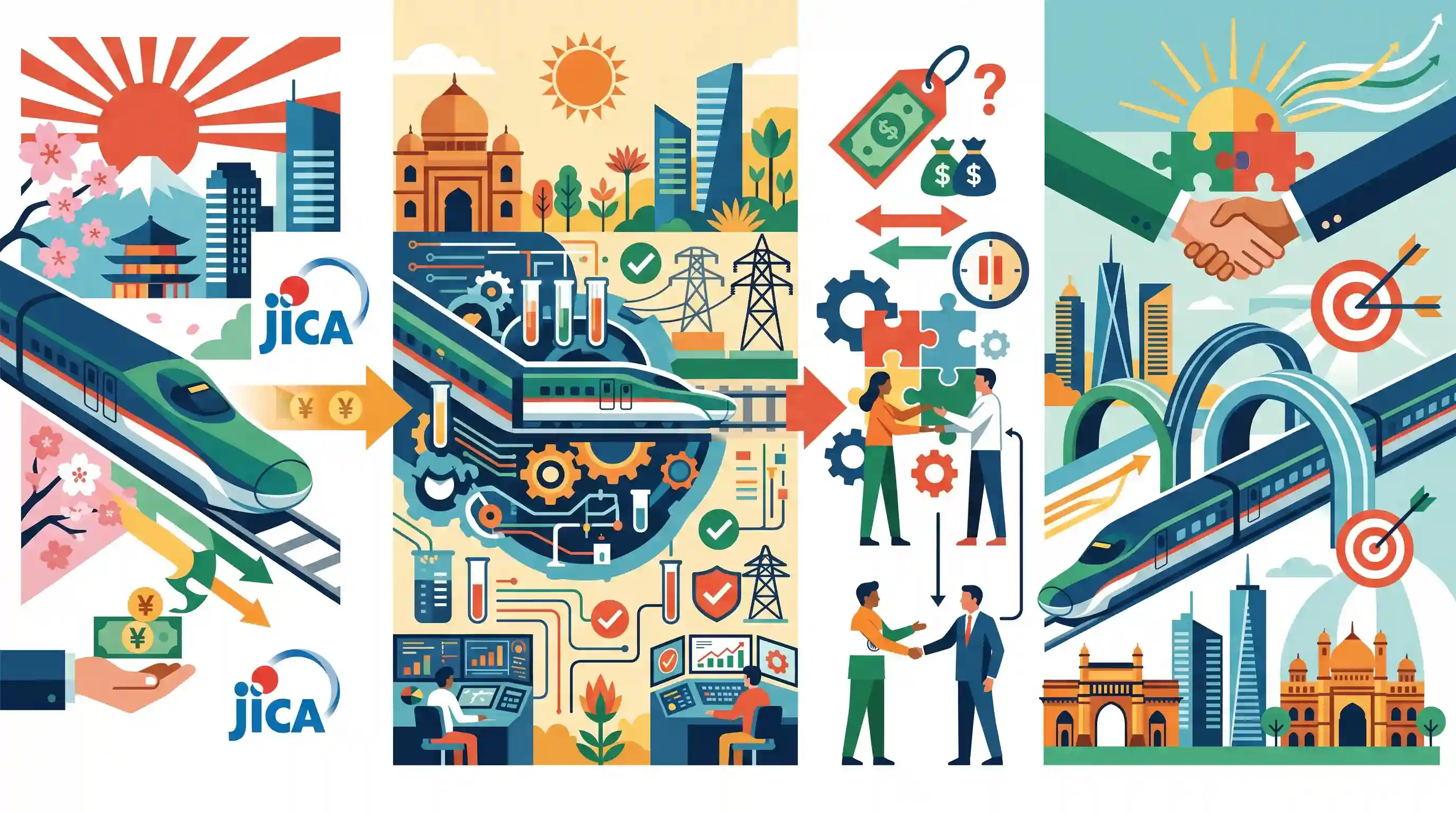
The launch of the Mumbai-Ahmedabad High-Speed Rail (MAHSR) project by its 2027 target heavily depends on the timely acquisition of B28 trainsets from Japan. Based on the E5 Shinkansen series, these trainsets are essential for conducting extensive trials and ensuring the system adapts safely to Indian conditions before commercial operations begin. Delays stemming from pricing negotiations highlight the complexities of technology transfer and procurement in large-scale, bilaterally funded infrastructure projects backed by the Japan International Cooperation Agency (JICA).
Key Points
- The Mumbai-Ahmedabad High-Speed Rail (MAHSR) project aims for a partial launch (Surat to Bilimora) by 2027.
- The B28 trainset, based on Japan's E5 Shinkansen technology, is crucial for testing and calibrating the system under Indian climatic and track conditions.
- Delays in procuring these trainsets due to pricing negotiations with Japanese manufacturers could threaten the 2027 target.
- The project is heavily funded by a soft loan from the Japan International Cooperation Agency (JICA), highlighting deep India-Japan economic cooperation.
Important Terms
Mumbai-Ahmedabad High-Speed Rail (MAHSR) Corridor

India's first bullet train project, a 508-km high-speed corridor connecting the financial hub of Mumbai with Ahmedabad using Japanese Shinkansen technology.
UPSC context
GS III (Infrastructure: Railways) and GS II (Bilateral Relations: India-Japan). Tests knowledge of flagship infrastructure projects and strategic partnerships.
National High-Speed Rail Corporation Limited (NHSRCL)
A Special Purpose Vehicle (SPV) established in 2016 to finance, construct, maintain, and manage high-speed rail corridors in India, involving the Central and State governments.
UPSC context
GS III (Investment Models). Tests understanding of institutional frameworks for executing mega-infrastructure projects under joint equity participation.
Japan International Cooperation Agency (JICA)
The Japanese governmental agency providing major financial support (approx. 81% of costs) for the MAHSR project via concessional Official Development Assistance (ODA) loans.
UPSC context
GS II (Bilateral Agreements) and GS III (Economic Development). Tests knowledge of international funding mechanisms for Indian infrastructure.
B28 Trainset
The indigenous 'Bharat-made' high-speed trainset, designed for 280 kmph, being developed by BEML to enable the project's partial 2027 launch amidst Japanese procurement delays.
UPSC context
GS III (Science & Technology: Indigenization). Relevant for 'Make in India' and self-reliance in high-end transport technology.
Technology Transfer
The process of sharing or selling technical knowledge and manufacturing skills from one country to another; central to India's goal of building bullet trains locally.
UPSC context
GS III (Infrastructure and S&T). Tests understanding of bilateral cooperation benefits beyond simple financing, focusing on capacity building.
Shinkansen Technology
The Japanese high-speed rail system known for its safety and punctuality, which serves as the technical blueprint and rolling stock inspiration for India’s MAHSR.
UPSC context
GS III (Infrastructure). Specifically examines technical collaboration with Japan and the adoption of global standards in Indian Railways.
Prelims Trap
The Mumbai-Ahmedabad High-Speed Rail (MAHSR) corridor passes exclusively through the states of Gujarat and Maharashtra.
While it connects two states, the corridor also passes through the Union Territory of Dadra and Nagar Haveli. UPSC frequently tests the omission of small enclaves/UTs.
Static Concepts Connected
What characterizes a 'Soft Loan' in bilateral infrastructure financing?
- Concessional rates: Loans offered at significantly lower interest rates than commercial market borrowing, such as JICA's 0.1% rate for the MAHSR project.
- Extended tenure: They feature extended repayment periods, frequently coupled with generous initial grace periods before principal amortization begins.
- Geoeconomic utility: Often tied to Official Development Assistance (ODA), they promote bilateral diplomatic ties and facilitate donor-country technology exports.
How is a Special Purpose Vehicle (SPV) structured for public mega-projects?
- Risk isolation: A distinct legal entity created specifically to ring-fence financial and operational risks from the parent ministries or organizations.
- Joint equity: Usually features shared ownership models. NHSRCL, for example, is a joint venture with equity from the Central Government, Gujarat, and Maharashtra.
Cross-Topic Patterns
Tech transfer limits & Indigenization
The pivot from Japanese Shinkansen to indigenous B28 trainsets mirrors defense sector procurement, highlighting the friction between imported tech transfer costs and 'Make in India' imperatives.
Japan's ODA as strategic counterweight
JICA's massive soft loans for Indian mega-projects act as a strategic, transparent alternative to China's Belt and Road Initiative (BRI), strengthening the geoeconomic pillar of the Quad.

Expect a multi-statement question mixing NHSRCL's equity structure, MAHSR's exact route (including DNH UT), and JICA soft loan terms.
Linked PYQs · 3
Linked PYQs · 3
- 2021MainsGS3
“Investment in infrastructure is essential for more rapid and inclusive economic growth.” Discuss in the light of India's experience.
- 2019MainsGS2
‘The time has come for India and Japan to build a strong contemporary relationship, one involving global and strategic partnership that will have a great significance for Asia and the world as a whole.’ Comment.
- 2022MainsGS3
Why is Public Private Partnership (PPP) required in infrastructural projects ? Examine the role of PPP model in the redevelopment of Railway Stations in India.
