मध्य प्रदेश चावल डायवर्जन दावों पर FCI का स्पष्टीकरण
स्रोत:rediff ↗
क्यों मायने रखता है
यह मामला भारत में जैव ईंधन (biofuels) के लिए खाद्यान्न आवंटन को नियंत्रित करने वाले कड़े निगरानी ढांचे, नियामक अनुपालन को लागू करने में FCI, राज्य नागरिक आपूर्ति निगमों और NABARD जैसे शीर्ष निकायों जैसी वैधानिक संस्थाओं की सक्रिय भूमिका को उजागर करता है, और सार्वजनिक वितरण रिपोर्टिंग में सांख्यिकीय विसंगतियों को स्पष्ट करता है।
सारांश
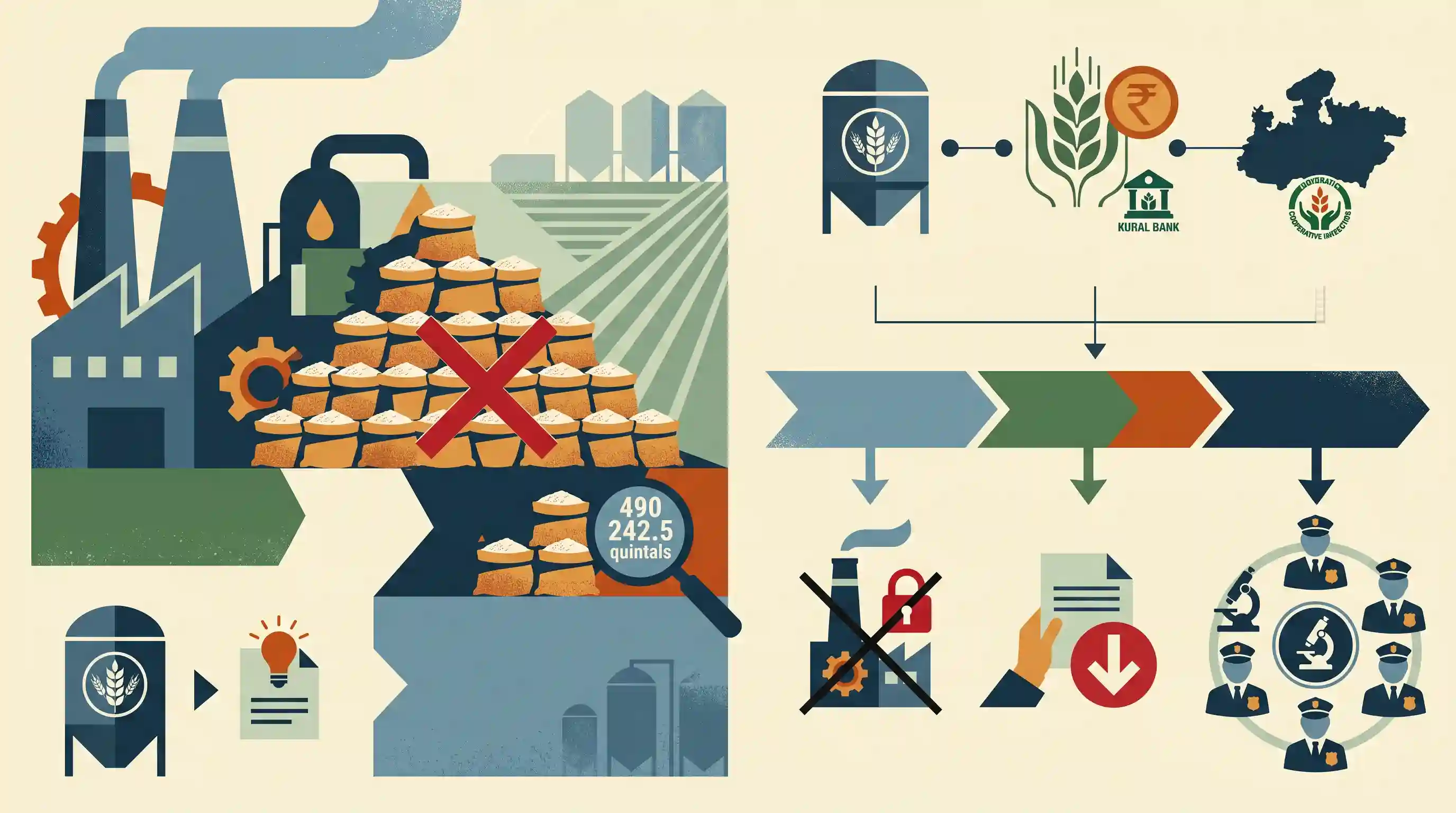
भारतीय खाद्य निगम (FCI) ने स्पष्ट किया है कि मध्य प्रदेश में इथेनॉल उत्पादन के लिए चावल के कथित डायवर्जन (विचलन) की चल रही जांच केवल 5.63 लाख रुपये मूल्य के 242.50 क्विंटल (490 बोरी) से संबंधित है, न कि मीडिया रिपोर्टों में दावा किए गए 5 लाख टन (मूल्य 1,160 करोड़ रुपये) से। 1,160 करोड़ रुपये की राशि वर्ष 2024-25 के इथेनॉल आपूर्ति वर्ष से पूरे भुगतान के बदले राज्य में डिस्टिलरी को जारी किए गए 5.39 लाख टन चावल की वैध आपूर्ति को दर्शाती है। कई केंद्रीय और राज्य एजेंसियों (NABARD, DFPD, MPSCSC और FCI सहित) ने त्वरित दंडात्मक और विनियामक कार्रवाई की है, जिसमें ब्याज सहायता (interest subvention) रोकना, उल्लंघन करने वाली मिल को ब्लैकलिस्ट करना और एक विशेष जांच दल (SIT) का गठन करना शामिल है।
मुख्य बिंदु
- भारतीय खाद्य निगम (FCI) ने स्पष्ट किया कि एथेनॉल उत्पादन के लिए मध्य प्रदेश में चावल के कथित डायवर्जन (विचलन) में केवल 5.63 लाख रुपये मूल्य का 242.50 क्विंटल (490 बोरी) चावल शामिल है, और उन्होंने 5 लाख टन (1,160 करोड़ रुपये मूल्य) के घोटाले की मीडिया रिपोर्टों का खंडन किया।of_the_project_management_group_of_the_project_and_the_activities_of_the_project_management_group_are_not_subject_to_the_provisions_of_the_Law_on_State_Procurements.md # Standard Document ## 1. Description of the project ### 1.1 Project Title Support to the implementation of the State program of implementation of the Strategy of Development of the Agrarian Sector of Ukraine for the period up to 2030. ### 1.2 Context and Background of the project The Strategy of Development of the Agrarian Sector of Ukraine for the period up to 2030 (hereinafter - the Strategy) was approved by the Cabinet of Ministers of Ukraine on November 11, 2020. The main goal of the Strategy is to create conditions for the stable development of the agrarian sector of Ukraine, which will ensure food security, increase the competitiveness of Ukrainian agricultural products in the world markets, and increase the welfare of the rural population. The Strategy defines the main directions of development of the agrarian sector of Ukraine for the period up to 2030, in particular: * development of agricultural production; * development of food and processing industry; * development of rural areas; * improvement of the state regulation and support system in the agrarian sector. To ensure the implementation of the Strategy, the Cabinet of Ministers of Ukraine approved the Action Plan for the implementation of the Strategy of Development of the Agrarian Sector of Ukraine for the period up to 2030 (hereinafter - the Action Plan) on December 16, 2020. The Action Plan defines the main tasks and measures, the implementation of which is necessary to achieve the goals of the Strategy, as well as the responsible executors, terms of implementation, and indicators of achievement. The Ministry of Agrarian Policy and Food of Ukraine (hereinafter - the Ministry) is the main executor of the Strategy and the Action Plan. The Ministry is responsible for coordinating the activities of central and local executive authorities, local self-government bodies, enterprises, institutions, and organizations involved in the implementation of the Strategy and the Action Plan. To ensure the effective implementation of the Strategy and the Action Plan, the Ministry needs to strengthen its institutional capacity, in particular, in the field of project management, monitoring and evaluation, policy analysis, and strategic planning. The project "Support to the implementation of the State program of implementation of the Strategy of Development of the Agrarian Sector of Ukraine for the period up to 2030" (hereinafter - the Project) is aimed at providing expert and consultative support to the Ministry in the implementation of the Strategy and the Action Plan. ### 1.3 Project Goal and Objectives The main goal of the Project is to support the Ministry of Agrarian Policy and Food of Ukraine in the effective implementation of the Strategy of Development of the Agrarian Sector of Ukraine for the period up to 2030 and the Action Plan for its implementation. To achieve this goal, the Project will focus on the following objectives: 1. Strengthening the institutional capacity of the Ministry in project management, monitoring, and evaluation. 2. Providing expert and consultative support to the Ministry in the development and implementation of key agrarian policies. 3. Improving the coordination and communication between the Ministry, other state authorities, international partners, and the public. 4. Ensuring the monitoring and evaluation of the implementation of the Strategy and the Action Plan. ### 1.4 Main Activities The Project activities will be implemented in four main components, corresponding to the objectives: **Component 1: Institutional Capacity Building** * Establishment and support of the Project Management Group (PMG) within the Ministry. * Development of project management methodologies, guidelines, and templates. * Conducting training and capacity building workshops for the Ministry staff. * Assisting in the improvement of internal administrative and operational procedures of the Ministry related to project management. **Component 2: Expert and Policy Support** * Providing expert support in the development of draft laws, regulations, and policy papers. * Conducting analytical studies, market assessments, and policy analyses. * Developing recommendations for the improvement of the state support system in the agrarian sector. * Assisting in the alignment of Ukrainian agrarian legislation with EU acquis. **Component 3: Coordination and Communication** * Support in organizing meetings of the Steering Committee and other coordination bodies. * Facilitating dialogue and coordination with other ministries, state agencies, and local authorities. * Strengthening partnership and coordination with international donor organizations and financial institutions. * Developing and implementing a communication strategy for the Strategy and the Action Plan. **Component 4: Monitoring and Evaluation** * Developing and implementing a comprehensive monitoring and evaluation (M&E) system for the Strategy and the Action Plan. * Designing and implementing IT tools for tracking the progress of implementation of tasks and activities. * Preparing regular monitoring reports and progress assessments. * Conducting mid-term and final evaluation of the Strategy implementation. ## 2. Project Management and Implementation Arrangements ### 2.1 Project Beneficiary The Beneficiary of the Project is the Ministry of Agrarian Policy and Food of Ukraine. ### 2.2 Project Management Group (PMG) To ensure the day-to-day management and implementation of the Project, a Project Management Group (PMG) will be established. The PMG will be located within the Ministry and will work under the direct supervision of the Deputy Minister responsible for strategic planning and European integration. The PMG will be responsible for: * Planning, coordination, and day-to-day management of Project activities. * Procurement of goods, works, and services required for Project implementation. * Financial management and reporting. * Monitoring and evaluation of Project progress and reporting to the Ministry and donors. * Coordination with other departments of the Ministry and external partners. The PMG will consist of key experts, including a Project Manager, Procurement Specialist, Financial Management Specialist, Policy Experts, and Monitoring & Evaluation Specialist. ### 2.3 Steering Committee To provide strategic guidance and oversight of the Project implementation, a Steering Committee will be established. The Steering Committee will be chaired by the Minister or Deputy Minister of Agrarian Policy and Food of Ukraine and will include representatives from the Ministry, other relevant ministries (e.g., Ministry of Finance, Ministry for Development of Economy, Trade and Agriculture), donor organizations, and civil society. The Steering Committee will meet at least twice a year to: * Review and approve annual work plans and budgets. * Review and approve progress reports. * Provide strategic guidance and resolve any policy issues that may arise during Project implementation. * Ensure coordination with other relevant initiatives and projects. ### 2.4 Procurement and Financial Management All procurement under the Project will be carried out in accordance with the rules and procedures agreed upon with the donor(s). Since the Project is implemented through international technical assistance, the activities of the Project Management Group are not subject to the provisions of the Law of Ukraine "On Public Procurement". The PMG will establish and maintain a financial management system acceptable to the donor(s) and the Ministry. Financial records and accounts will be maintained in accordance with international accounting standards. Annual audits of the Project accounts will be conducted by independent auditors. ## 3. Monitoring, Evaluation, and Reporting ### 3.1 Monitoring and Evaluation Framework The PMG will develop a detailed Monitoring and Evaluation (M&E) Plan within the first three months of Project implementation. The M&E Plan will define the key performance indicators (KPIs), data collection methods, frequency of data collection, and responsibilities for monitoring. The progress of the Project will be monitored against the indicators defined in the Project Logical Framework (to be developed during the inception phase). ### 3.2 Reporting The PMG will prepare and submit the following reports to the Ministry and the donor(s): * **Inception Report:** Within three months of Project start, presenting the detailed work plan, methodology, and updated risk assessment. * **Semi-Annual Progress Reports:** Within 30 days after the end of each six-month period, describing the progress achieved, challenges faced, and plans for the next period. * **Annual Progress Reports:** Within 45 days after the end of each calendar year, providing a comprehensive assessment of progress, financial status, and updated work plan for the next year. * **Final Project Report:** Within three months after Project completion, summarizing the achievements, lessons learned, and recommendations for sustainability. ## 4. Risks and Mitigation Measures The main risks associated with the Project implementation and the corresponding mitigation measures are presented in the table below: | Risk Description | Impact | Probability | Mitigation Measures | | :--- | :--- | :--- | :--- | | Political instability or changes in Ministry leadership | High | Medium | Build strong institutional relations with civil servants and key departments; align Project objectives with long-term national strategies. | | Delays in government approval of key legislation/regulations | Medium | High | Provide high-quality and timely expert support; facilitate dialogue and coordination among key stakeholders. | | Difficulty in recruiting and retaining highly qualified experts for PMG | High | Medium | Offer competitive remuneration; ensure a professional and supportive working environment. | | Inadequate coordination among government agencies | Medium | Medium | Use the Steering Committee and other coordination platforms to facilitate dialogue and resolve conflicts. | | Force majeure (e.g., security situation) | High | Medium | Develop contingency plans; ensure flexible project management and possibility of remote work. | ## 5. Budget and Financing The Project will be financed by international donor organizations (to be determined). The total estimated budget of the Project is USD [To be defined] for a duration of [To be defined] years. The detailed budget breakdown will be prepared by the PMG during the inception phase and approved by the Steering Committee. The budget will cover the costs of: * Staff salaries (PMG experts and short-term consultants). * Office rent, equipment, and running costs. * Organization of training, workshops, and study tours. * Development of IT systems and tools. * Audit and evaluation. ## 6. Project Logical Framework (Draft) A detailed Logical Framework will be developed during the inception phase. The following is a draft framework: | Level | Intervention Logic | Key Performance Indicators (KPIs) | Sources of Verification | Assumptions | | :--- | :--- | :--- | :--- | :--- | | **Goal** | To support the Ministry of Agrarian Policy and Food of Ukraine in the effective implementation of the Strategy 2030 and the Action Plan. | Percentage of tasks in the Action Plan implemented on time. | Official reports of the Cabinet of Ministers, Ministry M&E system. | Political stability; continued government commitment to the Strategy. | | **Outcome 1** | Strengthened institutional capacity of the Ministry in project management, monitoring, and evaluation. | PMG established and operational; M&E system functioning; Ministry staff trained. | Project reports, training evaluation forms, M&E system outputs. | Availability of qualified staff; willingness of Ministry staff to participate in training. | | **Outcome 2** | High-quality expert and policy support provided for key agrarian reforms. | Number of draft laws and regulations developed with Project support; number of policy studies completed. | Draft legislation, published studies, government resolutions. | Timely feedback from the Ministry; cooperation of other state agencies. | | **Outcome 3** | Improved coordination and communication among stakeholders. | Steering Committee meetings held; communication campaign implemented; increased public awareness. | Meeting minutes, media monitoring reports, survey results. | Active participation of Steering Committee members. | | **Outcome 4** | Robust monitoring and evaluation of Strategy implementation. | Regular monitoring reports prepared and published; IT monitoring tool operational. | Published reports, access to the IT tool. | Timely provision of data by other ministries and agencies. |
- 1,160 करोड़ रुपये का आंकड़ा एथेनॉल आपूर्ति वर्षों (ESY) 2024-25 और 2025-26 के दौरान किए गए भुगतानों के एवज में मध्य प्रदेश की डिस्टिलरी को वैध रूप से जारी किए गए चावल के मूल्य को दर्शाता है।
- ESY 2024-25 के दौरान, MP की डिस्टिलरीज़ को 22.50 रुपये प्रति किलोग्राम की दर से 2.98 लाख टन FCI चावल जारी किया गया था, और ESY 2025-26 में (30 जून, 2026 तक), 23.20 रुपये प्रति किलोग्राम की दर से 2.41 लाख टन चावल जारी किया गया।
- जून 2026 में सरकारी एजेंसियों द्वारा अनियमितताओं को चिह्नित किया गया था, जिसके बाद 11 जून, 2026 को DFPD और FCI द्वारा एक संयुक्त निरीक्षण किया गया।
- प्रशासनिक कार्रवाइयों में FIR दर्ज करना, डिस्टिलरी की सुरक्षा जमा राशि (security deposit) को जब्त करना, FCI द्वारा भविष्य में किए जाने वाले चावल के आवंटन पर रोक लगाना, और मप्र स्टेट सिविल सप्लाइज कॉर्पोरेशन (MP State Civil Supplies Corporation) द्वारा चावल मिल को ब्लैकलिस्ट करने के साथ-साथ 44.12 लाख रुपये का जुर्माना लगाना शामिल है।
- DFPD ने नाबार्ड (NABARD) को संबंधित डिस्टिलरी की ब्याज सहायता (interest subvention) को रोकने का निर्देश दिया, और मध्य प्रदेश राज्य सरकार ने आगे की जांच के लिए एक विशेष जांच दल (SIT) का गठन किया।_
महत्वपूर्ण शब्द
भारतीय खाद्य निगम (FCI)

खाद्य निगम अधिनियम, 1964 के तहत स्थापित एक वैधानिक निकाय। यह पूरे भारत में खाद्य सुरक्षा सुनिश्चित करने के लिए खाद्यान्नों की खरीद, भंडारण, वितरण और बफर स्टॉक के रखरखाव की देखरेख करता है।
UPSC context
GS Paper 3: खाद्य सुरक्षा और PDS। कृषि मूल्य निर्धारण, बफर स्टॉक प्रबंधन और सार्वजनिक वितरण प्रणाली सुधारों की समझ का परीक्षण करता है।
राष्ट्रीय कृषि और ग्रामीण विकास बैंक (NABARD)
भारत में सर्वोच्च विकास वित्तीय संस्थान, जिसकी स्थापना 1981 के NABARD अधिनियम के तहत 1982 में की गई थी। यह कृषि और ग्रामीण उद्योगों के संवर्धन और विकास के लिए ऋण को नियंत्रित और प्रदान करता है।
UPSC context
GS Paper 3: भारतीय अर्थव्यवस्था और कृषि। ग्रामीण ऋण (rural credit), कृषि वित्तपोषण बुनियादी ढांचे (agricultural financing infrastructure), और सूक्ष्म वित्त योजनाओं (microfinance schemes) की अवधारणाओं का परीक्षण।
इथेनॉल ब्लेंडिंग प्रोग्राम (EBP)
पेट्रोलियम और प्राकृतिक गैस मंत्रालय द्वारा पेट्रोल के साथ इथेनॉल को मिलाने के लिए शुरू की गई एक सरकारी पहल। इसका उद्देश्य कच्चे तेल के आयात को कम करना, उत्सर्जन में कटौती करना और किसानों की आय को बढ़ाना है।
UPSC context
GS Paper 3: Infrastructure, Energy & Environment. यह bio-fuel नीतियों, carbon emission न्यूनीकरण रणनीतियों और कृषि विविधीकरण (agricultural diversification) का परीक्षण करता है।
खाद्य और सार्वजनिक वितरण विभाग (DFPD)
उपभोक्ता मामले, खाद्य और सार्वजनिक वितरण मंत्रालय के तहत एक विभाग। यह खाद्यान्न खरीद, भंडारण और PDS (सार्वजनिक वितरण प्रणाली) पर राष्ट्रीय नीतियां तैयार करने के लिए नोडल एजेंसी है।
UPSC context
GS Paper 2 & 3: Governance और Food Security। कल्याणकारी योजनाओं के लिए प्रशासनिक तंत्र, PDS कार्यान्वयन और खाद्य सब्सिडी प्रबंधन का परीक्षण करता है।
एथेनॉल आपूर्ति वर्ष (ESY)
ऑयल मार्केटिंग कंपनियों (OMCs) को इथेनॉल के आवंटन और आपूर्ति के लिए निर्धारित वार्षिक चक्र। आधिकारिक तौर पर इसे अगले वर्ष के 1 नवंबर से 31 अक्टूबर तक चलने के लिए फिर से परिभाषित किया गया था।
UPSC context
GS Paper 3: आर्थिक विकास और ऊर्जा। यह जैव ईंधन कार्यक्रमों और गन्ने/कृषि फसल चक्रों की नीति-स्तरीय कार्यान्वयन समयसीमा का परीक्षण करता है।
प्रारंभिक ट्रैप
NBCC, जो इथेनॉल के लिए अधिशेष खाद्यान्न के विचलन (डाइवर्जन) को मंजूरी देता है, की अध्यक्षता उपभोक्ता मामले, खाद्य और सार्वजनिक वितरण मंत्री द्वारा की जाती है।
खाद्यान्न के विचलनों (diversion) का प्रबंधन करने के बावजूद, NBCC की अध्यक्षता केंद्रीय पेट्रोलियम और प्राकृतिक गैस मंत्री द्वारा की जाती है, न कि उपभोक्ता मामलों के मंत्री द्वारा।
संबंधित अवधारणाएँ
राष्ट्रीय जैव ईंधन समन्वय समिति (NBCC) की क्या भूमिका है?_
- अध्यक्षता: केंद्रीय पेट्रोलियम और प्राकृतिक गैस मंत्री की अध्यक्षता में।
- फीडस्टॉक संबंधी निर्णय: अधिशेष या क्षतिग्रस्त खाद्यान्न को इथेनॉल में बदलने की मंजूरी देने के लिए अधिकृत।
- नीतिगत समन्वय: भारत के बायोफ्यूल (जैव ईंधन) कार्यक्रमों के लिए उच्च स्तरीय दिशा-निर्देश, निगरानी और अंतर-मंत्रालयी समन्वय प्रदान करता है।
भारतीय खाद्य निगम (Food Corporation of India - FCI) का वैधानिक जनादेश (statutory mandate) क्या है?
- उत्पत्ति: राष्ट्रीय खाद्यान्न खरीद के प्रबंधन के लिए खाद्य निगम अधिनियम, 1964 के तहत स्थापित किया गया।
- मूल्य समर्थन: गेहूं और धान की MSP-आधारित खरीद के माध्यम से किसानों के हितों को सुरक्षित करता है।
- PDS संचालन: खाद्य सुरक्षा सुनिश्चित करने के लिए देश भर में परिचालन बफर स्टॉक (operational buffer stocks) का रखरखाव करता है और खाद्यान्नों का वितरण करता है।
अंतर-विषय पैटर्न
खाद्य सुरक्षा बनाम हरित संक्रमण (Green Transition)
बायोफ्यूल (जैव ईंधन) लक्ष्यों के लिए चावल जैसे PDS-बाउंड (सार्वजनिक वितरण प्रणाली के लिए आरक्षित) अधिशेष खाद्यान्नों को डाइवर्ट (स्थानांतरित) करना, राष्ट्रीय खाद्य सुरक्षा प्रतिबद्धताओं और कार्बन शमन (carbon mitigation) लक्ष्यों के बीच नियामक संघर्ष (regulatory conflicts) पैदा करता है।
बहु-स्तरीय कृषि-निगरानी
FCI, राज्य निगमों और NABARD के बीच यह सहयोग दर्शाता है कि विकेंद्रीकृत खरीद (decentralised procurement) के दौरान लीकेज (ऋसाव) को रोकने के लिए बहु-एजेंसी शासन (multi-agency governance) कितना महत्वपूर्ण है।

वर्ष 2025-26 तक राष्ट्रीय खाद्य सुरक्षा और E20 इथेनॉल सम्मिश्रण (ethanol blending) के दोहरे लक्ष्य आगामी परीक्षाओं में GS-3 के संसाधन-संघर्ष (resource-conflict) से जुड़े प्रश्न के रूप में सामने आ सकते हैं।
संबद्ध PYQ · 3
संबद्ध PYQ · 3
- 2023MPPSC_PRELIMSGS1
When was the NABARD established?
- 2015MPPSC_PRELIMSGS1
'NABARD' stands for
- 2023MPPSC_PRELIMSGS1
The Food Preservation Commission is a statutory body established under which of the following Acts?
