India diplomatic outreach to Bangladesh and neighbourhood policy
Source:Indian Express ↗
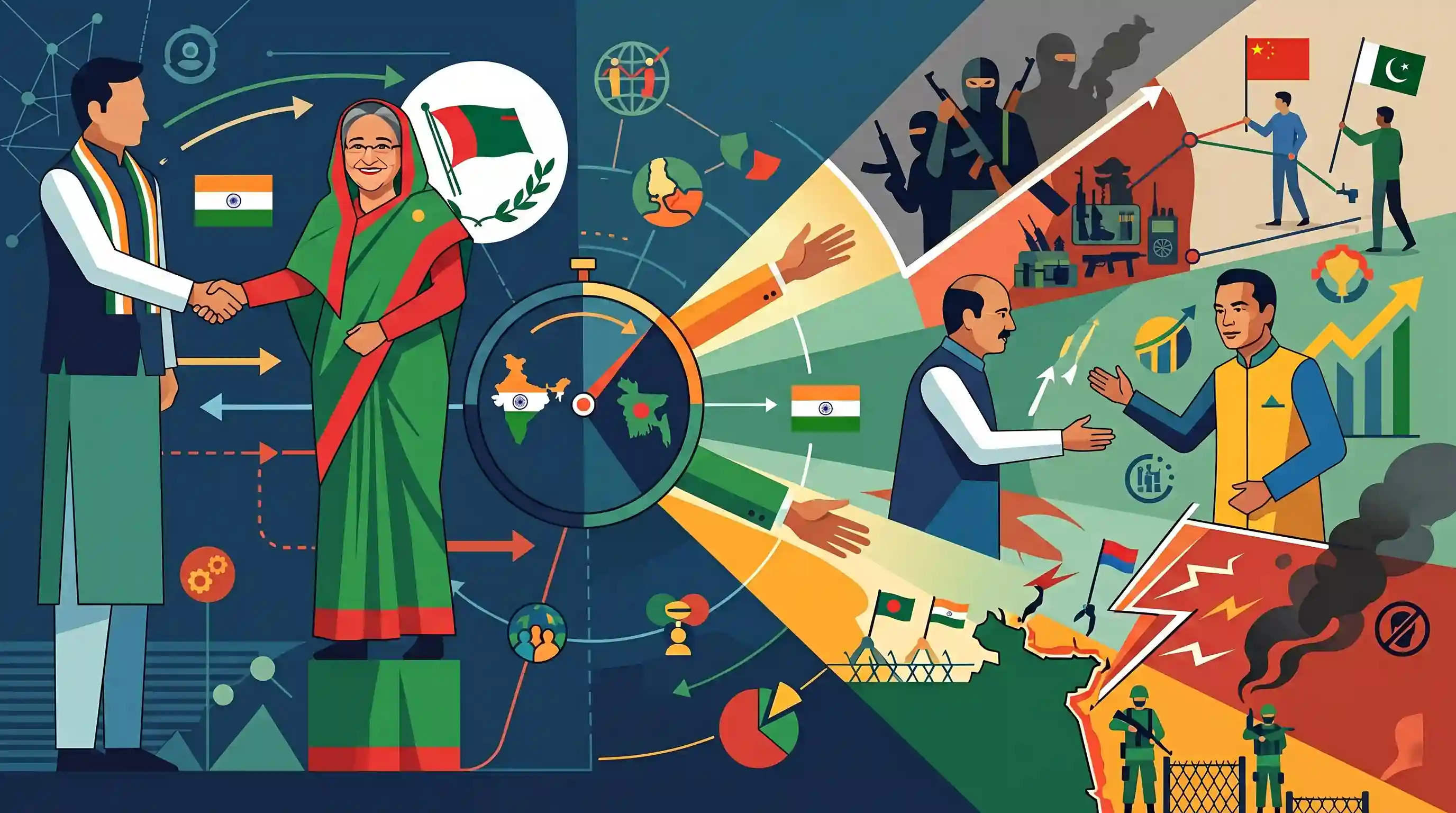
Why It Matters
Understanding India's diplomatic maneuvering in its immediate neighborhood is critical for GS Paper 2 (International Relations). The shift in strategy towards Bangladesh highlights the nuances of the 'Neighbourhood First' policy, the imperatives of political pragmatism in foreign affairs, and the intersection of domestic regime changes in neighboring countries with India's internal security and strategic interests.
Summary
The article analyzes a significant pragmatic shift in India's foreign policy towards Bangladesh following its recent political transition. Recognizing the changing power dynamics, the Indian government has initiated outreach to Tarique Rahman, the acting chairman of the Bangladesh Nationalist Party (BNP). This move marks a departure from New Delhi's historical reliance on Sheikh Hasina's Awami League and a recalibration of its 'Neighbourhood First' policy to engage with emerging power centers. However, normalizing relations remains highly challenging. Historical friction—stemming from the BNP's past accommodation of anti-India insurgent groups, its perceived pro-China and pro-Pakistan leanings, and its association with radical factions—continues to cast a shadow. While the initial contact represents diplomatic pragmatism, building substantive strategic trust will require navigating deep-rooted suspicions, border security concerns, and complex geopolitical realities in South Asia.
Key Points
- India has initiated diplomatic outreach to Tarique Rahman, signaling a pragmatic adjustment to the new political realities in Bangladesh post-Sheikh Hasina.
- Mending ties with the BNP is complicated by historical mistrust, as the party's 2001-2006 tenure saw anti-India insurgent groups operating from Bangladeshi soil.
- The BNP's perceived leanings towards China and Pakistan, along with its alliances with radical groups, remain significant concerns for India's internal and border security.
- The move reflects a recalibration of India's 'Neighbourhood First' policy, recognizing the need to engage with a broader spectrum of political actors rather than relying solely on the Awami League.
Important Terms
Neighbourhood First Policy

India's core foreign policy priority focusing on building stable, cooperative, and high-trust relationships with its immediate neighbors through connectivity, trade, and development assistance.
UPSC context
GS II (International Relations). Tests strategic shifts, regional stability, and management of bilateral ties with immediate neighbors.
Bangladesh Nationalist Party (BNP)
A major center-right political party in Bangladesh, currently led by Tarique Rahman. Historically seen as pro-Pakistan/China, it recently returned to power, prompting an Indian diplomatic reset.
UPSC context
GS II. Evaluates the impact of neighboring countries' internal political shifts on India’s strategic and security interests.
Awami League
A secular political party in Bangladesh led by Sheikh Hasina. Historically India's most trusted partner, it oversaw a period of unprecedented bilateral cooperation until its ouster in 2024.
UPSC context
GS II. Important for understanding historical ties, the 1971 Liberation War, and the challenges of regime-centric diplomacy.
Jamaat-e-Islami
The largest Islamist political party in Bangladesh. Historically allied with the BNP and opposed to the 1971 independence, its influence is viewed by India as a security risk.
UPSC context
GS III (Internal Security). Relevant to radicalization, cross-border terrorism, and the security of India’s sensitive border regions.
Tarique Rahman
Acting Chairman of the BNP and Prime Minister of Bangladesh (as of 2026). He advocates a "Bangladesh First" foreign policy, requiring pragmatic engagement from New Delhi.
UPSC context
GS II. Essential for identifying key regional leadership figures and the evolution of personal-level diplomacy in the neighborhood.
Siliguri Corridor
A narrow, 22km-wide land corridor in West Bengal connecting India's Northeast to the mainland. It is highly sensitive to security shifts or instability in neighboring Bangladesh.
UPSC context
GS III (Border Management). Tests knowledge of India's geographical vulnerabilities and the strategic importance of friendly border regimes.
Prelims Trap
India's diplomatic protocols strictly prohibit official engagement with opposition figures in neighboring countries.
India routinely engages with opposition leaders, military figures, and civil society in neighboring nations as standard diplomatic pragmatism to secure its strategic interests.
Static Concepts Connected
How does political instability in Bangladesh impact India's internal security?
- Safe Havens: Regimes hostile to India have historically allowed groups like ULFA and NSCN to operate from the Chittagong Hill Tracts.
- Porous Boundaries: The 4,096 km boundary facilitates illegal immigration, cattle smuggling, and arms trafficking when border cooperation breaks down.
- Extremism Spillover: The rise of right-wing outfits (e.g., Jamaat-e-Islami) risks cross-border radicalization and demographic anxieties in states like West Bengal and Assam.
What are the core pillars of India's 'Neighbourhood First' Policy?
- Non-reciprocity: Unilateral economic and developmental assistance without expecting equal returns, rooted in the Gujral Doctrine.
- Connectivity: Integrating the region through infrastructure, transit agreements, and energy grids (e.g., cross-border pipelines).
- Strategic Security: Ensuring neighbors deny safe havens to anti-India actors and limit adversarial external presence (like China).
Cross-Topic Patterns
Northeast Insurgency and Dhaka's Regime
The decline of Northeast insurgencies over the last decade was directly tied to Dhaka's crackdown on IIG camps, highlighting how India's internal security is strictly tethered to its neighborhood diplomacy.
China's strategic encirclement in South Asia
A pro-China BNP regime could accelerate Beijing's footprint in Bangladesh, forcing India to re-evaluate its maritime security in the Bay of Bengal and infrastructure investments like the Teesta river project.

Expect a 2026 Mains question linking the recalibration of 'Neighbourhood First' policy with internal security management in the Northeast.
Linked PYQs · 3
Linked PYQs · 3
- 2020MainsGS3
Analyze internal security threats and transborder crimes along Myanmar, Bangladesh and Pakistan borders including Line of Control (LoC). Also discuss the role played by various security forces in this regard.
- 2019MainsGS3
Cross-border movement of insurgents is only one of the several security challenges facing the policing of the border in North-East India. Examine the various challenges currently emanating across the India-Myanmar border. Also, discuss the steps to counter the challenges.
- 2015MainsGS2
Project 'Mausam' is considered a unique foreign policy initiative of the Indian Government to improve relationship with its neighbours. Does the project have a strategic dimension? Discuss.
