Counter-terrorism operations against communication network misuse
Source:Indian Express ↗
Why It Matters
The article provides a contemporary example of how communication networks (like SIM cards) are exploited by non-state actors for subversive activities. It is highly relevant for GS Paper 3, illustrating state counter-terrorism measures and the persistent internal security challenges in Jammu and Kashmir.
Summary
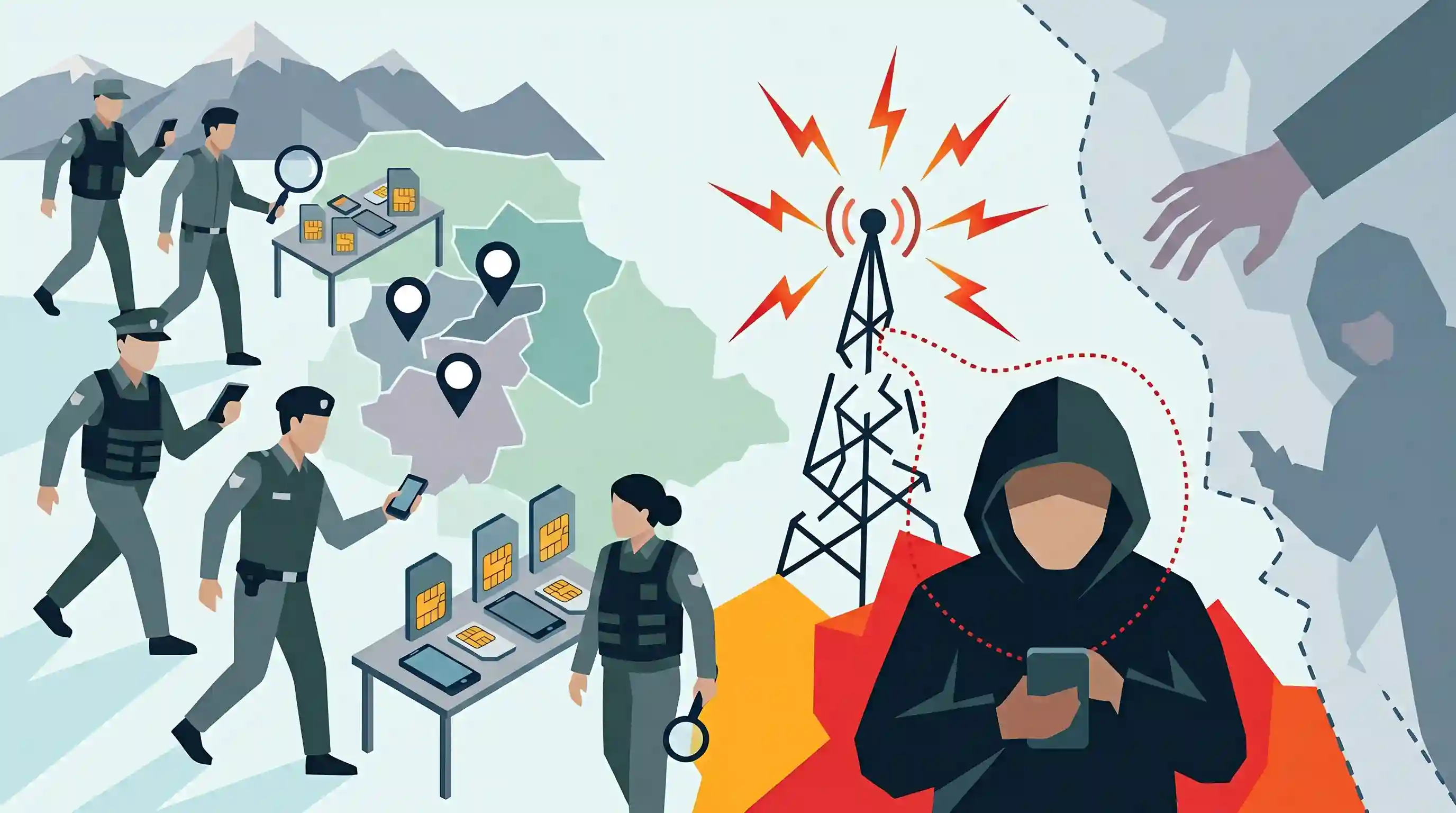
The Counter Intelligence Kashmir (CIK) recently conducted extensive searches across several districts in the Kashmir valley, focusing on the alleged misuse of mobile SIM cards by terror operatives and their associates. The raids, covering areas like Kulgam, Kunzer, and Shopian, aim to disrupt the communication channels used by non-state actors and anti-national elements to coordinate subversive activities, highlighting ongoing state efforts to tackle terrorism and internal security threats in the region.
Key Points
- Counter Intelligence Kashmir (CIK) conducted multi-district searches in the Kashmir valley regarding the misuse of mobile SIM cards.
- The operation targeted terror operatives, overground workers, and their associates using SIM cards to facilitate terror activities.
- The searches took place in locations including Kulgam, Kunzer, and Shopian.
- This action is part of broader counter-terrorism efforts to dismantle the communication networks used by anti-national elements in Jammu and Kashmir.
Important Terms
Counter Intelligence Kashmir (CIK)

The specialized investigative and intelligence-gathering wing of the Jammu and Kashmir Police. It focuses on disrupting terror ecosystems, tracking militant networks, and countering subversive activities in the region.
UPSC context
GS Paper 3: Internal Security. Tests knowledge of specialized state-level agencies and their role in neutralizing localized security threats.
Over Ground Workers (OGWs)
Individuals who do not join militant ranks as active combatants but provide essential logistical support, such as information, shelter, and facilitating communication (often via misused SIM cards).
UPSC context
GS Paper 3: Terrorism. Critical for understanding the 'ecosystem' of militancy and the challenges of asymmetric warfare in Jammu and Kashmir.
Internal Security Challenges through Communication Networks
The vulnerability of digital infrastructure (internet, mobile networks) to exploitation by criminals and terrorists for recruitment, radicalization, and coordinating attacks while maintaining anonymity.
UPSC context
GS Paper 3: Syllabus specific. Focuses on the intersection of technology and security, including cyber-terrorism and end-to-end encryption challenges.
Non-State Actors
Entities like terrorist organizations, extremist outfits, or insurgent groups that exert significant influence and power but lack the formal recognition or backing of a sovereign state.
UPSC context
GS Paper 3: Role of external state and non-state actors. Tests the ability to distinguish between formal warfare and proxy/clandestine threats.
Digital Tradecraft
The set of sophisticated online techniques used by terror groups—including encrypted apps, burner SIMs, and anonymous servers—to hide identities and plan operations.
UPSC context
GS Paper 3: Cybersecurity/Terrorism. A modern term describing the evolving nature of terror logistics in the digital age.
Unlawful Activities (Prevention) Act (UAPA)
India's primary anti-terror law designed for the more effective prevention of certain unlawful activities of individuals and associations and for dealing with terrorist activities.
UPSC context
GS Paper 2 & 3: Governance and Security. Tests understanding of the legal framework used to prosecute terror-linked cases like SIM misuse.
Prelims Trap
Obtaining a SIM card through fraud or impersonation is a bailable offence under Indian telecommunication laws.
The Telecommunications Act 2023 explicitly makes obtaining SIM cards via fraud, cheating, or impersonation a cognizable and non-bailable offence to deter terror financing and communication.
Static Concepts Connected
Who are Over Ground Workers (OGWs) in the context of J&K terrorism?
- Logistical Support: They provide crucial non-combat support including safe houses, terror financing, and transportation for weapons.
- Intelligence Gathering: They monitor security force movements and relay actionable intelligence to active militants using encrypted channels.
- Radicalization & Recruitment: They aid in the ideological radicalization and recruitment of local youth without participating in direct armed combat.
What are SIM boxes and how are they misused for security threats?
- Routing Mechanism: Devices that hold multiple SIM cards to route international VoIP calls as local cellular traffic, evading tariffs and lawful interception.
- Anonymity: They effectively mask the original identity and geographic location of the caller, making them preferred tools for cybercrime and terror syndicates.
- Legal Status: Their use is strictly illegal in India under new telecom cyber security rules, and agencies detect them via abnormal cell-tower signaling.
Cross-Topic Patterns
Telecom Act 2023 & Internal Security
The Telecommunications Act 2023 replaces archaic telegraph laws, explicitly addressing national security through biometric verification mandates and stringent penalties for digital identity fraud.
OGWs and UAPA Individual Terrorist tag
"White-collar" terror modules and Over Ground Workers (OGWs) providing logistical or digital support can now be targeted individually under the Unlawful Activities (Prevention) Act 2019 amendments.

Prelims 2026 could feature a multi-statement question on the Telecommunications Act 2023, specifically its SIM fraud and biometric rules.
Linked PYQs · 4
Linked PYQs · 4
- 2025MainsGS3
Terrorism is a global scourge. How has it manifested in India? Elaborate with contemporary examples. What are the counter measures adopted by the State? Explain.
- 2016MainsGS3
Use of Internet and social media by non-state actors for subversive activities is a major security concern. How have these been misused in the recent past? Suggest effective guidelines to curb the above threat.
- 2021MainsGS3
Analyse the multidimensional challenges posed by external state and non-state actors, to the internal security of India. Also discuss measures required to be taken to combat these threats.
- 2024MainsGS3
Social media and encrypting messaging services pose a serious security challenge. What measures have been adopted at various levels to address the security implications of social media? Also suggest any other remedies to address the problem.
