Addressing Legitimate Aspirations and Deepening Mistrust in Ladakh
Source:The Hindu ↗
Why It Matters
Ladakh's demands present a classic case study of balancing national security in sensitive border regions with the democratic decentralization and constitutional protection of tribal populations. It touches upon crucial UPSC topics like the Sixth Schedule, internal security, and Centre-State relations.
Summary
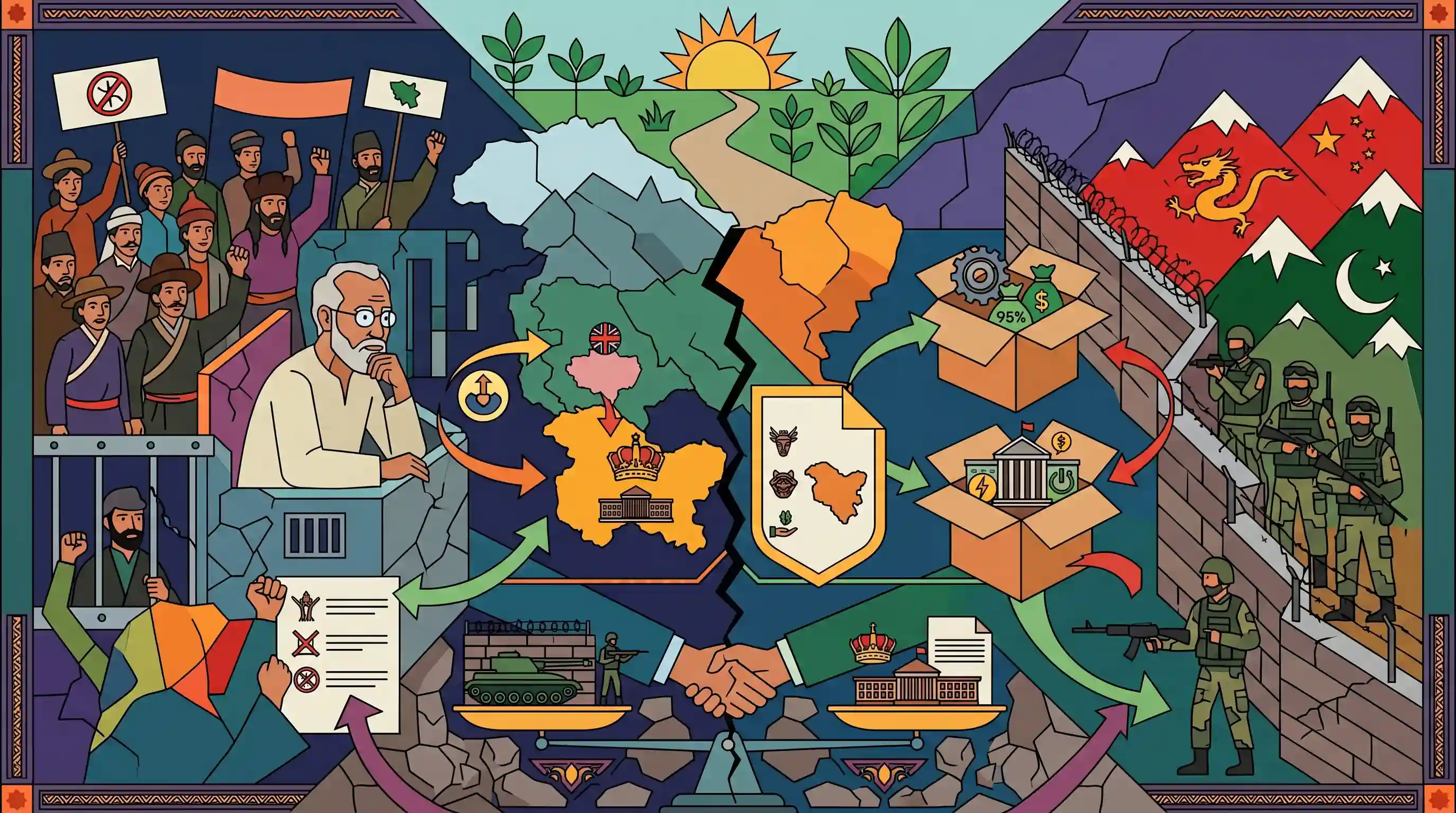
The article examines the renewed unrest in Ladakh fueled by unmet demands for Statehood and inclusion under the Sixth Schedule of the Constitution. Despite the Centre offering substantial administrative and economic concessions—such as 95% job reservations and enhanced powers for Hill Development Councils—groups like the LAB and KDA continue to push for full constitutional safeguards. The arrest of prominent figures like Sonam Wangchuk has deepened local mistrust. The editorial cautions that while the Centre prioritizes security given Ladakh's volatile borders with China and Pakistan, true stability can only be achieved by addressing the legitimate democratic and political aspirations of the local population.
Key Points
- Violent protests resurfaced in Ladakh after the hospitalization of elderly hunger strikers, exacerbating an already fragile situation.
- The core demands of the Leh Apex Body and Kargil Democratic Alliance include Statehood, Sixth Schedule inclusion, and greater political representation.
- The Union government had previously offered compromises like 95% job reservation, language recognition, and greater financial devolution to Hill Development Councils, but refused full Sixth Schedule status.
- The administration suspects foreign instigation behind the protests, citing Ladakh's strategic vulnerability on the borders of Pakistan and China.
- The editorial emphasizes that internal security in a frontline border state is best maintained by honoring the legitimate democratic and constitutional aspirations of the local populace, rather than merely using heavy-handed security measures.
Important Terms
Sixth Schedule of the Constitution

Provides for the administration of tribal areas in Assam, Meghalaya, Tripura, and Mizoram via Autonomous District Councils with legislative, judicial, and executive powers. Ladakh seeks inclusion to protect its tribal identity and ecology.
UPSC context
GS Paper 2: Polity and Governance. Tests understanding of federalism, tribal rights, and special constitutional provisions for regional autonomy.
Leh Apex Body (LAB)
A powerful amalgam of socio-political, religious, and student organizations in Leh. It leads the agitation for Ladakh's statehood, Sixth Schedule inclusion, and additional parliamentary representation.
UPSC context
GS Paper 2: Pressure Groups and Formal/Informal Associations. Tests the role of regional interest groups in shaping national policy.
Kargil Democratic Alliance (KDA)
A coalition of political and religious groups representing the Kargil district. It collaborates with the Leh Apex Body to demand constitutional safeguards and democratic representation for the Union Territory.
UPSC context
GS Paper 2: Federal Structure and Regional Aspirations. Tests dynamics of inter-district cooperation in conflict resolution and governance.
Ministry of Home Affairs (MHA)
The central ministry responsible for the administration of Union Territories and internal security. It manages the high-level dialogue with Ladakhi groups regarding their four-point constitutional agenda.
UPSC context
GS Paper 2: Government Policies and Interventions. Tests understanding of the executive’s role in managing Union Territories and internal security.
Ladakh Autonomous Hill Development Council (LAHDC)
Statutory bodies (LAHDC Leh and Kargil) created under a 1995 Act to provide local self-governance. While they manage development, they lack the full legislative powers found in Sixth Schedule councils.
UPSC context
GS Paper 2: Local Self-Government. Tests models of decentralization and the limitations of statutory vs. constitutional bodies in India.
Statehood for Ladakh
The demand for Ladakh to transition from a Union Territory without a legislature to a full state, granting it an elected assembly and greater political autonomy.
UPSC context
GS Paper 2: Reorganization of States. Tests knowledge of Article 3 and the evolution of India's federal structure.
Prelims Trap
"The Ladakh Autonomous Hill Development Councils (LAHDC) exercise legislative powers over land and forests under the Sixth Schedule."
LAHDCs are statutory bodies created by a 1995 Act with only executive/financial powers, unlike Sixth Schedule ADCs which possess constitutional backing and independent legislative autonomy.
Static Concepts Connected
What differentiates Sixth Schedule ADCs from Ladakh's existing Hill Councils?
- Constitutional vs Statutory: ADCs are constitutional bodies under Article 244(2). LAHDCs are statutory bodies established under the LAHDC Act of 1995.
- Legislative Autonomy: ADCs can enact laws on land, forests, and customs. LAHDCs lack legislative autonomy, possessing only executive and financial powers over local development.
Which states are currently administered under the Sixth Schedule of the Constitution?
- AMTM States: The Schedule applies exclusively to specific tribal areas in Assam, Meghalaya, Tripura, and Mizoram (AMTM states).
- Constitutional Basis: It operates under Articles 244(2) and 275(1) to protect tribal populations from exploitation and preserve their unique socio-cultural practices.
Cross-Topic Patterns
Border Management & Local Alienation
Disaffection in strategic border areas like Ladakh creates internal security vulnerabilities that adversaries (China and Pakistan) can exploit through grey-zone tactics and intelligence gathering.
Statehood vs UT Administration
Ladakh's demand for a legislative assembly reflects the democratic deficit inherent in Union Territories managed solely by centrally appointed administrators under Article 239.

Expect a Prelims question contrasting the legislative powers of Sixth Schedule ADCs with statutory bodies like Ladakh's Hill Councils.
Linked PYQs · 4
Linked PYQs · 4
- 2024MainsGS3
India has a long and troubled border with China and Pakistan fraught with contentious issues. Examine the conflicting issues and security challenges along the border. Also give out the development being undertaken in these areas under the Border Area Development Programme (BADP) and Border Infrastructure and Management (BIM) Scheme.
- 2022MainsGS2
“While the national political parties in India favour centralisation, the regional parties are in favour of State autonomy.” Comment.
- 2022PrelimsGS1
If a particular area is brought under the Fifth Schedule of the Constitution of India, which one of the following statements best reflects the consequence of it ?
- 2019PrelimsGS1
Under which Schedule of the Constitution of India can the transfer of tribal land to private parties for mining be declared null and void?
