Jeypore Ground Gecko Habitat Threat from Mining
Source:The Hindu ↗
Why It Matters
It highlights the ecological conflicts between mining/industrial projects and the protection of endemic, micro-endemic species in sensitive ecosystems like the Eastern Ghats.
Summary
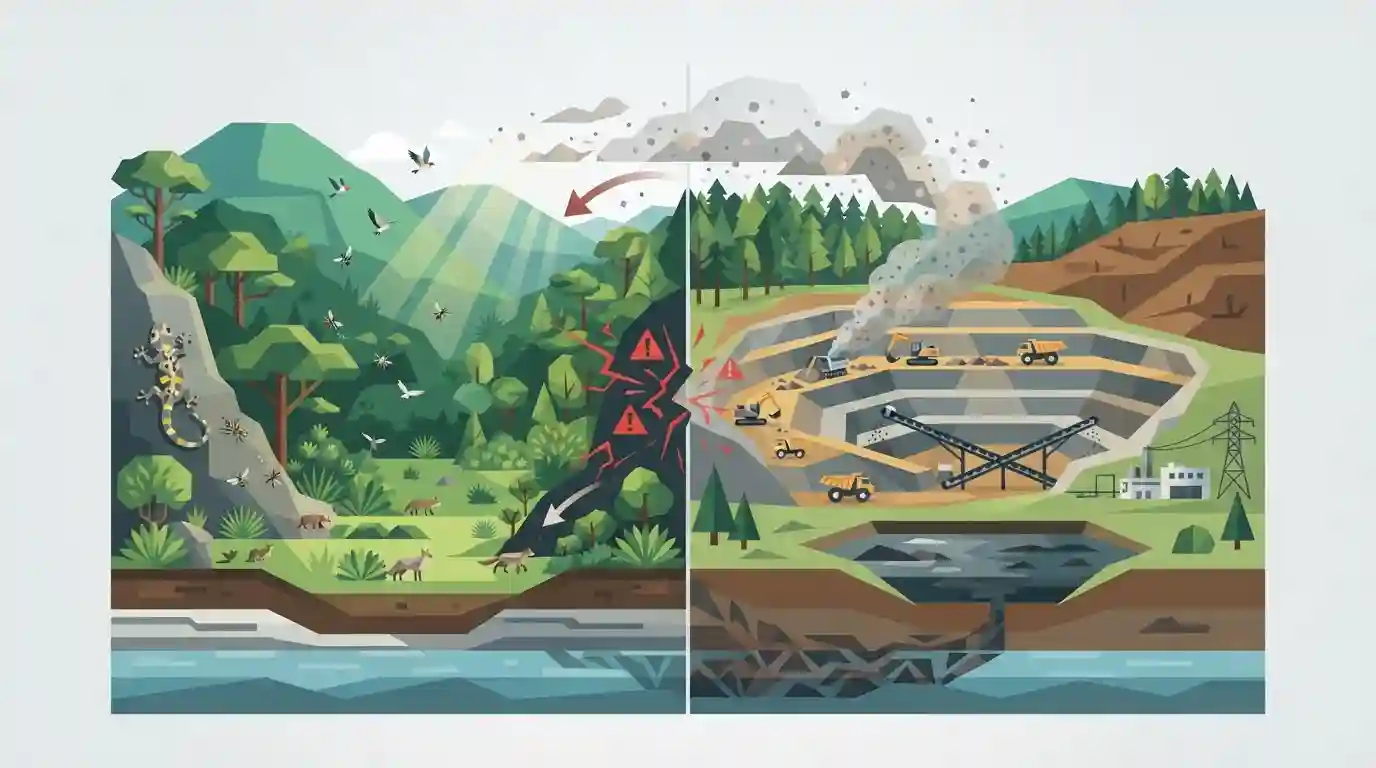
A proposed mining project in Odisha threatens the rare and endemic Jeypore ground gecko, drawing attention to the environmental and biodiversity risks associated with mining in the Eastern Ghats.
Key Points
- A proposed mining project in Odisha threatens the habitat of the rare Jeypore ground gecko (Cyrtodactylus jeyporensis), an endemic reptile found in the Eastern Ghats.
- The Jeypore ground gecko is a rare, nocturnal species known from only a few fragmented locations, making it extremely vulnerable to habitat destruction.
- Environmentalists and researchers have raised concerns over the ecological clearance of industrial and mining projects in ecologically sensitive regions of the Eastern Ghats.
- The case highlights the constant tension between economic development/mineral extraction and biodiversity conservation in India.
Important Terms
Wildlife Protection Act

India's principal legislation for the protection of wild animals, birds, and plants, providing varying degrees of statutory protection across its schedules to curb poaching and illegal wildlife trade.
UPSC context
GS Paper III (Environment & Biodiversity). Tests statutory frameworks for wildlife conservation, legal schedules, and species protection in India.
IUCN
The International Union for Conservation of Nature is a global authority on the status of the natural world and measures to safeguard it, maintaining the comprehensive Red List of Threatened Species.
UPSC context
GS Paper III (Environment & Biodiversity). Evaluates international biodiversity metrics, conservation statuses, and criteria for threatened flora and fauna.
Supreme Court of India
The apex judicial body of India, empowered to interpret the Constitution and adjudicate public interest litigations related to environmental degradation, wildlife conservation, and forest rights.
UPSC context
GS Paper II (Polity & Governance) and GS Paper III (Environment). Tests judicial activism, environmental jurisprudence, and balancing development with ecology.
Static Concepts Connected
What are the key legal classifications and conservation statuses of the Jeypore ground gecko?
- IUCN Status: IUCN Status: Classified as Endangered due to its highly restricted and fragmented distribution in the Eastern Ghats.
- WPA Schedule: Wildlife Protection Act: Listed under Schedule I of India's Wild Life (Protection) Act, 1972, granting it maximum legal protection.
- CITES Appendix: CITES: Included under Appendix II to regulate international trade and prevent over-exploitation.
Cross-Topic Patterns
Endemic Reptiles + Wildlife Act Schedules
Endemic Eastern Ghats reptiles illustrate how fragmented micro-habitats outside protected areas evade traditional conservation frameworks, mirroring challenges seen with Western Ghats amphibians.

Endemic species + Wildlife Protection Act Schedule I status + IUCN status will be tested in a matching or multi-statement question.
Linked PYQs · 3
Linked PYQs · 3
- 2020PrelimsGS1
With reference to India's biodiversity, Ceylon frogmouth, Coppersmith barbet, Gray-chinned minivet and White-throated redstart are
- 2011PrelimsGS1
The “Red Data Books” published by the International Union for Conservation of Nature and Natural Resources (IUCN) contain lists of 1. Endemic plant and animal species present in the biodiversity hotspots. 2. Threatened plant and animal species. 3. Protected sites for conservation of nature and natural resources in various countries. Select the correct answer using the codes given below:
- 2025MainsGS3
Mineral resources are fundamental to the country's economy and these are exploited by mining. Why is mining considered an environmental hazard? Explain the remedial measures required to reduce the environmental hazard due to mining.
