Telangana Agriculture Becomes Dependent on Migrant Farm Labour
Source:The Hindu ↗
Why It Matters
The shifting dynamics of agricultural labour and the rise of rural-to-rural migration are important for understanding contemporary challenges in Indian agriculture, labour economics, and social welfare policies for migrant workers.
Summary
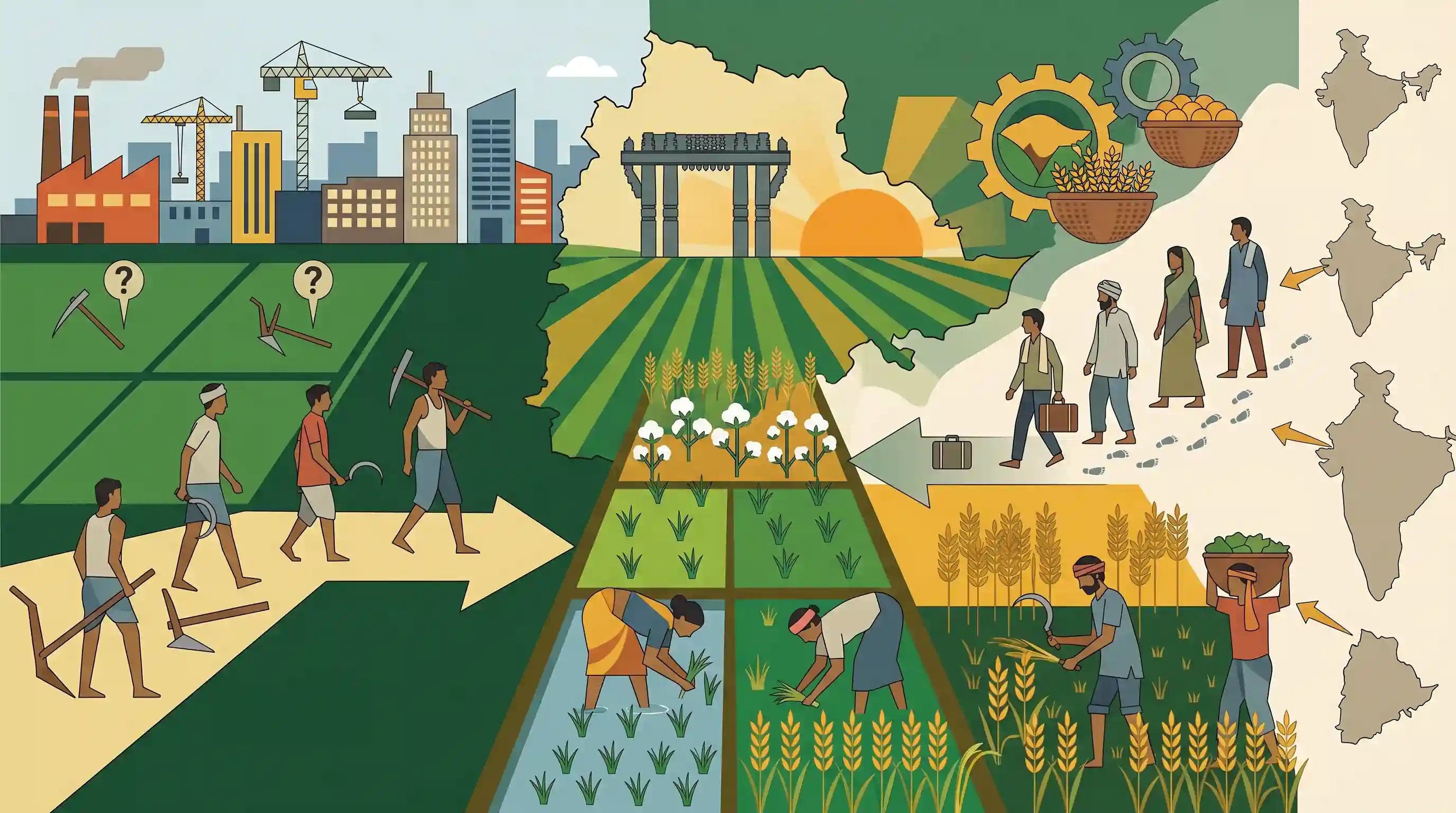
The article explores the growing dependence of Telangana's agricultural sector on migrant farm workers. As local labourers increasingly shift to non-agricultural jobs or migrate to urban areas, farmers in Telangana are relying on internal migrants from other states to perform essential agricultural tasks such as sowing and harvesting. This phenomenon underscores shifting rural labour dynamics, highlighting the prevalence of rural-to-rural migration to address farm labour shortages and the implications for agricultural productivity and migrant welfare.
Key Points
- Telangana's agricultural sector is increasingly reliant on migrant labour to meet its workforce demands.
- Migrants from other states are filling the critical gap in farm activities like sowing, weeding, and harvesting due to a shortage of local agricultural labour.
- This trend reflects the changing dynamics of rural employment, where local workers are shifting to non-agricultural sectors or migrating to urban areas.
- The situation highlights broader patterns of rural-to-rural internal migration driven by regional agricultural disparities.
Prelims Trap
Rural-to-urban migration constitutes the largest share of internal migration in India.
Rural-to-rural migration actually accounts for the highest percentage (approx 54% per 2011 Census), driven heavily by marriage and agricultural labor demands, not rural-to-urban.
Static Concepts Connected
What are the primary streams and drivers of internal migration in India (Census 2011)?
- Dominant Stream: Rural-to-Rural is the highest volume stream (approx 54% of total internal migrants), significantly dwarfing rural-to-urban movements.
- Gendered Drivers: Marriage is the overwhelming reason for female migration, while employment and business constitute the largest drivers for male migration.
How does the OSH Code 2020 alter the legal framework for inter-state migrant workers?
- Expanded Definition: The Code includes individuals who migrate on their own (self-relocated), moving beyond the 1979 Act which only covered those recruited through contractors.
- Welfare Portability: It mandates the portability of Public Distribution System (PDS) benefits via One Nation One Ration Card and construction worker cess benefits across states.
Cross-Topic Patterns
Irrigation projects driving demographic pulls
Mega-projects like Kaleshwaram expand water-intensive paddy cropping. This creates massive seasonal labor demand that local workforces cannot meet, triggering inter-state rural-to-rural migration.
Lewis Model in Indian Agriculture
Local laborers shifting to non-farm sectors reflects a Lewis structural transition. However, the farm labor vacuum relies on cheap inter-state migration rather than immediate capital-intensive mechanization.

Prelims 2026 will likely test the dominance of rural-to-rural migration paired with OSH Code 2020 definitions for self-relocated migrants.
Linked PYQs · 1
Linked PYQs · 1
- 2015MainsGS1
Discuss the changes in the trends of labour migration within and outside India in the last four decades.
