Big tech restructuring and capital reallocation for AI infrastructure
Source:The Hindu ↗
Why It Matters
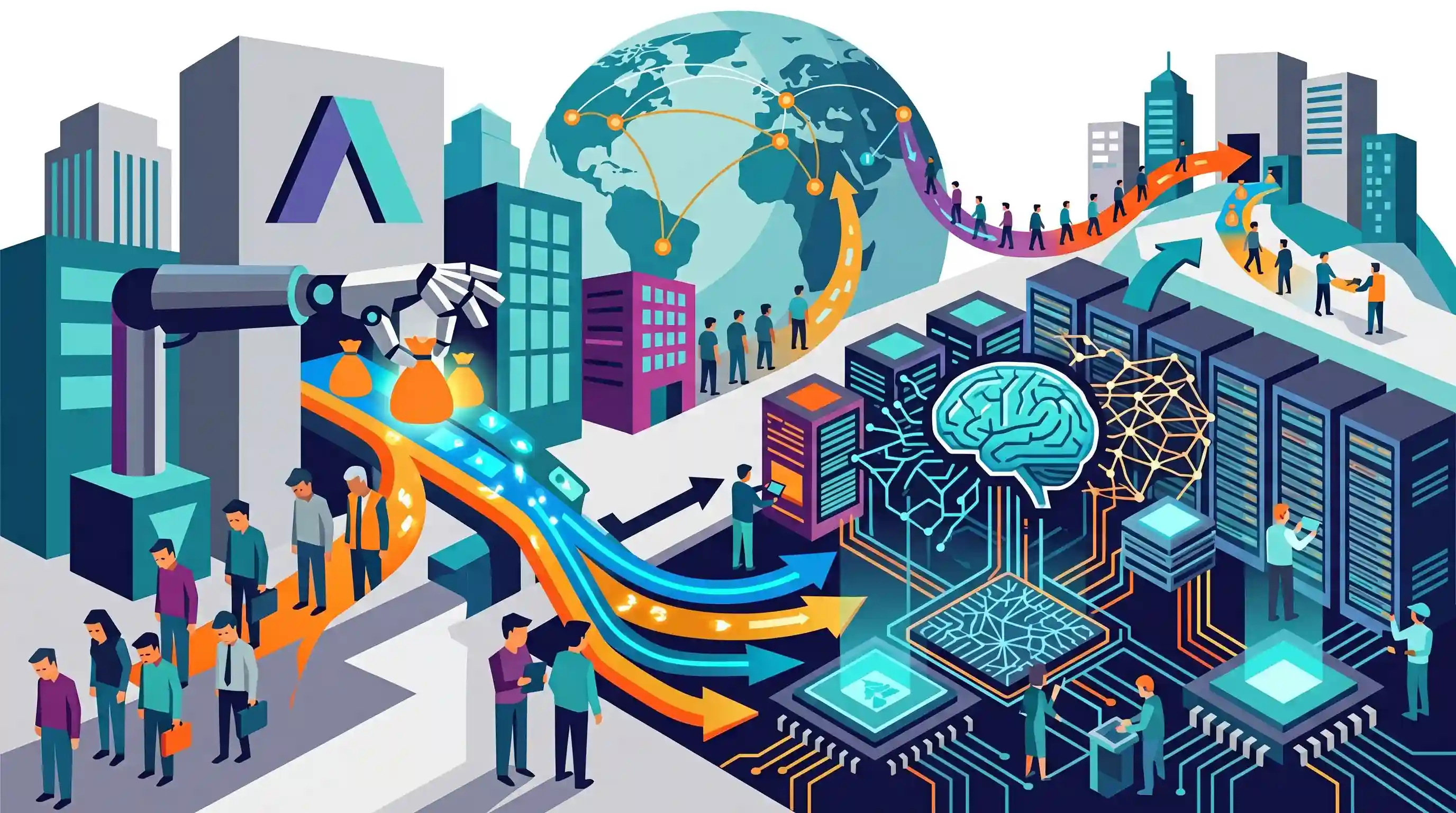
This article illustrates a key macroeconomic friction of the AI revolution: 'capital reallocation-driven displacement'. Rather than directly replacing workers with AI tools, firms are laying off human labor to redirect capital toward expensive AI infrastructure (GPUs, data centers). This structural shift has profound implications for service-exporting nations like India, which must prepare for shifts in global IT demand and the changing nature of tech employment.
Summary
Microsoft is laying off 4,800 workers (2.1% of its workforce) as part of a broader corporate restructuring to free up capital for massive Artificial Intelligence (AI) infrastructure investments [1]. Despite strong cloud demand, the high cost of building AI data centers and rising hardware prices have squeezed margins [1]. This reflects a sector-wide trend where global tech giants are managing down headcounts to fund capital-intensive AI projects, illustrating the indirect structural impacts of disruptive technologies on global labor markets [1].
Key Points
- Microsoft is laying off approximately 4,800 employees (2.1% of its workforce), targeting its commercial business and Xbox gaming divisions, as part of a restructuring wave across Big Tech.
- The layoff wave is driven by a massive reallocation of capital toward Artificial Intelligence (AI) infrastructure, with collective tech industry AI spending projected to exceed $700 billion in 2026.
- Microsoft's capital expenditure for 2026 is projected at $190 billion, primarily to build data centers and support cloud-computing demand for Azure and OpenAI models, squeezing profit margins and cash flow.
- The Xbox division is undergoing a major reset due to high hardware subsidies ($20 billion over five years), soft console demand, and rising memory chip prices driven by intense data center demand.
- Although Microsoft notes that these jobs are not being directly replaced by AI, the structural shift highlights how AI investment acts as a capital sink, crowding out human labor costs in non-core/routine business units.
Important Terms
Microsoft

A global technology corporation specializing in software, cloud computing, and AI infrastructure. Its business restructuring and capital allocation represent shifts in global tech employment and digital market dynamics.
UPSC context
GS Paper III: S&T and Economy; tests understanding of multinational corporate influences on domestic technology policy and employment.
Amazon
A multinational technology giant focusing on e-commerce, cloud computing, and AI. Its massive workforce and capital investments set trends in global supply chains, cloud infrastructure, and job displacement.
UPSC context
GS Paper III: Indian Economy; tests knowledge of digital monopolies, e-commerce regulatory frameworks, and labor impacts of automation.
Meta
A leading technology conglomerate developing social networking platforms, virtual reality, and advanced AI systems. It influences global data governance, communication standards, and tech-sector labor allocation.
UPSC context
GS Paper III: S&T; tests issues relating to cyber security, data privacy, social media regulation, and digital economies.
OpenAI
An artificial intelligence research organization that creates powerful generative AI models. Its developments drive global S&T competition, corporate partnerships, and structural changes in technology-driven labor markets.
UPSC context
GS Paper III: S&T; tests developments in generative AI, ethical governance of technology, and automation's impact on employment.
Prelims Trap
All data centres in India, regardless of capacity, have been granted infrastructure status to boost cloud-computing.
Only data centres with a minimum IT power capacity of 5 MW qualify for infrastructure status under the 2022 harmonized master list.
Static Concepts Connected
What are the structural differences between frictional and structural unemployment?
- Structural Unemployment: Caused by long-term shifts in the economy (like AI adoption) creating a fundamental mismatch between worker skills and market demand.
- Frictional Unemployment: Temporary mismatch occurring when workers are in-between jobs, relocating, or searching for better opportunities in a functional labor market.
- Policy Remedies: Structural requires deep reskilling and education reforms, while frictional is resolved through improved job-matching platforms and information flows.
What is 'Jobless Growth' and its primary driver?
- Macroeconomic Definition: An economic phenomenon where GDP and productivity expand while employment opportunities stagnate or decline.
- Capital Deepening: Driven by firms investing heavily in capital/technology (like AI) rather than labor, increasing output per worker without hiring more staff.
Cross-Topic Patterns
Data center growth + green energy grids
Massive AI computation demands exponential energy, directly tying tech capital expenditure to India's 500 GW non-fossil energy targets and power grid stability.
AI displacement + demographic dividend
Corporate AI substitution challenges India's strategy to employ its massive youth population, demanding a shift from basic IT-service skills to advanced cognitive tasks.

Mains 2026 is likely to evaluate the economic trade-offs of AI-driven capital deepening versus employment growth in the service sector.
Linked PYQs · 2
Linked PYQs · 2
- 2023MainsGS3
Most of the unemployment in India is structural in nature. Examine the methodology adopted to compute unemployment in the country and suggest improvements.
- 2022MainsGS3
Economic growth in the recent past has been led by increase in labour productivity." Explain this statement. Suggest the growth pattern that will lead to creation of more jobs without compromising labour productivity.
