Microplastic pollution risks to marine ecosystems and human health
Source:The Hindu ↗
Why It Matters
Microplastics are a critical, invisible environmental threat bridging marine ecology and human health. The topic is highly relevant for UPSC, as evidenced by recent Prelims questions on microbeads and hidden plastics in everyday items (like chewing gum and cigarette butts), and fits into GS3's focus on pollution and degradation.
Summary
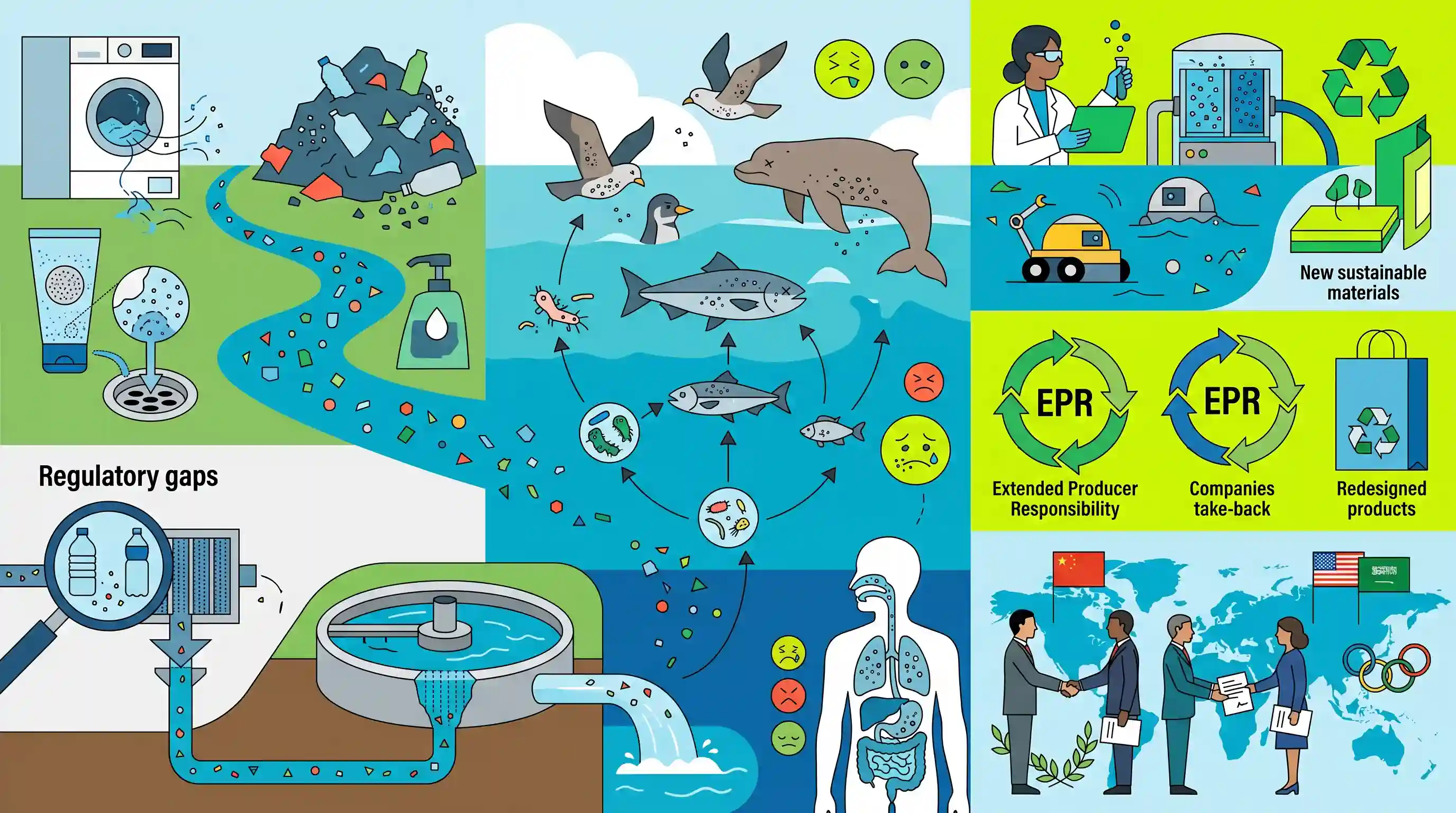
The article underscores the escalating crisis of microplastic pollution, detailing how these pervasive tiny particles threaten marine ecosystems, biodiversity, and human health. It outlines the various sources of microplastics, from the breakdown of larger debris to synthetic microfibers and cosmetic microbeads. The discussion highlights significant regulatory gaps, noting that current waste management policies primarily target macro-plastics while failing to adequately address microplastic contamination at the source or during wastewater treatment. Addressing this complex environmental menace requires a comprehensive strategy encompassing technological innovations, enhanced corporate accountability through Extended Producer Responsibility (EPR), and proactive engagement in international environmental treaties.
Key Points
- Microplastics (particles smaller than 5mm) are ubiquitous in the environment, contaminating oceans, terrestrial ecosystems, and the human food chain.
- They originate from primary sources like microbeads in cosmetics and secondary sources such as the degradation of larger plastic waste, synthetic textiles, and tire wear.
- Marine organisms ingest these particles, leading to bioaccumulation of toxic chemicals that eventually reach humans, potentially causing cellular damage and endocrine disruption.
- Existing regulatory frameworks often exhibit gaps regarding microplastics, heavily focusing on macro-plastics and single-use plastics rather than preventing micro-level shedding and filtration.
- Tackling the issue requires advanced wastewater treatment technologies, stringent Extended Producer Responsibility (EPR) norms, and robust global cooperation through agreements like the proposed Global Plastics Treaty.
Important Terms
Plastic Waste Management (PWM) Rules

Regulatory framework (notified 2016, amended 2022/2024) managing India's plastic waste through source segregation, recycling, and a ban on specific single-use plastics to mitigate environmental degradation.
UPSC context
GS Paper 3: Environmental Pollution & Degradation. Tests knowledge of domestic environmental governance and waste management strategies.
Global Plastics Treaty
A proposed legally binding international agreement negotiated under UNEP to end plastic pollution by addressing the full lifecycle of plastics, from production and design to disposal.
UPSC context
GS Paper 2 & 3: International Relations and Conservation. Reflects global environmental diplomacy and transboundary pollution efforts.
Extended Producer Responsibility (EPR)
Policy approach making producers financially and/or physically responsible for a product's entire lifecycle, especially post-consumer collection and recycling, to promote a circular economy.
UPSC context
GS Paper 3: Environment/Economy. A core principle in India's waste management rules (Plastic, E-waste, Batteries).
Environment Protection Act (EPA), 1986
India’s "umbrella" legislation enacted after the Bhopal tragedy to protect and improve the environment, providing a legal framework for central coordination of environmental activities.
UPSC context
GS Paper 2 & 3: Acts/Policies and Conservation. Foundational law for most environmental regulations in India.
Central Pollution Control Board (CPCB)
Statutory body (est. 1974) under the MoEF&CC responsible for setting environmental standards, monitoring pollution levels, and enforcing environmental laws across India.
UPSC context
GS Paper 2 & 3: Statutory Bodies and Environmental Monitoring. Tests understanding of regulatory enforcement mechanisms.
United Nations Environment Programme (UNEP)
The leading global environmental authority that sets the global environmental agenda and coordinates the United Nations' environmental activities, including the Global Plastics Treaty.
UPSC context
GS Paper 2: International Organizations. Tests awareness of global institutional roles in environmental conservation.
Prelims Trap
All microplastics found in marine ecosystems are secondary microplastics formed by the breakdown of larger plastic debris.
False. Microplastics also originate directly from primary sources like cosmetic microbeads, synthetic textiles, and industrial scrubbers before ever entering water bodies.
Static Concepts Connected
How is Extended Producer Responsibility (EPR) implemented for plastics in India?
- Applicability: Mandates Producers, Importers, and Brand Owners (PIBOs) to manage the post-consumer lifecycle of their plastic packaging waste.
- Market mechanism: Allows the generation, purchase, and sale of EPR certificates via a centralized CPCB portal to meet environmental targets.
- Categorization: Classifies plastics into four distinct categories: rigid, flexible, multi-layered, and compostable plastics, each with specific targets.
What distinguishes Bioaccumulation from Biomagnification in ecological terms?
- Bioaccumulation: The gradual build-up of toxins (like microplastics or heavy metals) within a single organism's tissues over its entire lifespan.
- Biomagnification: The progressive increase in toxic concentrations at successively higher trophic levels as predators consume contaminated prey in a food web.
Cross-Topic Patterns
Microplastics + Ocean Gyres
Accumulation of marine microplastics is driven by ocean currents and gyres (like the Great Pacific Garbage Patch), directly linking marine pollution to static physical geography and oceanography.
Microplastics + Endocrine Disruptors
Microplastics act as vectors for PFAS (forever chemicals) causing endocrine disruption, connecting environmental degradation directly to human biology, fertility issues, and public health concerns.

Expect a matched-pair question on 'Primary vs Secondary Microplastics' or specific provisions of the UN Global Plastics Treaty in 2026.
Linked PYQs · 4
Linked PYQs · 4
- 2019PrelimsGS1
Why is there a great concern about the 'microbeads' that are released into environment?
- 2024PrelimsGS1
Consider the following statements : Statement-I: Many chewing gums found in the market are considered a source of environmental pollution. Statement-II : Many chewing gums contain plastic as gum base. Which one of the following is correct in respect of the above statements?
- 2025PrelimsGS1
Consider the following: I. Cigarette butts II. Eyeglass lenses III. Car tyres How many of them contain plastic?
- 2024MainsGS3
Industrial pollution of river water is a significant environmental issue in India. Discuss the various mitigation measures to deal with this problem and also the government's initiatives in this regard.
