Microplastics and chemical contamination in Delhi Yamuna River study
Source:The Hindu ↗
Why It Matters
This study highlights the growing menace of microplastic and chemical pollution in urban river systems like the Yamuna, directly impacting environmental degradation, water security, and public health, which is central to the UPSC GS-3 syllabus on conservation and pollution control.
Summary
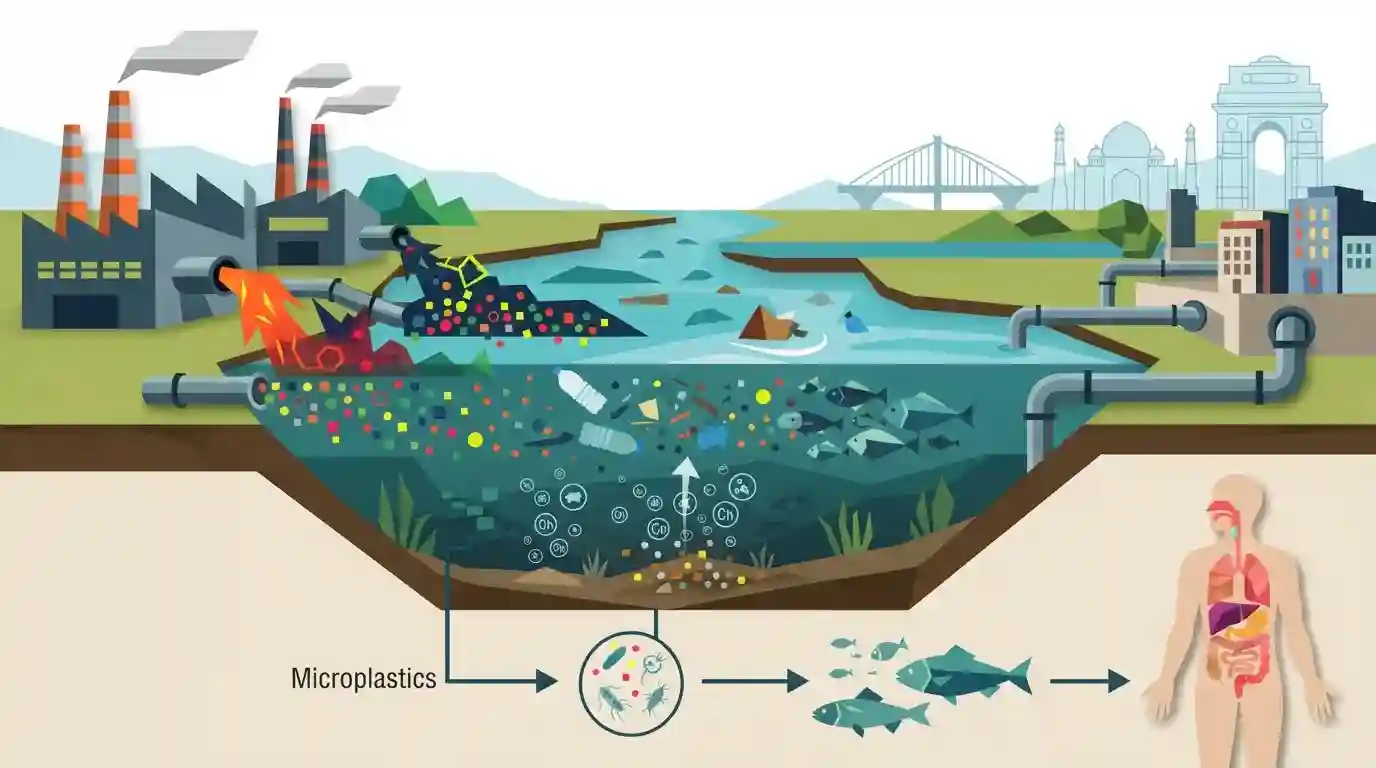
A recent study reveals that Delhi's Yamuna River is heavily contaminated with microplastics and a hazardous mix of chemical pollutants. The research underscores how plastic particles act as carriers for toxic substances, raising serious concerns regarding urban river health, industrial effluent management, and public health risks in India.
Key Points
- A recent study on Delhi's Yamuna River highlights severe contamination by microplastics combined with a cocktail of hazardous chemicals.
- Microplastics act as vectors, absorbing and transporting toxic heavy metals and organic pollutants through aquatic ecosystems.
- The study points to inadequate wastewater treatment and untreated industrial effluents as primary drivers of plastic and chemical pollution in urban rivers.
- Such contamination poses severe ecological and public health risks, entering the food chain and threatening aquatic biodiversity.
Important Terms
Microplastics

Tiny plastic fragments less than 5 millimeters in size that pollute aquatic and terrestrial ecosystems, often acting as vectors carrying toxic chemical pollutants and pharmaceutical residues.
UPSC context
UPSC Prelims/Mains (GS Paper III - Environment & Pollution): Tests knowledge of emerging pollutants, environmental degradation, and impacts on freshwater ecosystems.
Industrial Effluent
Wastewater and liquid waste discharged from manufacturing, processing, or industrial plants into natural water bodies, frequently carrying heavy metals and hazardous chemicals.
UPSC context
UPSC Mains (GS Paper III - Environmental Pollution & Degradation): Evaluates policies, regulations, and challenges regarding industrial pollution control in Indian rivers.
Yamuna Action Plan
A major multi-phase initiative launched by the Government of India with international financial assistance to clean and restore the heavily polluted Yamuna River.
UPSC context
UPSC Prelims/Mains (GS Paper III - Conservation): Important for questions on river rejuvenation programs, urban waste management, and governmental interventions.
Prelims Trap
Microplastics act solely as physical choking hazards for aquatic life without chemically interacting with other pollutants in the water column.
Aspirants often assume microplastics are merely physical debris; however, they chemically function as toxic vectors, adsorbing and concentrating persistent organic pollutants and heavy metals.
Static Concepts Connected
What are the key institutional mechanisms and statutory bodies governing water pollution in India?
- Statutory Mandate: Central Pollution Control Board (CPCB) operates under the Water (Prevention and Control of Pollution) Act, 1974 to promote cleanliness of streams and wells.
- State Enforcement: State Pollution Control Boards (SPCBs) enforce effluent standards for industries and monitor sewage treatment plant (STP) compliance locally.
- Judicial Oversight: National Green Tribunal (NGT) acts as a specialized judicial body for fast-tracking environmental cases relating to river pollution and restoration.
Cross-Topic Patterns
Yamuna Microplastics + Global Plastic Treaty
Urban river pollution combines with microplastic vector effects, testing policy instruments like Namami Gange alongside emerging UN treaties on plastic pollution.
Urban Effluents + Water Act, 1974
Industrial effluent mismanagement in metropolitan rivers directly violates water quality standards under the Water (Prevention and Control of Pollution) Act, 1974.

Microplastics as vectors for heavy metals/pollutants + untreated urban drains likely in a multi-statement environment/science question.
Linked PYQs · 3
Linked PYQs · 3
- 2025PrelimsGS1
Consider the following: I. Cigarette butts II. Eyeglass lenses III. Car tyres How many of them contain plastic?
- 2019PrelimsGS1
Why is there a great concern about the 'microbeads' that are released into environment?
- 2024MainsGS3
Industrial pollution of river water is a significant environmental issue in India. Discuss the various mitigation measures to deal with this problem and also the government's initiatives in this regard.
