Meta Content Moderation Disparities and Hate Speech in India
Source:The Hindu ↗
हे का महत्त्वाचे आहे
Exposes a critical vulnerability in how global tech giants regulate harmful content in India, directly linking to UPSC GS3 topics on internal security challenges posed by social media and GS2 topics on regulating hate speech and freedom of expression.
सारांश
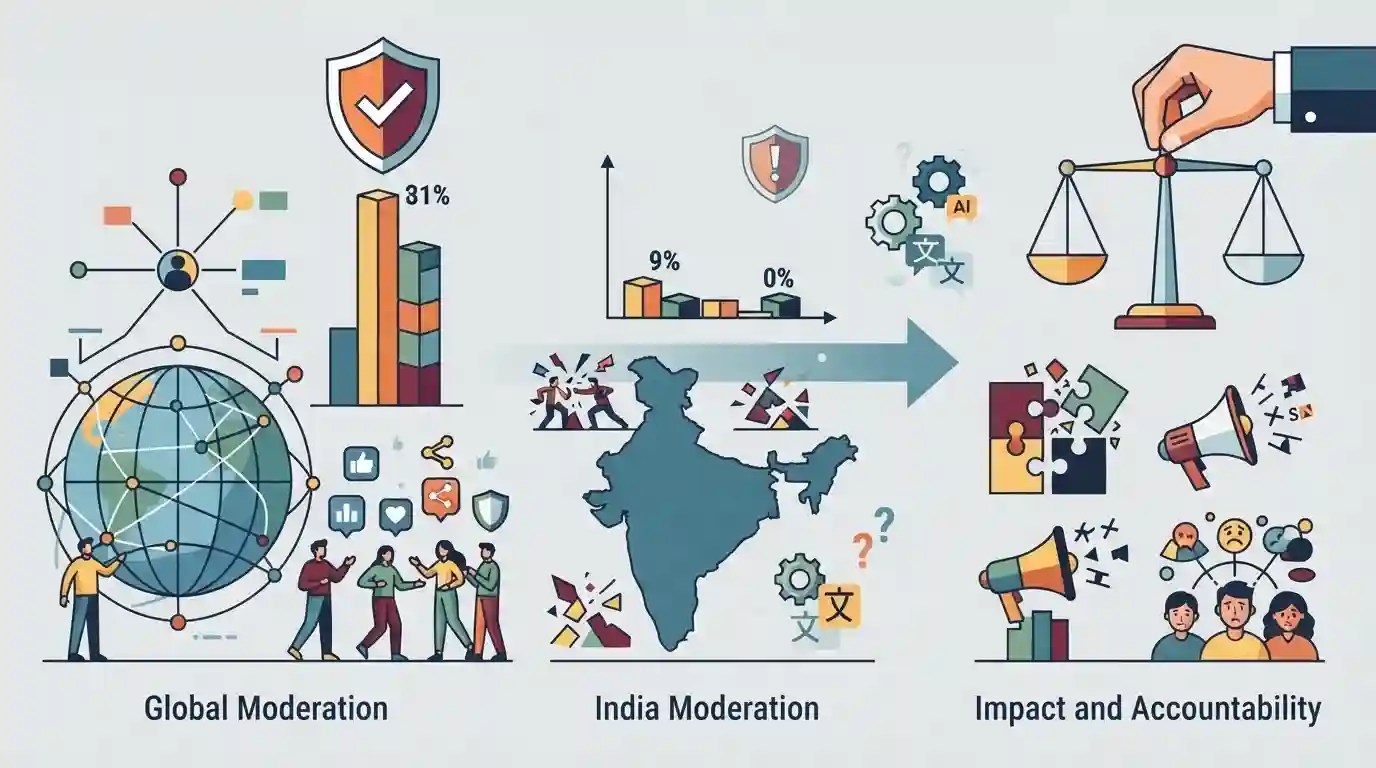
Meta's social media platforms, Facebook and Instagram, proactively regulate hate speech, bullying, and violence significantly less in India than they do globally. Data indicates that while global proactive moderation rates for hate speech are around 74-84%, the rate in India hovers around 30-32%. This disparity, which has widened since July 2025, raises serious concerns about social media accountability, AI language capabilities for content moderation, and the potential impact on India's internal security and social fabric.
मुख्य मुद्दे
- Meta's proactive moderation rate for hate speech in India is significantly lower (~32%) compared to its global average (~84%).
- The proactive regulation gap applies across multiple harmful categories on Facebook and Instagram, including bullying, harassment, and violence and incitement.
- The disparity in content moderation has been worsening in India since July 2025.
- This highlights issues regarding the effectiveness of AI and algorithmic moderation in regional Indian languages and the accountability of large tech platforms in the Global South.
महत्त्वाच्या संज्ञा
Meta

A multinational technology conglomerate that owns major social media and messaging platforms, including Facebook, Instagram, and WhatsApp.
UPSC context
Relevant to GS-3 (Internal Security) regarding platform accountability, algorithmic moderation disparities, and compliance with India's IT Rules.
A prominent global social media platform owned by Meta that enables users to create communities and share information, media, and opinions at scale.
UPSC context
Important for GS-3 (Internal Security) discussions on the viral spread of fake news, hate speech, and the need for robust content moderation.
A popular photo and video-sharing social networking service owned by Meta, characterized by high user engagement and heavily utilized by youth in India.
UPSC context
Relevant to GS-3 (Internal Security) concerning algorithmic amplification, proactive regulation of cyberbullying, and hate speech moderation challenges.
पूर्वपरीक्षा सापळा
Under Section 79 of the IT Act, intermediary safe harbour is lost the moment any private user reports illegal content.
Shreya Singhal (2015) ruled that 'actual knowledge' requires a formal court order or government notification, preventing arbitrary loss of immunity based on private flags.
संबंधित स्थिर संकल्पना
What is the legal status of Safe Harbour under the IT Act, 2000?
- Section 79 protection: Grants intermediaries legal immunity from liability for third-party content, provided they act as mere data transmission channels.
- Due diligence caveat: Immunity is conditional upon compliance with state-notified due diligence guidelines, including the IT Rules 2021.
- Rule 7 penalty: Failure to follow due diligence results in automatic forfeiture of safe harbour, exposing the platform to general penal prosecution.
How is hate speech legally regulated in India?
- Constitutional silence: The Constitution does not explicitly define 'hate speech'; it is restricted through Article 19(2) 'reasonable restrictions' like public order.
- Statutory penal provisions: Regulated under Bharatiya Nyaya Sanhita (BNS) 2023, notably Section 196 (promoting enmity) and Section 299 (outraging religious feelings).
- Judicial interpretations: The Supreme Court has consistently called for balance between preventing harm and protecting free speech, highlighting the need for specific hate speech laws.
आंतर-विषय नमुने
AI linguistic bias and federal inclusion
The lack of high-quality vernacular datasets for AI moderation creates a digital security divide, leaving non-English speaking regional populations highly vulnerable to targeted hate speech.
Platform safety and internal security
Ineffective content moderation of code-mixed regional dialects acts as a force multiplier for online radicalization and communal flare-ups, challenging civil administration and local policing.

Intermediary liability, Shreya Singhal ruling, and the IT Rules 2021 framework likely to be tested in a multi-statement polity question.
संबंधित PYQ · 2
संबंधित PYQ · 2
- 2024MainsGS3
Social media and encrypting messaging services pose a serious security challenge. What measures have been adopted at various levels to address the security implications of social media? Also suggest any other remedies to address the problem.
- 2014MainsGS2
What do you understand by the concept "freedom of speech and expression"? Does it cover hate speech also ? Why do the films in India stand on a slightly different plane from other forms of expression ? Discuss.
