Meta employee lawsuit highlights challenges of proving AI bias
Source:Indian Express ↗
આ શા માટે મહત્વનું છે
This article illustrates the complex intersection of digital governance, ethical corporate decision-making, and labor rights in the age of AI. It offers concrete material for GS4 (Ethics) essays on algorithmic bias and the ethical limits of automated administrative decision-making, as well as GS3 (Science and Technology/Internal Security) questions on digital privacy and corporate surveillance.
સારાંશ
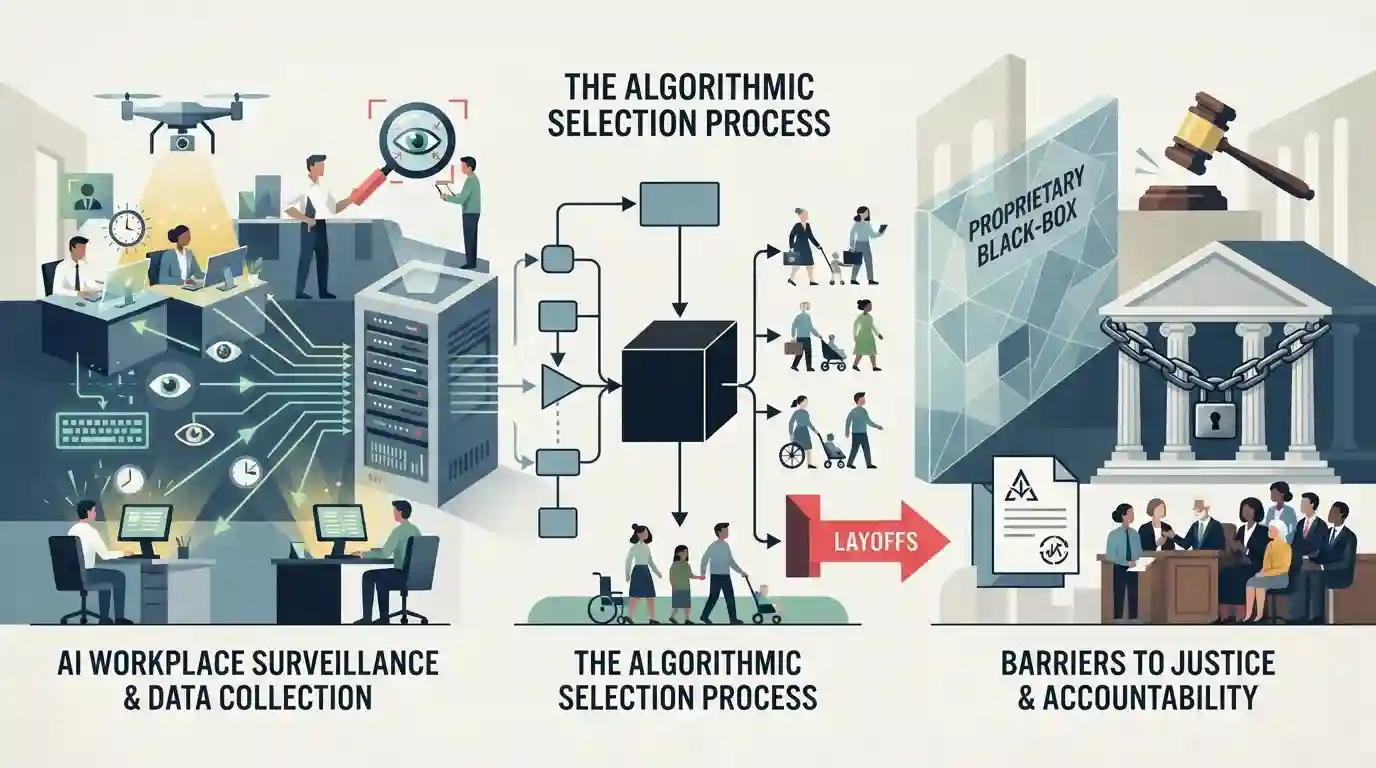
A lawsuit against Meta Platforms by laid-off employees highlights the legal and ethical challenges of proving algorithmic discrimination. The plaintiffs allege that Meta relied on AI tracking tools (such as 'Metamate', digital surveillance trackers, and keystroke monitoring) to select employees for layoffs, which disproportionately impacted those with disabilities or who took family leave. However, proving algorithmic bias is obstructed by the 'black-box' nature of proprietary AI systems and binding corporate arbitration agreements that prevent public class-action lawsuits. The case underscores major global debates regarding corporate digital surveillance, worker rights, and the ethics of delegating HR decision-making to automated systems.
મુખ્ય મુદ્દા
- A novel lawsuit by former Meta employees highlights the severe legal and ethical hurdles workers face when trying to prove algorithmic discrimination in employment and layoffs.
- The plaintiffs allege that Meta used intrusive AI tools—including 'Metamate' (an LLM assistant), a communications-tracking 'second brain', and productivity scores from monitoring keystrokes, emails, and browser history—which disproportionately targeted those with disabilities or those who took medical/family leave.
- The 'Black Box' dilemma and severe information asymmetry make proving AI bias extremely difficult, as corporate employers hold all proprietary algorithmic data and code, leaving plaintiffs unable to show precisely how AI targeted them.
- Mandatory arbitration clauses in employment contracts prevent class-action lawsuits and public jury trials, keeping algorithmic bias disputes private and shielding corporations from public accountability and legal precedents.
- US District Judge William Orrick denied a temporary restraining order due to a lack of initial proof but left open the possibility of a preliminary injunction if evidence of improper algorithmic deployment emerges.
મહત્વપૂર્ણ શબ્દો
Algorithmic Bias

The phenomenon where AI systems replicate, reinforce, or amplify preexisting societal prejudices and inequalities due to flawed, non-inclusive training datasets or biased software design.
UPSC context
GS Paper III (S&T) & IV (Ethics). Tests understanding of bias, discrimination, and equity in automated systems.
Workplace Surveillance
The corporate practice of using digital monitoring tools—such as keyloggers, screen activity trackers, and AI metrics—to oversee employee productivity, raising privacy and mental health concerns.
UPSC context
GS Paper II (Labour Rights) & IV (Ethics). Tests analysis of digital privacy and employer-employee power dynamics.
Binding Corporate Arbitration
A private conflict resolution mechanism where employees sign agreements to settle disputes through a neutral third-party arbitrator whose decision is legally binding, bypassing public courts.
UPSC context
GS Paper II (Judiciary/Alternative Dispute Resolution). Tests knowledge of private dispute systems versus constitutional access to justice.
Algorithmic Accountability
The requirement that automated systems remain transparent, auditable, and explainable, ensuring that developers and users are held answerable for any discriminatory or harmful outcomes.
UPSC context
GS Paper II (Governance) & GS Paper III (Tech Policy). Tests ability to propose regulatory frameworks for safe tech adoption.
Meta Platforms
A global social technology giant facing class-action and employee lawsuits over its digital surveillance policies, algorithmic layoff strategies, and lack of transparency.
UPSC context
GS Paper III (S&T/Data Protection). Relevant for analyzing Big Tech accountability, data surveillance practices, and labor ethics.
Workday
A major American cloud-based human capital management software company facing legal scrutiny over claims that its automated recruiting AI discriminatorily filters out job applicants.
UPSC context
GS Paper III (S&T/Corporate Governance). Serves as a key global case study for legal liability of third-party HR algorithms.
પ્રિલિમ્સ ટ્રેપ
Under the DPDP Act 2023, employers must obtain explicit, affirmative consent from employees for all workplace productivity tracking.
Under DPDP Act Section 7(i), 'employment purposes' is a 'legitimate use' where processing does not require explicit consent, creating a statutory exception for employers.
સંલગ્ન સ્થિર ખ્યાલો
Are industrial and labour disputes arbitrable under Indian law?
- Public Law Category: Indian jurisprudence categorizes industrial and labour disputes as non-arbitrable because they involve public law rights and social welfare.
- Power Imbalance: Private arbitration is barred to protect weaker employees from being forced into unfair dispute resolution terms by dominant corporate employers.
- Judicial Redressal: Such disputes must be resolved through public statutory forums like Labour Courts established under the Industrial Disputes Act, 1947.
What are the core principles of NITI Aayog's 'Responsible AI' framework?
- Seven Core Principles: Includes safety, equality, inclusivity, privacy, transparency, accountability, and reinforcement of positive human values to guide AI governance in India.
- Operationalizing Trust: Recommends self-assessment guides, algorithmic audits, and regulatory sandboxes to mitigate systemic biases before commercial or public sector deployment.
આંતર-વિષય પેટર્ન
AI Surveillance vs. Article 21 Privacy
Automated productivity tracking and AI-driven HR evaluations challenge the 'reasonable expectation of privacy' established under the Puttaswamy judgment, testing the boundaries of corporate digital surveillance.
Gig economy algorithmic management
The shift from human managers to opaque dispatch and penalty algorithms mirrors the Meta case, highlighting the legislative gaps in protecting gig workers from arbitrary automated termination.

DPDP Act 'legitimate uses' exemptions vs employee privacy rights likely to be tested via analytical GS-2/GS-3 questions in 2026.
સંલગ્ન PYQ · 3
સંલગ્ન PYQ · 3
- 2024MainsGS4
The application of Artificial Intelligence as a dependable source of input for administrative rational decision-making is a debatable issue. Critically examine the statement from the ethical point of view.
- 2024MainsGS4
“Ethics encompasses several key dimensions that are crucial in guiding individuals and organizations towards morally responsible behaviour.” Explain the key dimensions of ethics that influence human actions. Discuss how these dimensions shape ethical decision-making in the professional context.
- 2023MainsGS3
Introduce the concept of Artificial Intelligence (AI). How does Al help clinical diagnosis? Do you perceive any threat to privacy of the individual in the use of Al in healthcare?
