Tech Giants Appeal Landmark Verdict on Social Media Addiction
Source:The Hindu ↗
Why It Matters
This article highlights a major shift in cyber-jurisprudence from content-based liability to design-based liability. As India refines its Digital India Act and IT Act exemptions (Section 79), understanding how international courts are penalizing 'persuasive design features' (dark patterns, infinite scroll) is highly critical for both security/regulation (GS3) and technology ethics (GS4).
Summary
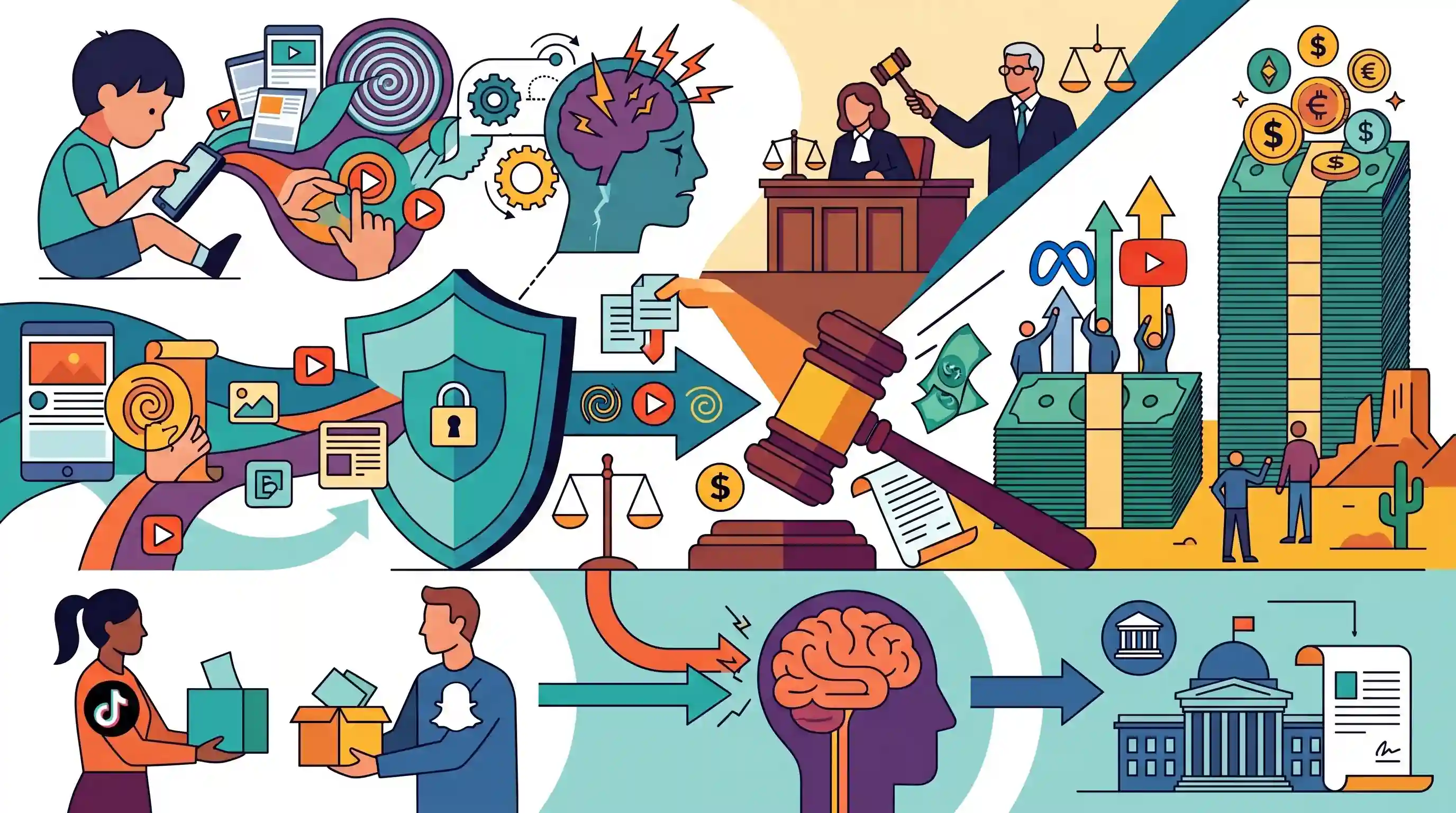
Meta and YouTube have appealed a landmark Los Angeles court verdict that awarded $6 million to a plaintiff who became addicted to social media as a child. By focusing on addictive 'design features' like infinite scroll and autoplay rather than third-party content, the plaintiffs successfully bypassed standard safe-harbor protections under Section 230 of the US Communications Decency Act. This verdict, alongside a separate $375 million fine in New Mexico and settlements by TikTok and Snap Inc., represents a major shift toward holding big-tech firms legally liable for the psychological impacts of algorithmic and persuasive platform designs.
Key Points
- Meta and Google's YouTube have appealed a landmark Los Angeles court verdict holding them liable for social media addiction that severely worsened a young user's mental health, resulting in a $6 million award in damages.
- To bypass Section 230 of the US Communications Decency Act—which shields intermediaries from liability for third-party content—plaintiffs strategically targeted 'design features' (such as infinite scroll and autoplay) instead of content, claiming negligent product design.
- This case signals a major legal shift from content moderation accountability to product design liability, opening the door for thousands of similar pending lawsuits against tech platforms.
- The legal precedent is mirrored by other major rulings, such as a New Mexico jury awarding a $375 million penalty against Meta over child safety, and out-of-court settlements by competitors like TikTok and Snapchat (Snap Inc.).
- The legal developments emphasize the rising global scrutiny of 'dark patterns' and persuasive design elements in digital tech, raising critical questions for India's regulatory framework under Section 79 of the IT Act.
Important Terms
Section 230 of the Communications Decency Act (1996)

A foundational US law granting interactive computer services (like social media platforms) "safe harbour" immunity, shielding them from civil liability for third-party content published on their platforms.
UPSC context
GS Paper II & III; key for comparative analysis of global intermediary liability, digital safe harbour, and corporate technology regulation.
Information Technology Act (India)
India's primary legal framework for cyber security, e-commerce, and electronic communication, with Section 79 providing conditional "safe harbour" immunity to digital intermediaries for user-generated content.
UPSC context
GS Paper III (Cyber Security) and GS Paper II; crucial for understanding intermediary guidelines, online free speech, and platform accountability.
Meta
A global technology conglomerate owning Facebook, Instagram, and WhatsApp, frequently at the center of regulatory and ethical debates over algorithmic platform design and adolescent mental health.
UPSC context
GS Paper III (Cyber Security/Tech) & GS Paper IV (Ethics); tests corporate accountability, persuasive algorithms, and tech-induced mental health issues.
YouTube
A leading online video-sharing intermediary platform owned by Google, key to discussions on recommendation algorithms, content moderation, and safe harbour liability limits.
UPSC context
GS Paper III (Cyber Security) & GS Paper II; tested under digital platform regulation, automated recommender systems, and safe harbour boundaries.
TikTok
A short-form video hosting service owned by ByteDance, known for highly engaging recommendation algorithms that spark global debates over youth addiction, data privacy, and national security.
UPSC context
GS Paper III (Security) & GS Paper II; relevant to bans, geopolitical tech decoupling, and minors' digital safety frameworks.
Prelims Trap
Safe harbor under Section 79 of the IT Act shields intermediaries from legal liability arising from manipulative UI designs and dark patterns.
Section 79 only immunizes intermediaries against liability for hosting third-party content. It does not shield platforms from lawsuits or penalties related to manipulative user interface (UI) designs or consumer rights violations.
Static Concepts Connected
What is the 'Safe Harbor' principle under India's IT Act?
- Definition: Under Section 79 of the IT Act, 2000, intermediaries are exempted from liability for third-party data, content, or communication links hosted by them.
- Key Conditions: Immunity is conditional upon the platform not initiating, selecting, or modifying the transmission, and observing strict statutory due diligence guidelines.
- Judicial Interpretation: In Shreya Singhal (2015), the SC ruled that intermediaries must remove content only upon receiving actual knowledge via a court order or government directive.
How does India regulate 'Dark Patterns' in the digital ecosystem?
- Regulatory Framework: Regulated by the Central Consumer Protection Authority (CCPA) under the Consumer Protection Act, 2019, through specific guidelines notified in 2023.
- Definition: UI/UX design practices that mislead, coerce, or manipulate consumers into making choices that are against their best interests.
- Prohibited Practices: Explicitly prohibits 13 specified tactics, including 'forced action', 'subscription traps', 'nagging', 'drip pricing', and 'basket sneaking'.
Cross-Topic Patterns
Digital sovereignty vs Big Tech dominance
Explores how global legal precedents on persuasive algorithms shape India's regulatory stance in the upcoming Digital India Act, shifting focus from content moderation to structural platform design.
Cyber-psychology and public health policy
Links addictive platform features (like infinite scroll) to youth mental health crises, shifting tech policy from a "free speech" debate to a "Right to Health" framework under Article 21.

2026 Prelims may contrast Section 79 (IT Act) safe harbor for content with CCPA Dark Patterns liability to test tech vs consumer laws.
Linked PYQs · 2
Linked PYQs · 2
- 2025MainsGS4
In the present digital age, social media has revolutionised our way of communication and interaction. However, it has raised several ethical issues and challenges. Describe the key ethical dilemmas in this regard.
- 2024MainsGS3
Social media and encrypting messaging services pose a serious security challenge. What measures have been adopted at various levels to address the security implications of social media? Also suggest any other remedies to address the problem.
