Mercury in Skin Lightening Creams Health Risks and Regulation
Source:The Hindu ↗
Why It Matters
Relevant to GS3 (Environmental Pollution, Health and Safety) and GS2 (Health Governance and Consumer Protection), highlighting the toxic hazards of heavy metals in everyday consumer goods.
Summary
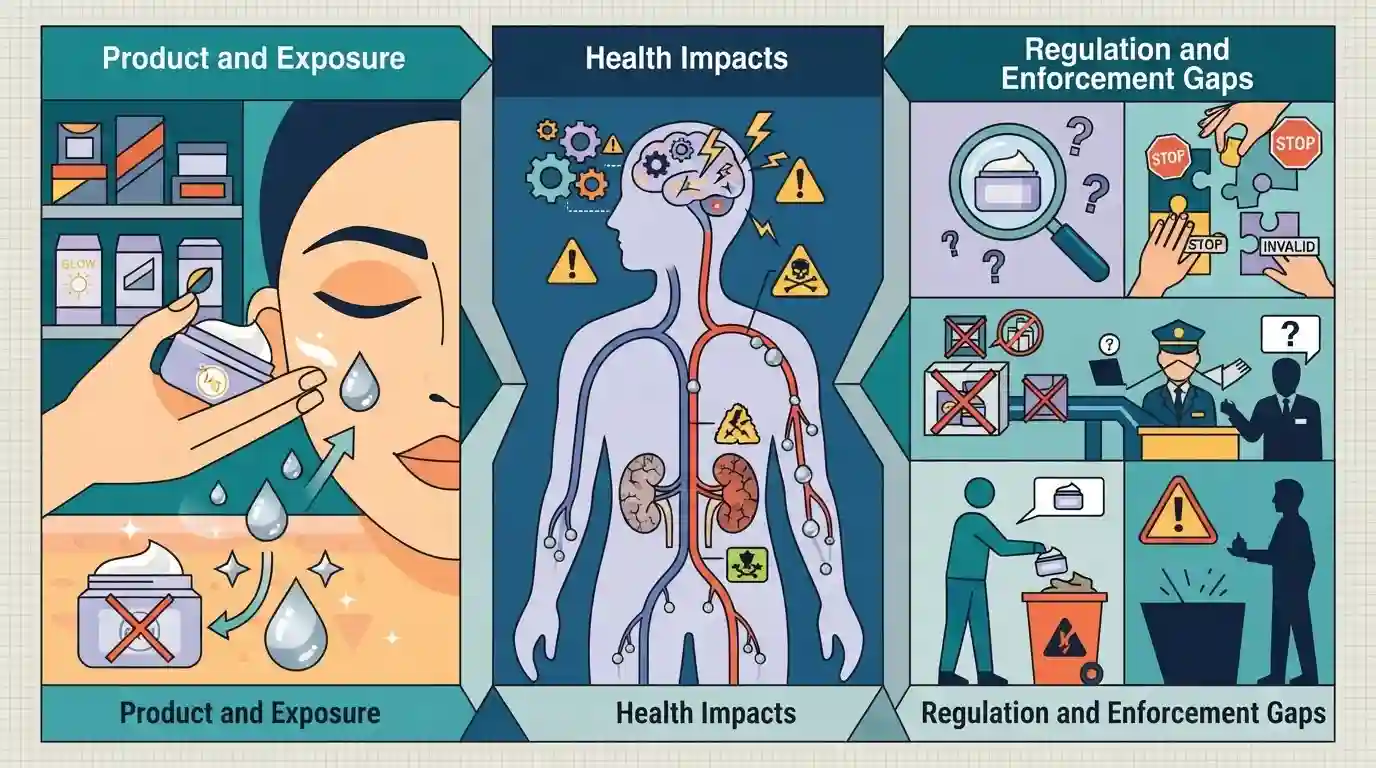
An examination of mercury use in skin-lightening cosmetics, highlighting health hazards such as kidney and neurological damage, regulatory gaps, and enforcement issues surrounding illegal beauty products.
Key Points
- Skin-lightening creams frequently contain illegal and toxic levels of inorganic mercury used to inhibit melanin production.
- Mercury poisoning through cosmetics can lead to severe neurological, renal, and dermal health consequences, including nephrotic syndrome.
- Regulatory challenges remain widespread due to online sales, unlabelled grey-market imports, and lax enforcement of cosmetic standards.
- The Minamata Convention addresses global mercury reduction, highlighting the public health menace of chemical toxicity in consumer goods.
Important Terms
Minamata Convention on Mercury

An international environmental treaty designed to protect human health and the environment from anthropogenic emissions and releases of mercury and its compounds, including restrictions on mercury-added cosmetics like skin-lightening creams.
UPSC context
GS Paper III (Environment & Pollution); tests knowledge of international environmental conventions, global hazardous waste management, and heavy metal pollution.
World Health Organization
A specialized agency of the United Nations responsible for international public health, which monitors chemical hazards, sets exposure guidelines, and campaigns against the public health threat of mercury in cosmetics.
UPSC context
GS Paper II/III (Health & Social Justice); tests understanding of global health governance, toxic exposure standards, and consumer safety regulations.
Static Concepts Connected
What are the key obligations and thresholds established by the Minamata Convention on Mercury?
- Global Treaty: Global Treaty: Designed to protect human health and the environment from anthropogenic emissions and releases of mercury and mercury compounds.
- Cosmetic Limit: Cosmetic Limit: Mandates a strict threshold of 1 part per million (ppm) for mercury content in skin-lightening products, soaps, and cosmetics.
- India Ratification: India's Ratification: India ratified the convention in 2018, aligning domestic regulations such as the Cosmetics Rules 2020 with its phase-out timelines.
Cross-Topic Patterns
Minamata Convention & Domestic Health Regulation
The Minamata Convention bridges global environmental treaties and domestic consumer protection mandates under India's Cosmetics Rules 2020.
Grey-Market Imports & Digital Enforcement Gaps
E-commerce proliferation and unlabelled grey-market imports complicate domestic enforcement of hazardous chemical bans, echoing similar challenges in e-waste and pharma.

Minamata Convention's scope regarding cosmetic thresholds (1 ppm) and bioaccumulation vectors will likely feature in a multi-statement prelims Q.
Linked PYQs · 2
Linked PYQs · 2
- 2023PrelimsGS1
Consider the following statements regarding mercury pollution: 1. Gold mining activity is a source of mercury pollution in the world. 2. Coal-based thermal power plants cause mercury pollution. 3. There is no known safe level of exposure to mercury. How many of the above statements are correct?
- 2022PrelimsGS1
Consider the following statements: 1. Other than those made by humans, nanoparticles do not exist in nature. 2. Nanoparticles of some metallic oxides are used in the manufacture of some cosmetics. 3. Nanoparticles of some commercial products which enter the environment are unsafe for humans. Which of the statements given above is/are correct?
