Meghalaya mine disaster highlights risks of illegal coal extraction
Source:Indian Express ↗
Why It Matters
The persistent issue of rat-hole mining in Meghalaya is a prime case study for UPSC aspirants on the clash between environmental conservation (NGT directives) and local socio-economic realities. It also touches on complex governance themes, notably how the Sixth Schedule's autonomy can complicate the enforcement of central mining and environmental regulations, leading to severe ecological disasters and loss of life.
Summary
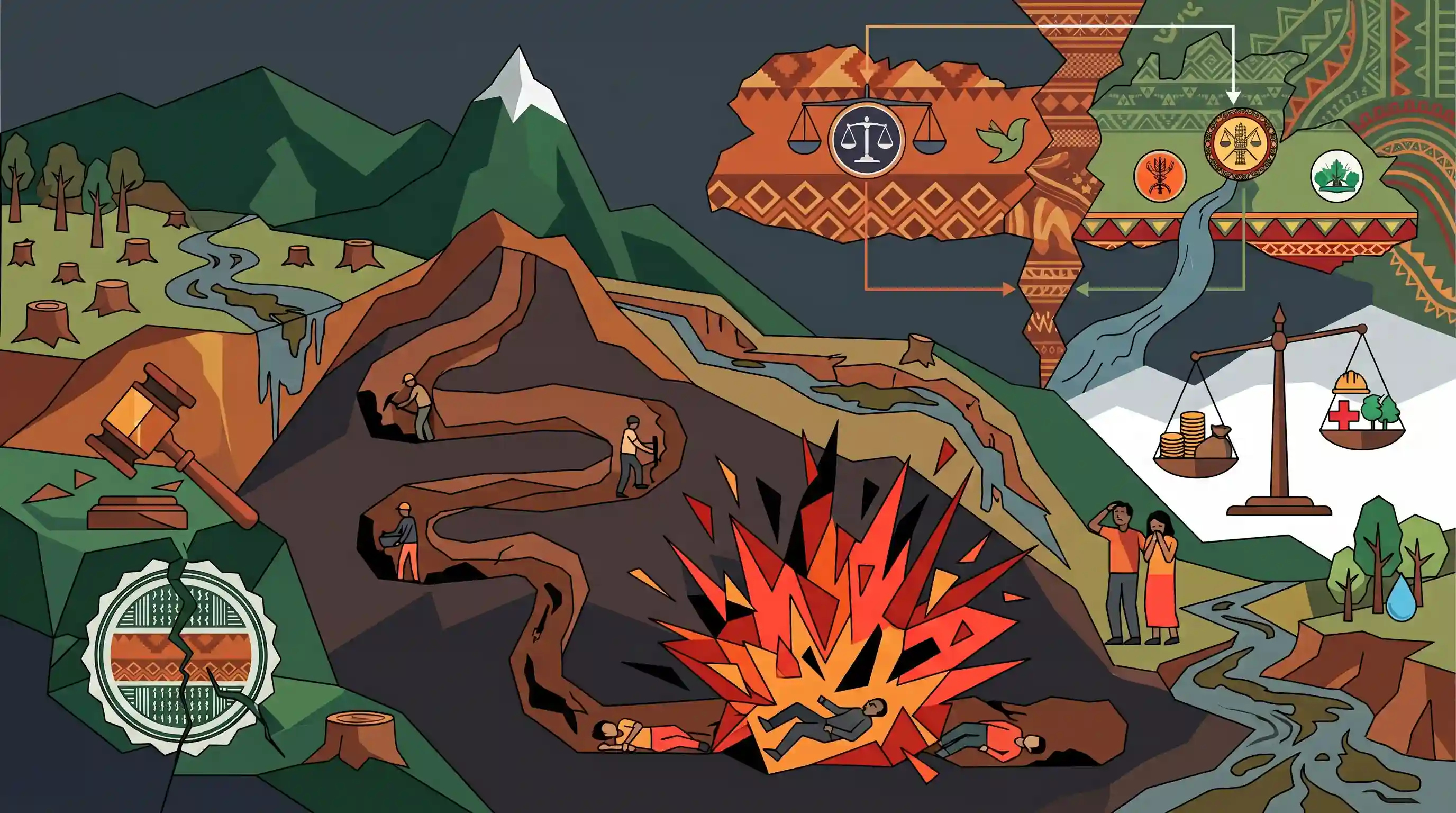
An explosion in an illegal rat-hole coal mine in Meghalaya has resulted in the deaths of 18 miners, with several others feared trapped. This tragedy highlights the persistence of unscientific and hazardous "rat-hole" mining practices despite a 2014 ban by the National Green Tribunal (NGT). The incident brings to the fore the conflict between environmental conservation, safety regulations, and the socio-economic realities of the region, where such mining remains a primary livelihood. Furthermore, it exposes governance gaps and jurisdictional complexities in enforcing environmental laws within tribal areas governed under the Sixth Schedule.
Key Points
- An explosion in a rat-hole coal mine in Meghalaya killed 18 miners, with several others feared trapped.
- Rat-hole mining is an unscientific and highly hazardous method involving narrow horizontal tunnels dug to extract coal, which compromises both safety and the environment.
- Despite a 2014 ban on rat-hole mining by the National Green Tribunal (NGT), illegal extraction continues largely due to lack of alternative livelihoods and local socio-economic dependence.
- The disaster highlights a severe lack of enforcement and the ecological damage caused by unregulated coal extraction, such as acid mine drainage.
- Enforcement of environmental laws is often complicated by jurisdictional ambiguities, as Meghalaya's tribal areas enjoy autonomy under the Sixth Schedule of the Constitution.
Important Terms
Sixth Schedule of the Indian Constitution

Provisions in Articles 244(2) and 275(1) providing for the administration of tribal areas in Assam, Meghalaya, Tripura, and Mizoram through Autonomous District Councils with legislative and judicial powers.
UPSC context
GS Paper II (Polity/Governance); tests knowledge of tribal autonomy, federalism, and special administrative frameworks in Northeast India.
National Green Tribunal (NGT)
A specialized judicial body established under the NGT Act (2010) for the effective and expeditious disposal of cases relating to environmental protection and conservation of forests.
UPSC context
GS Paper II & III (Statutory Bodies/Environment); tests understanding of environmental jurisprudence and the enforcement of ecological regulations.
Rat-hole mining
A primitive and hazardous coal extraction method involving digging very narrow (3-4 feet) horizontal tunnels into hill slopes or vertical pits, often lacking safety gear or ventilation.
UPSC context
GS Paper III (Environment/Disaster Management); highlights risks of unscientific mining, environmental degradation, and challenges in implementing judicial bans.
Autonomous District Councils (ADC)
Elected bodies in Sixth Schedule areas empowered to make laws on land, forests, and local customs, serving as the primary instrument of tribal self-governance.
UPSC context
GS Paper II (Polity); essential for understanding decentralized administration and the conflict between tribal rights and central/state laws.
Justice Katakey Committee
A judicial committee appointed by the Meghalaya High Court to monitor the restoration of the environment and check the continuation of illegal coal mining in Meghalaya.
UPSC context
GS Paper III (Environment/Governance); relevant for current affairs regarding judicial oversight in environmental protection and illegal mining enforcement.
Acid Mine Drainage (AMD)
The outflow of acidic water from metal or coal mines, caused when sulfide minerals are exposed to air and water, leading to severe pollution of nearby rivers.
UPSC context
GS Paper III (Environment/Science); tests technical understanding of industrial pollution and its impact on aquatic ecosystems and biodiversity.
Prelims Trap
Central mining and environmental laws do not apply to mineral extraction in Sixth Schedule areas due to tribal autonomy.
The Supreme Court (2019) ruled that while tribals own the minerals in Meghalaya, extraction must still strictly comply with central laws like the MMDR Act.
Static Concepts Connected
What is Acid Mine Drainage (AMD) and how does it affect local ecosystems?
- Chemical process: Sulfide minerals in high-sulfur coal react with oxygen and water to produce highly toxic sulfuric acid.
- Ecological dead-zones: The acid runoff lowers water pH drastically, killing aquatic life and turning rivers like Meghalaya's Lukha and Kopili biologically dead.
- Heavy metal leaching: The highly acidic environment dissolves and leaches dangerous heavy metals like arsenic and lead into the surrounding groundwater.
How does mineral ownership in Sixth Schedule areas differ from the rest of India?
- Community ownership: Unlike most Indian states where the government owns sub-surface minerals, tribal communities or individuals own both the surface land and the underlying minerals in Meghalaya.
- Regulatory oversight: Despite this private or community ownership, extraction cannot be unregulated; it must still secure clearances under the central MMDR Act and comply with NGT bans.
Cross-Topic Patterns
Sixth Schedule vs Central Green Laws
The friction between tribal customary mineral rights and central environmental enforcement (NGT/MMDR Act) is a classic federalism and governance conflict area frequently tested in Mains GS2.
Geography of North-East Coal Reserves
Meghalaya's coal seams are exceedingly thin and fragmented compared to Gondwana coal in Jharkhand, making conventional open-cast mining economically unviable and driving the illegal rat-hole method.

Expect a 2026 multi-statement question pairing Sixth Schedule mineral ownership rights with MMDR Act compliance and NGT jurisdiction.
Linked PYQs · 3
Linked PYQs · 3
- 2025MainsGS3
Mineral resources are fundamental to the country's economy and these are exploited by mining. Why is mining considered an environmental hazard? Explain the remedial measures required to reduce the environmental hazard due to mining.
- 2013MainsGS3
What are the consequences of Illegal mining ? Discuss the Ministry of Environment and Forests' concept of GO AND NO GO zones for coal mining sector.
- 2023PrelimsGS1
Consider the following statements regarding mercury pollution: 1. Gold mining activity is a source of mercury pollution in the world. 2. Coal-based thermal power plants cause mercury pollution. 3. There is no known safe level of exposure to mercury. How many of the above statements are correct?
