मेघालय रैट-होल माइनिंग त्रासदी NGT प्रतिबंध लागू करने में कमियां उजागर करती है
स्रोत:द हिंदू ↗
क्यों मायने रखता है
NGT के प्रतिबंधों के बावजूद रैट-होल माइनिंग का निरंतर जारी रहना UPSC के लिए एक आवर्ती विषय है, जो पर्यावरण संरक्षण, कानूनी प्रवर्तन और क्षेत्रीय सामाजिक-आर्थिक निर्भरता के बीच एक स्पष्ट संघर्ष को दर्शाता है। यह GS3 के उन विषयों के लिए अत्यधिक प्रासंगिक है जिनमें पर्यावरणीय प्रभाव, संसाधन प्रबंधन और आपदा प्रतिक्रिया शामिल हैं।
सारांश
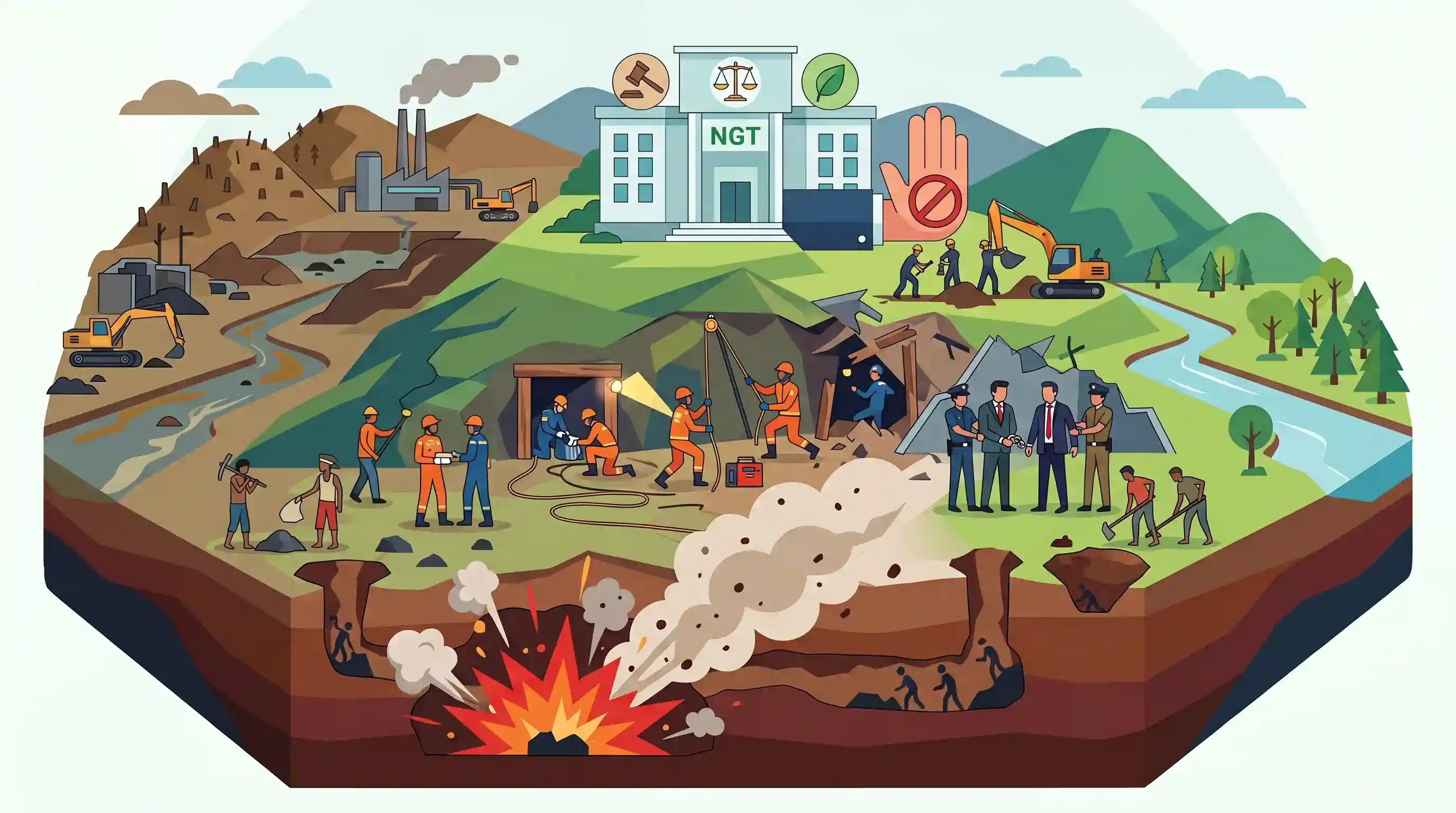
A devastating explosion at an illegal rat-hole coal mine in Meghalaya's East Jaintia Hills has claimed the lives of 18 miners, leading to the arrest of two mine owners. Rescue and recovery operations are actively underway, spearheaded by the NDRF and SDRF. The tragedy spotlights the ongoing, illicit practice of rat-hole mining in the state, which continues despite a strict ban imposed by the National Green Tribunal (NGT) in 2014 due to grave environmental and safety risks. The event underscores critical challenges in regulatory enforcement, environmental governance, and the socio-economic realities that drive illegal mining activities in the region.
मुख्य बिंदु
- मेघालय के ईस्ट जयंतिया हिल्स जिले में एक अवैध रैट-होल कोयला खदान में हुए विस्फोट में 18 खनिकों की मृत्यु हो गई, जहाँ NDRF और SDRF द्वारा बचाव अभियान चलाया जा रहा है।
- अवैध खदान के मालिकों और संचालकों के रूप में पहचाने गए दो व्यक्तियों को स्थानीय अधिकारियों द्वारा गिरफ्तार किया गया है।
- The incident exposes the persistent and illicit use of rat-hole mining, a hazardous practice that has been under a blanket ban by the National Green Tribunal (NGT) since April 2014.
- Despite state efforts to crack down on these illegal operations and transition towards scientific mining, the disaster highlights significant gaps in the enforcement of environmental regulations and mine safety laws.
महत्वपूर्ण शब्द
Rat-hole mining

A hazardous, primitive coal extraction method using narrow, unventilated horizontal tunnels dug into hillsides. Primarily practiced in Meghalaya's thin coal seams, it was banned by the NGT in 2014.
UPSC context
GS पेपर III: पर्यावरण एवं आपदा प्रबंधन। अवैज्ञानिक खनन, सुरक्षा जोखिमों और नियामक विफलताओं के ज्ञान का परीक्षण करता है।
National Green Tribunal (NGT)
A statutory body established under the NGT Act 2010 for the expeditious disposal of cases related to environmental protection and conservation of forests and other natural resources.
UPSC context
GS Paper II & III: Statutory Bodies/Environment. Evaluates the tribunal’s role in environmental justice and enforcement.
NDRF
A specialized multi-disciplinary force established under the Disaster Management Act, 2005, for specialist response to natural and man-made disasters across India.
UPSC context
GS Paper III: Disaster Management. Focuses on institutional frameworks for disaster response and specialized rescue operations.
Illegal Mining
वैध लाइसेंस के बिना या अदालती प्रतिबंधों के उल्लंघन में खनिजों का अनधिकृत निष्कर्षण, जिससे अक्सर सुरक्षा संबंधी खतरे और गंभीर पर्यावरणीय क्षरण की स्थिति उत्पन्न होती है।
UPSC context
GS Paper III: Infrastructure/Environment. Tests understanding of resource governance, jurisdiction, and socio-economic drivers of illicit activities.
SDRF
आपदा प्रबंधन अधिनियम, 2005 के तहत गठित एक राज्य-स्तरीय विशेष प्रतिक्रिया बल, जो राष्ट्रीय प्रयासों के पूरक के रूप में आपदाओं के दौरान त्वरित और स्थानीय सहायता प्रदान करता है।
UPSC context
GS Paper III: Disaster Management. Examines state-level capacity and coordination with central agencies during rescue operations.
कोयला मंत्रालय
The Union government body responsible for coal and lignite exploration and production. It oversees the Coal Mines (Nationalisation) Act and monitors sector-wide compliance.
UPSC context
GS Paper II & III: Government Policies/Infrastructure. Covers resource nationalization and central oversight in the energy sector.
प्रारंभिक ट्रैप
छठी अनुसूची के क्षेत्रों में जनजातीय समुदायों को अपनी स्वयं की भूमि पर खनन के लिए MMDR Act से छूट प्राप्त है।
The Supreme Court (2019) clarified that while Meghalaya tribals own the sub-soil minerals, extraction must strictly comply with the central MMDR Act and require environmental clearances.
संबंधित अवधारणाएँ
What is Acid Mine Drainage (AMD)?
- उच्च सल्फर: Meghalaya's tertiary coal deposits contain an unusually high concentration of sulphur.
- Chemical Reaction: खनन के दौरान हवा और पानी के संपर्क में आने पर, सल्फर प्रतिक्रिया करके अत्यधिक संक्षारक सल्फ्यूरिक एसिड बनाता है।
- पारिस्थितिक प्रभाव: This runoff turns local rivers (like Lukha and Kopili) acidic and brightly discoloured, destroying aquatic ecosystems.
How do central mining laws apply in Sixth Schedule areas?
- Tribal Ownership: In Meghalaya, local indigenous tribes historically possess private and community ownership over land and sub-soil minerals.
- MMDR Compliance: Despite this ownership, the Supreme Court ruled that all mining must comply with the Mines and Minerals (Development and Regulation) Act, 1957.
- पर्यावरणीय छूट नहीं: छठी अनुसूची के तहत मिलने वाली छूट वैज्ञानिक खनन योजनाओं और वैधानिक पर्यावरणीय मंजूरी की आवश्यकता को दरकिनार नहीं करती है।
अंतर-विषय पैटर्न
Sixth Schedule vs. Environmental Governance
The clash between indigenous land/mineral ownership and central statutes like the MMDR Act is a key mains theme evaluating tribal autonomy versus national environmental mandates.
Acid Mine Drainage & River Pollution
अवैध कोयला निष्कर्षण सीधे तौर पर पूर्वोत्तर में गंभीर नदी प्रदूषण से जुड़ा है, जो भारी धातु जल संदूषण और पारिस्थितिक विनाश पर UPSC के निरंतर फोकस को दर्शाता है।

छठी अनुसूची के जनजातीय खनिज स्वामित्व को MMDR Act की प्रयोज्यता और NGT के अधिकार क्षेत्र के साथ जोड़कर Prelims में एक प्रश्न की अपेक्षा करें।
संबद्ध PYQ · 3
संबद्ध PYQ · 3
- 2025MainsGS3
Mineral resources are fundamental to the country's economy and these are exploited by mining. Why is mining considered an environmental hazard? Explain the remedial measures required to reduce the environmental hazard due to mining.
- 2013MainsGS3
What are the consequences of Illegal mining ? Discuss the Ministry of Environment and Forests' concept of GO AND NO GO zones for coal mining sector.
- 2018PrelimsGS1
How is the National Green Tribunal (NGT) different from the Central Pollution Control Board (CPCB)? 1. The NGT has been established by an Act whereas the CPCB has been created by an executive order of the Government. 2. The NGT provides environmental justice and helps reduce the burden of litigation in the higher courts whereas the CPCB promotes cleanliness of streams and wells, and aims to improve the quality of air in the country. Which of the statements given above is/are correct?
