Meghalaya rat-hole mining tragedy exposes NGT ban enforcement gaps
Source:The Hindu ↗
Why It Matters
The continued prevalence of rat-hole mining despite NGT bans is a recurrent theme for UPSC, reflecting a classic conflict between environmental protection, legal enforcement, and regional socio-economic dependencies. It is highly relevant for GS3 topics encompassing environmental impact, resource management, and disaster response.
Summary
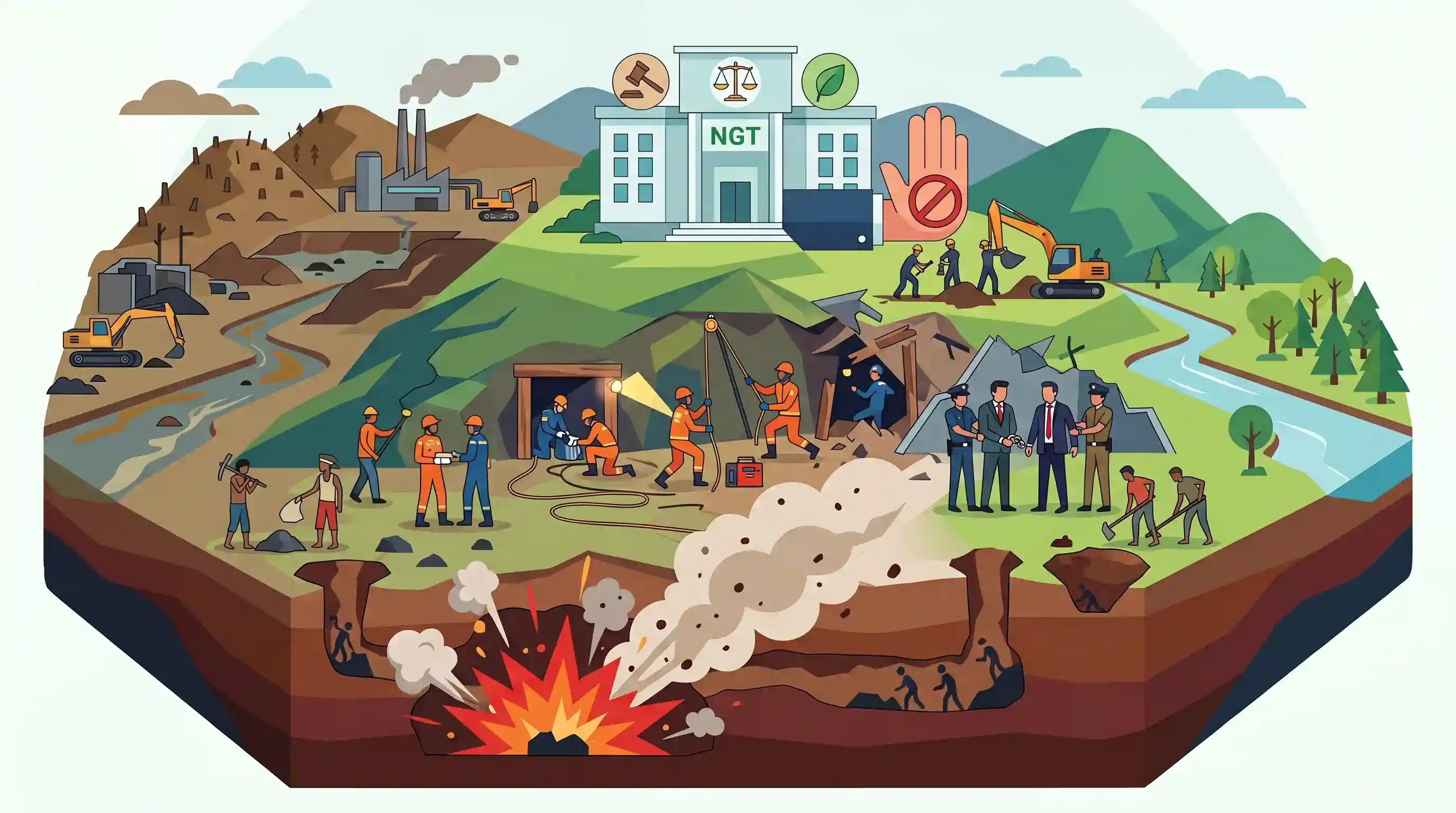
A devastating explosion at an illegal rat-hole coal mine in Meghalaya's East Jaintia Hills has claimed the lives of 18 miners, leading to the arrest of two mine owners. Rescue and recovery operations are actively underway, spearheaded by the NDRF and SDRF. The tragedy spotlights the ongoing, illicit practice of rat-hole mining in the state, which continues despite a strict ban imposed by the National Green Tribunal (NGT) in 2014 due to grave environmental and safety risks. The event underscores critical challenges in regulatory enforcement, environmental governance, and the socio-economic realities that drive illegal mining activities in the region.
Key Points
- An explosion at an illegal rat-hole coal mine in Meghalaya's East Jaintia Hills district resulted in the deaths of 18 miners, with rescue operations being led by the NDRF and SDRF.
- Two individuals, identified as the owners and operators of the illegal mine, have been arrested by local authorities.
- The incident exposes the persistent and illicit use of rat-hole mining, a hazardous practice that has been under a blanket ban by the National Green Tribunal (NGT) since April 2014.
- Despite state efforts to crack down on these illegal operations and transition towards scientific mining, the disaster highlights significant gaps in the enforcement of environmental regulations and mine safety laws.
Important Terms
Rat-hole mining

A hazardous, primitive coal extraction method using narrow, unventilated horizontal tunnels dug into hillsides. Primarily practiced in Meghalaya's thin coal seams, it was banned by the NGT in 2014.
UPSC context
GS Paper III: Environment & Disaster Management. Tests knowledge of unscientific mining, safety risks, and regulatory failures.
National Green Tribunal (NGT)
A statutory body established under the NGT Act 2010 for the expeditious disposal of cases related to environmental protection and conservation of forests and other natural resources.
UPSC context
GS Paper II & III: Statutory Bodies/Environment. Evaluates the tribunal’s role in environmental justice and enforcement.
NDRF
A specialized multi-disciplinary force established under the Disaster Management Act, 2005, for specialist response to natural and man-made disasters across India.
UPSC context
GS Paper III: Disaster Management. Focuses on institutional frameworks for disaster response and specialized rescue operations.
Illegal Mining
The unauthorized extraction of minerals without valid licenses or in violation of court bans, often resulting in safety hazards and severe environmental degradation.
UPSC context
GS Paper III: Infrastructure/Environment. Tests understanding of resource governance, jurisdiction, and socio-economic drivers of illicit activities.
SDRF
A state-level specialized response force formed under the Disaster Management Act, 2005, to provide rapid, localized assistance during disasters, complementing national efforts.
UPSC context
GS Paper III: Disaster Management. Examines state-level capacity and coordination with central agencies during rescue operations.
Ministry of Coal
The Union government body responsible for coal and lignite exploration and production. It oversees the Coal Mines (Nationalisation) Act and monitors sector-wide compliance.
UPSC context
GS Paper II & III: Government Policies/Infrastructure. Covers resource nationalization and central oversight in the energy sector.
Prelims Trap
Tribal communities in 6th Schedule areas are exempt from the MMDR Act for mining on their own land.
The Supreme Court (2019) clarified that while Meghalaya tribals own the sub-soil minerals, extraction must strictly comply with the central MMDR Act and require environmental clearances.
Static Concepts Connected
What is Acid Mine Drainage (AMD)?
- High Sulphur: Meghalaya's tertiary coal deposits contain an unusually high concentration of sulphur.
- Chemical Reaction: When exposed to air and water during mining, sulphur reacts to form highly corrosive sulfuric acid.
- Ecological Impact: This runoff turns local rivers (like Lukha and Kopili) acidic and brightly discoloured, destroying aquatic ecosystems.
How do central mining laws apply in Sixth Schedule areas?
- Tribal Ownership: In Meghalaya, local indigenous tribes historically possess private and community ownership over land and sub-soil minerals.
- MMDR Compliance: Despite this ownership, the Supreme Court ruled that all mining must comply with the Mines and Minerals (Development and Regulation) Act, 1957.
- No Environmental Exemption: Exemptions under the Sixth Schedule do not bypass the need for scientific mining plans and statutory environmental clearances.
Cross-Topic Patterns
Sixth Schedule vs. Environmental Governance
The clash between indigenous land/mineral ownership and central statutes like the MMDR Act is a key mains theme evaluating tribal autonomy versus national environmental mandates.
Acid Mine Drainage & River Pollution
Illegal coal extraction links directly to severe river pollution in the Northeast, mirroring UPSC's recurring focus on heavy metal water contamination and ecological destruction.

Expect a Prelims question pairing 6th Schedule tribal mineral ownership with the applicability of the MMDR Act and NGT jurisdiction.
Linked PYQs · 3
Linked PYQs · 3
- 2025MainsGS3
Mineral resources are fundamental to the country's economy and these are exploited by mining. Why is mining considered an environmental hazard? Explain the remedial measures required to reduce the environmental hazard due to mining.
- 2013MainsGS3
What are the consequences of Illegal mining ? Discuss the Ministry of Environment and Forests' concept of GO AND NO GO zones for coal mining sector.
- 2018PrelimsGS1
How is the National Green Tribunal (NGT) different from the Central Pollution Control Board (CPCB)? 1. The NGT has been established by an Act whereas the CPCB has been created by an executive order of the Government. 2. The NGT provides environmental justice and helps reduce the burden of litigation in the higher courts whereas the CPCB promotes cleanliness of streams and wells, and aims to improve the quality of air in the country. Which of the statements given above is/are correct?
