Medical AI Equity and Algorithmic Bias in Healthcare Systems
Source:Indian Express ↗
Why It Matters
Highlighting the social and ethical dimensions of AI in healthcare is crucial for future administrators, directly aligning with UPSC's focus on inclusive technological development, health equity, and ethical AI deployment.
Summary
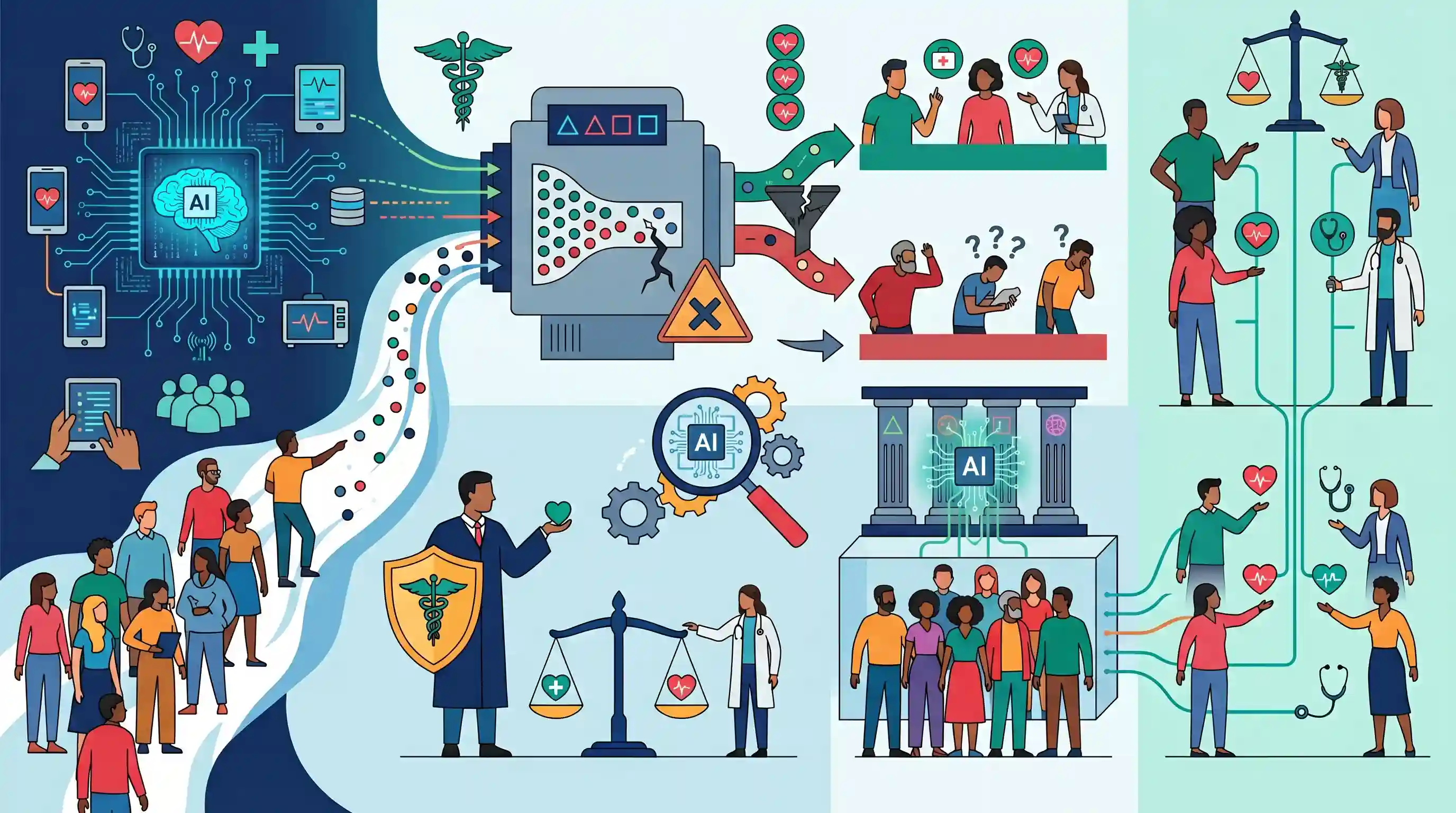
The article emphasizes that the development and deployment of Artificial Intelligence in the medical field must focus as much on equity as on the algorithms themselves. Highlighting the risks of algorithmic bias stemming from unrepresentative health data, it argues that unchecked AI could widen existing healthcare disparities. It calls for inclusive data sets, transparent systems, and robust ethical frameworks to ensure that AI advancements in clinical diagnosis and treatment benefit all sections of society fairly, without compromising individual privacy or propagating systemic biases.
Key Points
- The deployment of Artificial Intelligence in medicine must prioritize equity and social justice alongside technological advancements and algorithm accuracy.
- Medical AI systems trained on biased or unrepresentative datasets can exacerbate existing healthcare disparities, causing marginalized populations to receive less accurate diagnoses or inappropriate treatments.
- A balanced approach requires inclusive data collection, transparent algorithmic processes, and strict regulatory frameworks to ensure AI benefits all demographic groups equitably.
- Ethical considerations, including privacy, informed consent, and avoiding systemic bias, should be foundational to the design and implementation of clinical AI tools.
Prelims Trap
"Because AI algorithms are machine-driven, they inherently provide objective analysis free from subjective human prejudices."
AI models learn from historical training data. If that data reflects societal inequalities or medical oversights, the AI will inherit, replicate, and often amplify those biases.
Static Concepts Connected
What is 'Explainable AI' (XAI) in the context of machine learning?
- Definition: Methods and techniques that allow human users to understand, trust, and manage the decision-making processes of AI systems.
- Contrast with Black-Box: Standard deep learning models are opaque ("black boxes"). XAI provides transparent pathways showing exactly how an AI reached its conclusion.
- Significance: Crucial in high-stakes fields like healthcare and judiciary to assign legal liability, ensure physician trust, and debug systemic biases.
What are the primary causes of 'Algorithmic Bias' in AI systems?
- Unrepresentative Data: Using training datasets that underrepresent specific demographics, such as clinical trials lacking diverse ethnic or genetic profiles.
- Historical Skew: Systems trained on historically prejudiced human decisions or existing systemic inequalities will learn to replicate those exact patterns.
- Design Choices: Subjective flaws in how human developers weight variables, select features, or define the success metrics during model training.
Cross-Topic Patterns
ABDM data pools and AI bias
The Ayushman Bharat Digital Mission generates massive health datasets. If rural health-record digitization lags, AI trained on this national data will inherently skew toward urban physiological profiles and diseases.
GS4 Tech Ethics: Utilitarianism vs Equity
AI optimization often follows utilitarianism (maximizing overall accuracy). GS4 questions frequently test how to balance this statistical efficiency with justice and equity for marginalized, under-represented groups.

Expect a GS3 Mains question linking Ayushman Bharat health data to algorithmic bias and "Explainable AI" (XAI) frameworks in 2026.
Linked PYQs · 3
Linked PYQs · 3
- 2023MainsGS3
Introduce the concept of Artificial Intelligence (AI). How does Al help clinical diagnosis? Do you perceive any threat to privacy of the individual in the use of Al in healthcare?
- 2024MainsGS4
The application of Artificial Intelligence as a dependable source of input for administrative rational decision-making is a debatable issue. Critically examine the statement from the ethical point of view.
- 2021MainsGS4
Impact of digital technology as reliable source of input for rational decision making is a debatable issue. Critically evaluate with suitable example.
