MEA Rejects China Stance on Ladakh and Renaming
Source:The Hindu ↗
આ શા માટે મહત્વનું છે
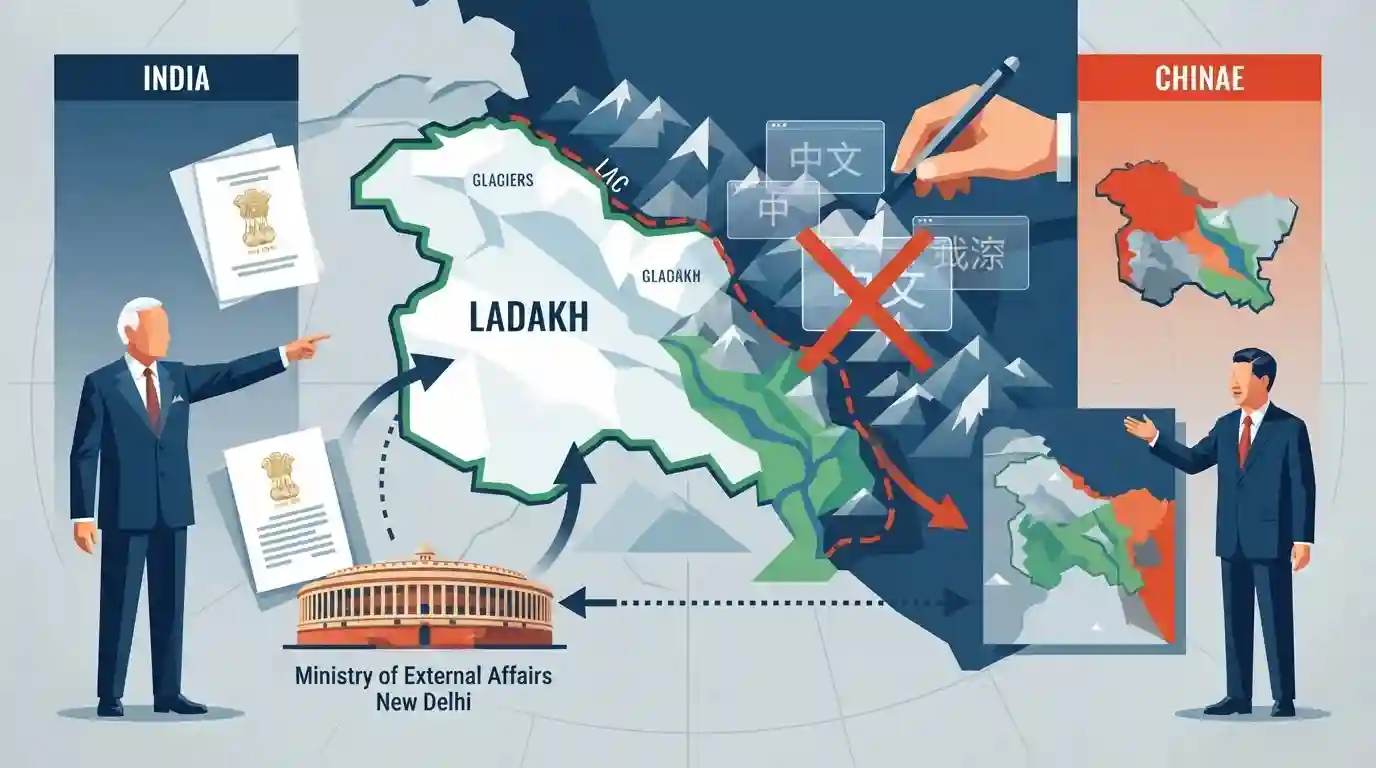
This article highlights ongoing geopolitical friction and territorial assertions between India and China, particularly concerning sovereignty over Ladakh and unilateral renaming practices, which are critical for GS2 International Relations.
સારાંશ
The Ministry of External Affairs (MEA) rejected China's refusal to recognize the Union Territory of Ladakh, firmly asserting that Ladakh is an integral part of India. India also condemned China's attempts to rename geographical features in the region, emphasizing that such arbitrary actions cannot change geographical realities or legal status.
મુખ્ય મુદ્દા
- The Ministry of External Affairs (MEA) firmly reiterated that Ladakh is an integral and inalienable part of India, rejecting China's refusal to recognize the Union Territory.
- India criticized China's practice of renaming geographical features in the region, stating that arbitrary renaming cannot alter historical facts and ground realities.
- The diplomatic exchange follows ongoing tensions and negotiations over the India-China bilateral relationship and border management along the Line of Actual Control (LAC).
મહત્વપૂર્ણ શબ્દો
Ministry of External Affairs (MEA)

The nodal government department in India responsible for conducting foreign relations, formulating external policies, and safeguarding national sovereignty on global diplomatic platforms.
UPSC context
UPSC GS Paper II: International Relations — mechanisms of Indian diplomacy, foreign policy formulation, and bilateral dispute responses.
Chinese Foreign Ministry
The executive agency of the People's Republic of China responsible for managing foreign affairs and articulating official state positions on territorial and bilateral disputes.
UPSC context
UPSC GS Paper II: International Relations — understanding major powers' foreign policy postures and cross-border territorial claims.
સંલગ્ન સ્થિર ખ્યાલો
What is the legal status and constitutional framework of Union Territories in India?
- Constitutional Provision: Constitutional status defined under Article 1 of the Indian Constitution, which classifies India as a Union of States and lists Union Territories in the First Schedule.
- Administrative Control: Direct administration governed by the President through an administrator appointed by him under Article 239, unlike states which enjoy federal autonomy.
- Parliamentary Power: Parliamentary power under Article 3 to create new States or Union Territories by altering boundaries or reorganizing existing territories.
આંતર-વિષય પેટર્ન
Cartographic Aggression & Territorial Sovereignty
China's renaming strategy in Ladakh mirrors its long-standing cartographic aggression in Arunachal Pradesh (Zangnan) and the South China Sea, testing international legal norms on territorial sovereignty.
Internal Reorganization & Bilateral Diplomacy
India's domestic administrative reorganization of 2019 continues to shape geopolitical friction points with bilateral neighbors, linking internal federal restructuring with regional security dynamics.

LAC dispute evolution, cartographic assertion, and the legal status of UTs under Article 1 of the Constitution will form core prelim statements.
સંલગ્ન PYQ · 1
સંલગ્ન PYQ · 1
- 2014MainsGS2
With respect to the South China sea, maritime territorial disputes and rising tension affirm the need for safeguarding maritime security to ensure freedom of navigation and over flight throughout the region. In this context, discuss the bilateral issues between India and China.
