Structural limitations of maternity benefit legislation in India
Source:Indian Express ↗
Why It Matters
The effectiveness of gender-centric legislation is a frequent analytical theme in UPSC Mains. The Maternity Benefit Act serves as a prime case study of how well-intentioned laws can have unintended consequences on female labour force participation if they ignore economic realities and structural inequalities, such as the informal-formal divide.
Summary
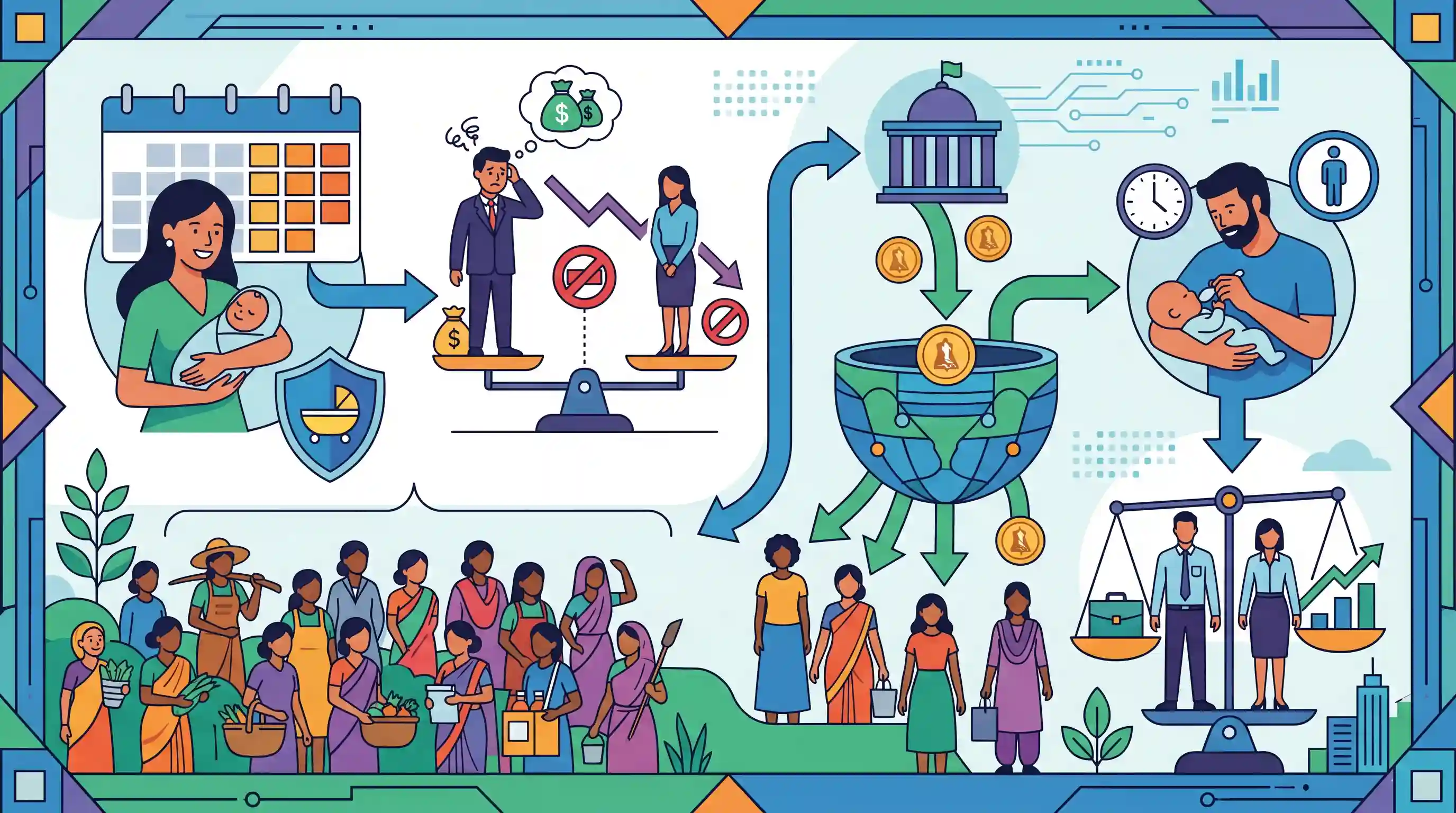
The article examines the Maternity Benefit (Amendment) Act, 2017, arguing that while providing 26 weeks of paid maternity leave is a progressive step, the legislation is insufficient on its own to drive genuine gender equity in the workforce. Because the financial burden of providing paid leave falls entirely on employers, it inadvertently creates a "motherhood penalty," making companies reluctant to hire women of childbearing age. Additionally, the law largely bypasses the vast majority of Indian women who work in the informal sector. To effect real change, the article suggests moving away from an employer-liability model toward a state-supported social insurance system, ensuring broader coverage for informal workers, and introducing mandatory paternity leave to dismantle patriarchal norms around caregiving.
Key Points
- Exclusion of the Informal Sector: The 26-week maternity leave provision predominantly benefits women in the formal sector, leaving out the millions of women working in the informal economy.
- The "Motherhood Penalty": Because employers bear the entire cost of the extended maternity leave, the law inadvertently incentivizes hiring biases against young women to avoid the financial burden.
- Need for Shared Parental Leave: The legislation's lack of provisions for paternity leave reinforces traditional gender roles, placing the sole burden of childcare on women.
- A Shift to Social Insurance: Moving from an employer-liability framework to a state-supported or shared-contribution social insurance model could alleviate the financial burden on companies and improve female workforce participation.
Important Terms
Maternity Benefit (Amendment) Act, 2017

Legislation increasing paid maternity leave from 12 to 26 weeks for the first two children. It mandates crèche facilities (50+ employees) and permits work-from-home options.
UPSC context
GS II: Social Justice/Welfare Schemes. Tests understanding of legislative efforts toward women's empowerment and labor rights.
Article 42 of the Constitution
A Directive Principle of State Policy (DPSP) mandating the State to ensure "just and humane conditions of work and for maternity relief."
UPSC context
GS II: Indian Polity. Essential for linking constitutional mandates to contemporary social welfare legislation.
Motherhood Penalty
Economic and professional disadvantages, such as wage gaps and hiring bias, faced by working mothers due to stereotypes about reduced productivity and commitment.
UPSC context
GS I: Social Issues; GS II: Gender Justice. Critical for analyzing structural barriers to female labor force participation (FLFP).
Employer-Liability Model
A regulatory model where individual employers are directly responsible for the full cost of maternity benefits, which can inadvertently discourage the hiring of women.
UPSC context
GS III: Economy/Labour Laws. Tests awareness of policy design flaws that impact industrial relations and economic equity.
Social Insurance System
A contributory model (e.g., ESI) where benefits are funded by a collective pool, reducing the direct financial burden on individual employers and mitigating gender-based hiring bias.
UPSC context
GS II/III: Governance and Social Security. Represents a major reform trajectory in India's new Social Security Code (2020).
International Labour Organization (ILO)
A UN agency setting global labor standards. Convention No. 183 recommends 14 weeks of maternity leave funded through social insurance or public funds.
UPSC context
GS II: International Relations/Institutions. Important for benchmarking Indian labor laws against global best practices.
Prelims Trap
The 2017 Act extends 26 weeks of state-funded maternity leave to all working women, including those in the unorganized sector.
The Act follows an "employer-liability" model (employer pays 100%) and only applies to establishments with 10 or more employees, excluding the vast informal sector.
Static Concepts Connected
What are the core provisions of the Maternity Benefit (Amendment) Act, 2017?
- 26 Weeks Leave: Increased paid leave from 12 to 26 weeks for the first two children; remains 12 weeks for subsequent children or adopting/commissioning mothers.
- Crèche Facility: Mandatory for establishments with 50 or more employees, allowing the mother 4 visits a day.
- Applicability: Applies to factories, mines, plantations, shops, or establishments employing 10 or more persons.
What is the "Motherhood Penalty" in labour economics?
- Definition: A phenomenon where working mothers face systematic disadvantages in pay, perceived competence, and hiring compared to childless women or men.
- Policy Paradox: Mandates like 100% employer-funded maternity leave inadvertently worsen this penalty by financially disincentivizing the hiring of women of childbearing age.
Cross-Topic Patterns
FLFPR and Informal Employment
While recent PLFS data shows rising Female Labour Force Participation (FLFPR), much of it is in unpaid informal agriculture, entirely outside the protective net of formal maternity benefit laws.
DPSP Article 42 Linkage
The Maternity Benefit Act operationalizes Article 42 of the Constitution (DPSP), which directs the State to make provision for securing just work conditions and maternity relief.

Expect a Prelims statement testing the 'employer-liability' funding model vs 'social insurance' and the 10-employee applicability threshold.
Linked PYQs · 3
Linked PYQs · 3
- 2019PrelimsGS1
Which of the following statements is/are correct regarding the Maternity Benefit (Amendment) Act, 2017? 1. Pregnant women are entitled for three months pre-delivery and three months post-delivery paid leave. 2. Enterprises with crèches must allow the mother minimum six crèche visits daily. 3. Women with two children get reduced entitlements. Select the correct answer using the code given below.
- 2024MainsGS1
Distinguish between gender equality, gender equity and women's empowerment. Why is it important to take gender concerns into account in programme design and implementation?
- 2019MainsGS2
Performance of welfare schemes that are implemented for vulnerable sections is not so effective due to absence of their awareness and active involvement at all stages of policy process. Discuss.
