ध्रुव64 माइक्रोप्रोसेसर ने सेमीकंडक्टर आत्मनिर्भरता को बढ़ाया
स्रोत:द हिंदू ↗
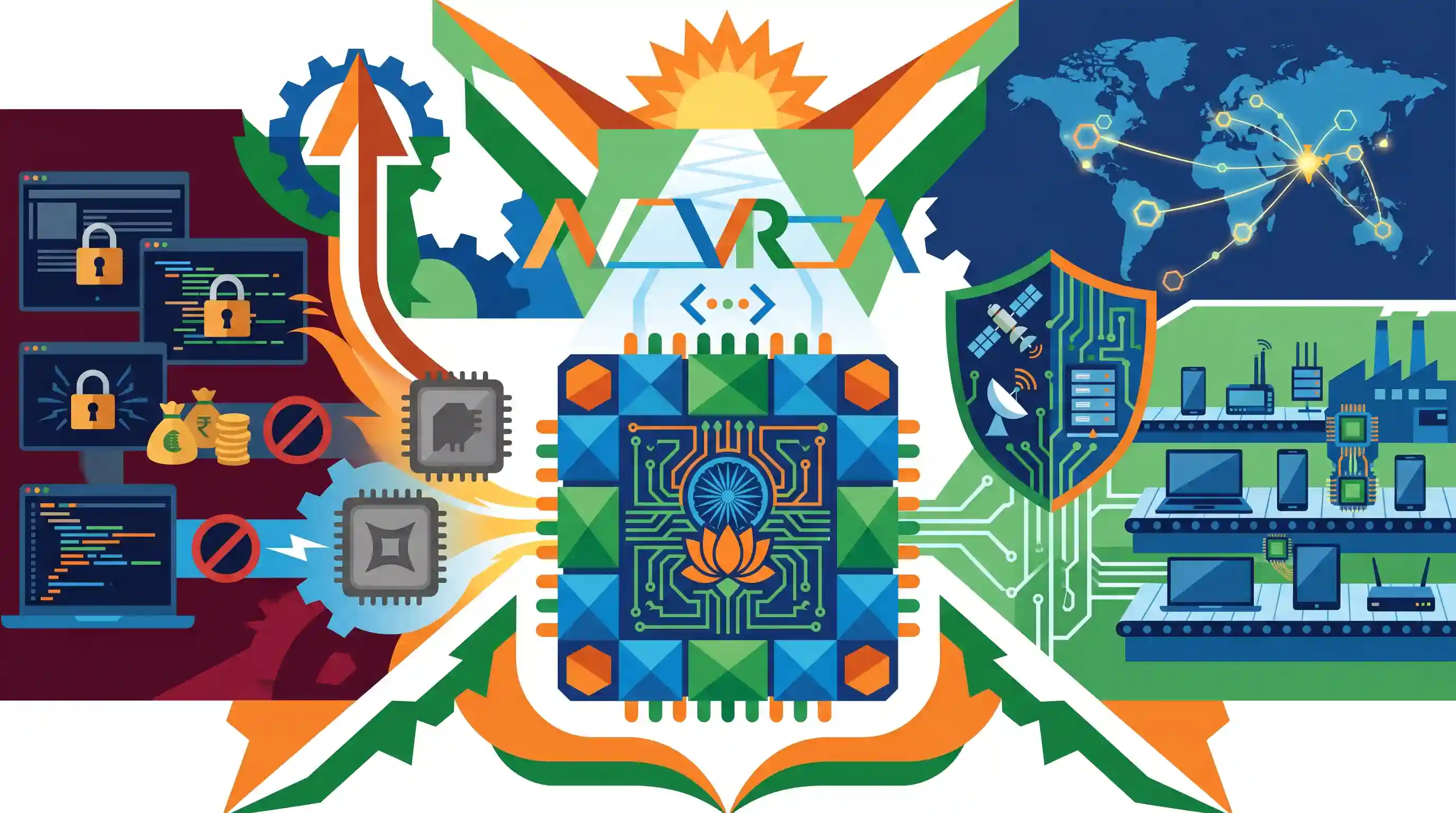
क्यों मायने रखता है
Self-reliance in electronics and semiconductor manufacturing is a major strategic goal for India (e.g., India Semiconductor Mission). Indigenous chips like DHRUV64 reduce import dependence, enhance national security in critical infrastructure, and align with UPSC GS3 topics on technology and industrial policy.
सारांश
The article explains the significance of DHRUV64, India's indigenous 64-bit microprocessor. Developed as part of the country's push for self-reliance in semiconductor technology, DHRUV64 is based on the open-source RISC-V architecture, which reduces reliance on expensive proprietary designs like ARM and x86. The chip represents a critical milestone under the Digital India RISC-V (DIR-V) program and the India Semiconductor Mission (ISM). By indigenizing microprocessor design, India aims to ensure hardware security for strategic sectors, boost local electronics manufacturing, and establish itself as a prominent player in the global semiconductor value chain, advancing the vision of Atmanirbhar Bharat.
मुख्य बिंदु
- DHRUV64 is a 64-bit indigenous microprocessor representing India's push towards self-reliance in semiconductor design.
- The development leverages the open-source RISC-V instruction set architecture, reducing dependency on proprietary foreign IP like ARM or x86.
- It strengthens India's semiconductor ecosystem under initiatives like the DIR-V program and the broader India Semiconductor Mission (ISM).
- Indigenous microprocessors enhance strategic autonomy, secure critical infrastructure against hardware backdoors, and support the Make in India goals in electronics.
महत्वपूर्ण शब्द
Dhruv64

An indigenous 1.0 GHz, 64-bit dual-core microprocessor developed by C-DAC. It is built on open-source architecture for use in strategic sectors like 5G and IoT.
UPSC context
GS III: Science & Tech. Tests knowledge of technological indigenization and hardware security in strategic sectors.
Digital India RISC-V (DIR-V) Program
A MeitY initiative to develop indigenous microprocessors (like Shakti and Vega) using open-source RISC-V architecture, aiming to reduce dependence on foreign proprietary designs.
UPSC context
GS III: Science & Tech. Important for government policies promoting domestic innovation and "Atmanirbhar Bharat."
इंडिया सेमीकंडक्टर मिशन (ISM)
A nodal agency under the Digital India Corporation tasked with establishing a robust semiconductor and display manufacturing ecosystem in India via financial incentives.
UPSC context
GS III: भारतीय अर्थव्यवस्था/विज्ञान एवं प्रौद्योगिकी। वैश्विक आपूर्ति श्रृंखला एकीकरण और औद्योगिक विकास के लिए महत्वपूर्ण।
RISC-V Architecture
An open-standard Instruction Set Architecture (ISA) that allows for royalty-free processor design and manufacture, offering a secure, customizable alternative to proprietary ARM/x86 standards.
UPSC context
GS III: Science & Tech. Highlights open-source technology's role in achieving strategic digital autonomy.
C-DAC (Centre for Development of Advanced Computing)
MeitY के अंतर्गत प्रमुख R&D संगठन जो भारत के सुपर कंप्यूटर और Dhruv64 माइक्रोप्रोसेसर के डिज़ाइन सहित उन्नत कंप्यूटिंग प्रौद्योगिकियों के लिए जिम्मेदार है।
UPSC context
GS III: Science & Tech. Identifies key institutional frameworks driving India's computational sovereignty.
Atmanirbhar Bharat
अर्थव्यवस्था और नवाचार जैसे स्तंभों के माध्यम से भारत को आत्मनिर्भर बनाने का एक राष्ट्रीय दृष्टिकोण, जिसमें सेमीकंडक्टर टेक्नोलॉजी जैसे रणनीतिक क्षेत्रों में घरेलू विनिर्माण पर विशेष बल दिया गया है।
UPSC context
GS III: Indian Economy. The foundational framework for current industrial policy and self-sufficiency goals.
प्रारंभिक ट्रैप
DHRUV64 is built on a proprietary instruction set architecture developed exclusively by the Indian government.
DHRUV64 is an indigenous design, but it uses RISC-V, which is a global open-source architecture. UPSC often incorrectly swaps 'open-source' with 'proprietary' to test conceptual clarity.
संबंधित अवधारणाएँ
What makes RISC-V architecture crucial for indigenous microprocessor development?
- ओपन-सोर्स प्रकृति: यह एक ओपन-सोर्स इंस्ट्रक्शन सेट आर्किटेक्चर है, जिसमें किसी लाइसेंसिंग शुल्क की आवश्यकता नहीं होती है और यह ARM और Intel (x86) जैसे प्रोप्रायटरी दिग्गजों के एकाधिकार को समाप्त करता है।
- High Customizability: Developers can easily modify and extend the architecture to optimize chips for highly specific tasks like AI, IoT, or defense applications.
- Hardware Security: Complete access to the foundational architecture ensures no hidden foreign backdoors or hardware trojans are embedded in strategic systems.
What are the core mechanisms of the India Semiconductor Mission (ISM)?
- Capital Subsidy: Provides a flat 50% financial support on a pari-passu basis for setting up Semiconductor and Display Fabs in India.
- Design Linked Incentive: DLI योजना घरेलू फैबलेस चिप डिजाइन स्टार्टअप्स के लिए विभिन्न चरणों में वित्तीय प्रोत्साहन और डिजाइन इंफ्रास्ट्रक्चर सहायता प्रदान करती है।
- Nodal Execution: Operates as an independent business division within the Digital India Corporation (MeitY) to drive long-term electronics manufacturing strategies.
अंतर-विषय पैटर्न
Hardware Trojans and Critical Infra
चिप डिज़ाइन का स्वदेशीकरण रक्षा, पावर ग्रिड और टेलीकॉम में सप्लाई-चेन हमलों और छिपे हुए हार्डवेयर बैकडोर (ट्रोजन) के जोखिम को कम करता है, जो स्पष्ट रूप से S&T के स्वदेशीकरण को आंतरिक सुरक्षा से जोड़ता है।
RISC-V and India's DPI Strategy
Adopting open-source RISC-V mirrors India's broader Digital Public Infrastructure approach (like UPI/ONDC), aiming to build sovereign capabilities while avoiding monopolistic Big Tech vendor lock-in.

भारत की DIR-V योजना में ओपन-सोर्स RISC-V और प्रोपराइटरी ARM आर्किटेक्चर के बीच अंतर का परीक्षण करने वाले 2026 Prelims के एक प्रश्न की अपेक्षा करें।
संबद्ध PYQ · 3
संबद्ध PYQ · 3
- 2025MainsGS3
India aims to become a semiconductor manufacturing hub. What are the challenges faced by the semiconductor industry in India? Mention the salient features of the India Semiconductor Mission.
- 2022PrelimsGS1
Consider the following : 1. Aarogya Setu 2. CoWIN 3. DigiLocker 4. DIKSHA Which of the above are built on top of open-source digital platforms?
- 2023MainsGS3
What is the status of digitalization in the Indian economy? Examine the problems faced in this regard and suggest improvements.
