Ensuring Healthcare Safety and Systemic Reforms in Public Health
Source:The Hindu ↗
Why It Matters
Ensuring healthcare safety is directly linked to the Right to Life (Article 21) and the moral imperative of a welfare state. Understanding the challenges and systemic reforms needed in the healthcare sector is crucial for GS Paper 2 (Health, Social Justice) and helps candidates address questions on public healthcare infrastructure and governance.
Summary
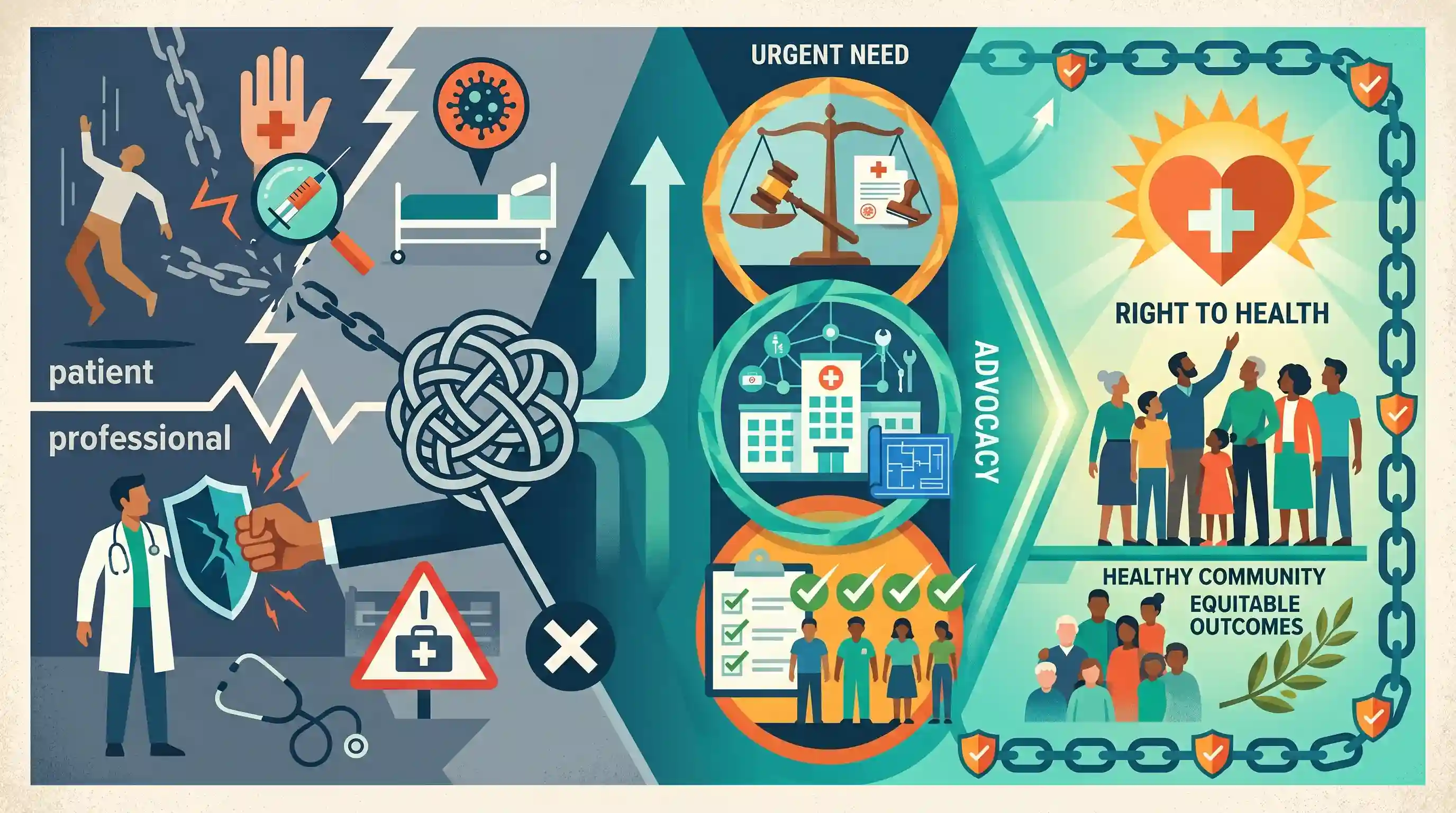
The article emphasizes the urgent need to make the Indian healthcare system safer for both patients and medical professionals. It highlights the systemic challenges that lead to medical errors, hospital-acquired infections, and growing instances of violence against doctors. By advocating for robust regulatory frameworks, better infrastructure, and a culture of accountability, it underlines that ensuring healthcare safety is essential for upholding the right to health and achieving equitable public health outcomes.
Key Points
- Healthcare safety encompasses both the protection of patients from medical errors and infections, and ensuring a secure working environment for healthcare professionals.
- Systemic deficiencies, such as inadequate public health infrastructure and understaffing, significantly compromise the quality of care and contribute to adverse medical events.
- There is a pressing need for strict enforcement of regulatory frameworks and adherence to standard treatment guidelines to improve patient outcomes and accountability.
- Enhancing the reach and quality of primary healthcare through increased state investment is crucial for building trust and ensuring equitable access to safe medical services.
Important Terms
Clinical Establishments Act, 2010

A central legislation mandating registration of all clinical facilities—public, private, and AYUSH—to ensure minimum standards for physical infrastructure, personnel, and healthcare services across India.
UPSC context
GS2: Government Policies. Tests knowledge of healthcare regulation, standardisation, and the federal challenges of central-state legislative adoption.
Right to Health
An interpreted fundamental right under Article 21 (Right to Life) of the Constitution, affirmed by the Supreme Court as essential for a life with dignity.
UPSC context
GS2: Constitution/Social Justice. Evaluates understanding of judicial activism, Article 21, and State obligations under Article 47.
Patient Safety
A healthcare discipline focused on reducing avoidable risks and harm to patients, guided by the WHO’s Global Patient Safety Action Plan 2021–2030.
UPSC context
GS2: Health Governance. Relevant for topics on medical ethics, quality of healthcare delivery, and systemic accountability.
Hospital-Acquired Infections (HAI)
Infections acquired during hospitalization that were not present at admission, often resulting from hygiene failures, invasive devices, or antimicrobial resistance.
UPSC context
GS3: Science & Tech/Public Health. Critical for understanding biosafety, sanitation protocols, and the challenge of superbugs in clinical settings.
Ministry of Health and Family Welfare (MoHFW)
The apex administrative body in India responsible for health policy, family welfare programs, and the implementation of national health missions like Ayushman Bharat.
UPSC context
GS2: Institutional Framework. Fundamental for understanding the executive structure of public health and national health schemes.
World Health Organization (WHO)
The UN specialized agency for international public health that sets global standards, coordinates pandemic responses, and promotes universal health coverage.
UPSC context
GS2: International Institutions. Important for global health diplomacy, standard-setting, and Sustainable Development Goal (SDG) 3.
Prelims Trap
The Clinical Establishments Act 2010 enforces uniform and binding safety standards across all states.
Health is a State List subject. The Act was enacted under Article 252 and applies only to states that voluntarily adopt it via resolutions, leading to inconsistent nationwide implementation.
Static Concepts Connected
How is the 'Right to Health' constitutionally protected in India?
- Article 21: The Supreme Court has interpreted the Right to Health as an inherent part of the Right to Life (e.g., Paschim Banga Khet Mazdoor Samity case, 1996).
- Article 47 (DPSP): A Directive Principle that mandates the State to raise nutrition levels, the standard of living, and improve public health.
- State List: Public health, sanitation, hospitals, and dispensaries fall under List II (State List) of the Seventh Schedule, making states primary actors.
What links Hospital-Acquired Infections (HAIs) to Antimicrobial Resistance (AMR)?
- Breeding grounds: Hospitals pool diverse pathogens and heavily utilize antibiotics, creating intense selective pressure that forces pathogens to mutate into drug-resistant strains.
- Superbug transmission: HAIs frequently involve multidrug-resistant organisms (MDROs) like MRSA, rendering standard antibiotic treatments ineffective and accelerating the broader AMR crisis.
- Red Line Campaign: A national awareness campaign urging people not to use medicines marked with a red line without a prescription, mitigating AMR.
Cross-Topic Patterns
Epidemic Act + Doctor Safety
The 2020 amendment to the 1897 Epidemic Diseases Act made violence against healthcare workers non-bailable, linking colonial-era disease containment laws to modern occupational safety and fundamental rights.
AMR + Hospital Infection Control
Hospital-Acquired Infections directly fuel Antimicrobial Resistance (AMR). UPSC frequently tests AMR; expect it to be linked with healthcare infrastructure quality, sanitation, and the One Health approach.

Expect a multi-statement question linking Article 21's Right to Health with the Article 252 mechanism used for the Clinical Estb. Act.
Linked PYQs · 3
Linked PYQs · 3
- 2024MainsGS2
In a crucial domain like the public healthcare system the Indian State should play a vital role to contain the adverse impact of marketisation of the system. Suggest some measures through which the State can enhance the reach of public healthcare at the grassroots level.
- 2021MainsGS2
“Besides being a moral imperative of a Welfare State, primary health structure is a necessary precondition for sustainable development.” Analyze.
- 2020MainsGS2
In order to enhance the prospects of social development, sound and adequate health care policies are needed particularly in the fields of geriatric and maternal health care. Discuss.
