Maharashtra Legislative Council Elections Seat Sharing Dispute
Source:indianrajniti ↗
Why It Matters
Important for understanding state-level legislative structures, coalition politics, and electoral dynamics in Maharashtra for MPSC aspirants.
Summary
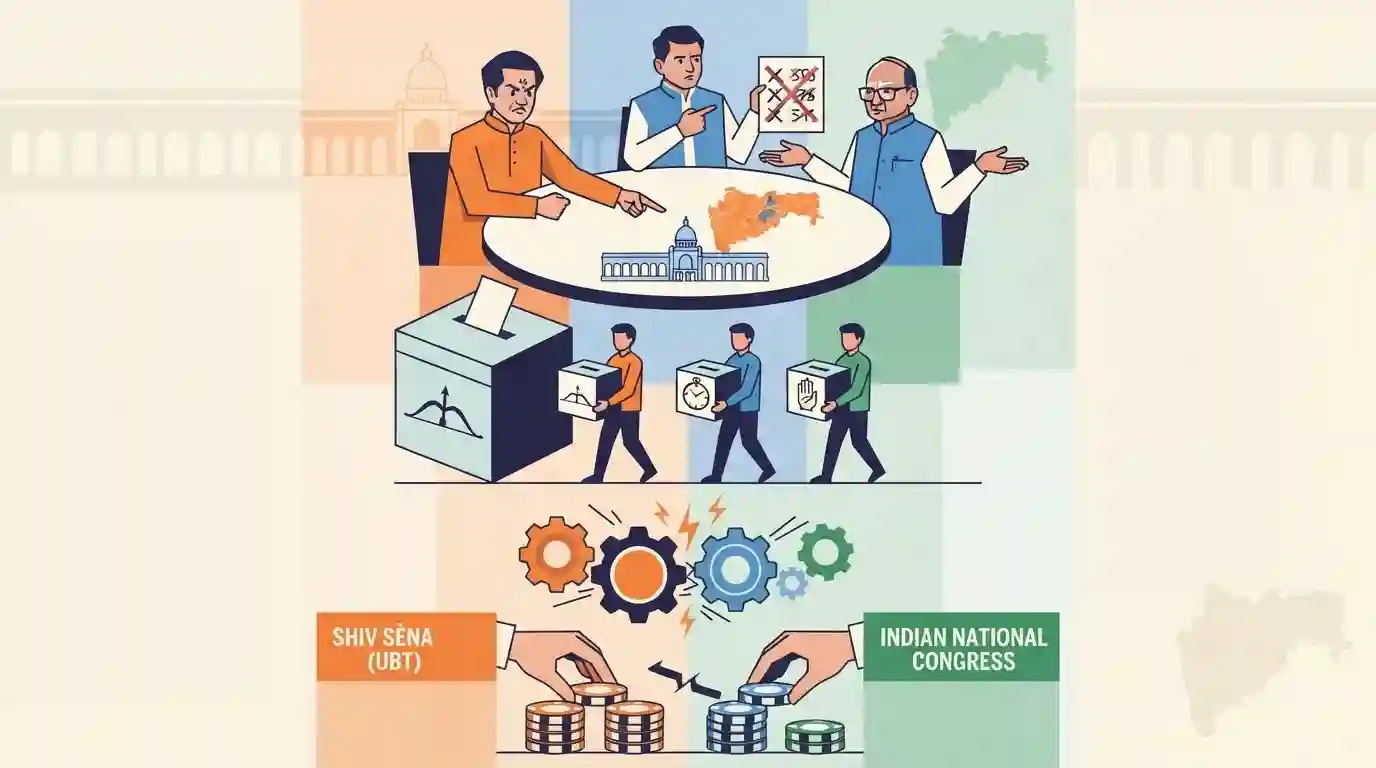
The article discusses political tensions and seat-sharing disagreements within the Maha Vikas Aghadi (MVA) alliance over the Maharashtra Legislative Council (MLC) elections, focusing on political friction and coalition bargaining.
Key Points
- Disputes over seat-sharing emerged within the Maha Vikas Aghadi (MVA) coalition concerning upcoming Maharashtra Legislative Council (MLC) elections.
- Seat-sharing negotiations highlight internal political maneuvering and coalition dynamics in Maharashtra politics.
- Coalition politics play a critical role in the composition and electoral outcomes of the Maharashtra Vidhan Parishad.
Important Terms
MVA (Maha Vikas Aghadi)

A political coalition in Maharashtra comprising the Congress, Shiv Sena (UBT), and the Nationalist Congress Party (Sharad Pawar faction), formed to contest state elections and form government.
UPSC context
MPSC Paper II (Indian Polity and Governance): Important for understanding state-level coalition politics, multi-party alliances, and electoral dynamics in Maharashtra.
Prelims Trap
The Maharashtra Legislative Council is subject to dissolution every five years and requires members to be at least 25 years of age.
Aspirants often confuse the minimum age for Legislative Council (30 years) with the Legislative Assembly (25 years), or assume the Council can be dissolved like the Lok Sabha.
Static Concepts Connected
What is the constitutional procedure for the creation or abolition of a State Legislative Council under Article 169?
- Assembly Resolution: Initiation via Assembly resolution passed by a special majority (total membership majority + 2/3rds present and voting).
- Parliament Power: Parliamentary enactment through a simple majority law, not considered a constitutional amendment under Article 368.
- Bicameral States: Examples of states with bicameral legislatures include Maharashtra, Uttar Pradesh, Bihar, Karnataka, Andhra Pradesh, and Telangana.
Cross-Topic Patterns
MLC Elections and Grassroots Coalition Bargaining
MLC elections are often influenced by local authorities and graduate constituencies, linking coalition bargaining directly with grassroots political mobilization across rural and urban Maharashtra.
Article 169 and Federal Legislative Supremacy
Article 169's power of Parliament to create or abolish a Vidhan Parishad connects state legislative design directly with federal legislative supremacy and special majority requirements.

Expect a multi-statement question on Vidhan Parishad composition, Article 169 creation process, and retirement cycles of members.
Linked PYQs · 2
Linked PYQs · 2
- 2011MPSC_PRELIMSGS1
How many members are there in Maharashtra Vidhan Parishad at present ?
- 2022MPSC_PRELIMSGS1
Which Article of the Indian Constitution empowers the Parliament of India to create or abolish Legislative Councils, if the Legislative Assembly of the State passes a resolution to that effect ?
