Marathi Language Rule: Deadline Extended for Auto and Taxi Drivers
Source:newsonair ↗
Why It Matters
This policy move highlights how regional identity is integrated into administrative and licensing frameworks like the Maharashtra Motor Vehicles Rules. For MPSC aspirants, understanding the state's linguistic policies, the Maharashtra Official Languages Act, 1964, and constitutional articles related to state and regional languages (Articles 345, 350, 350A, 350B, 351) is essential, as these frequently feature in state polity and administration questions.
Summary
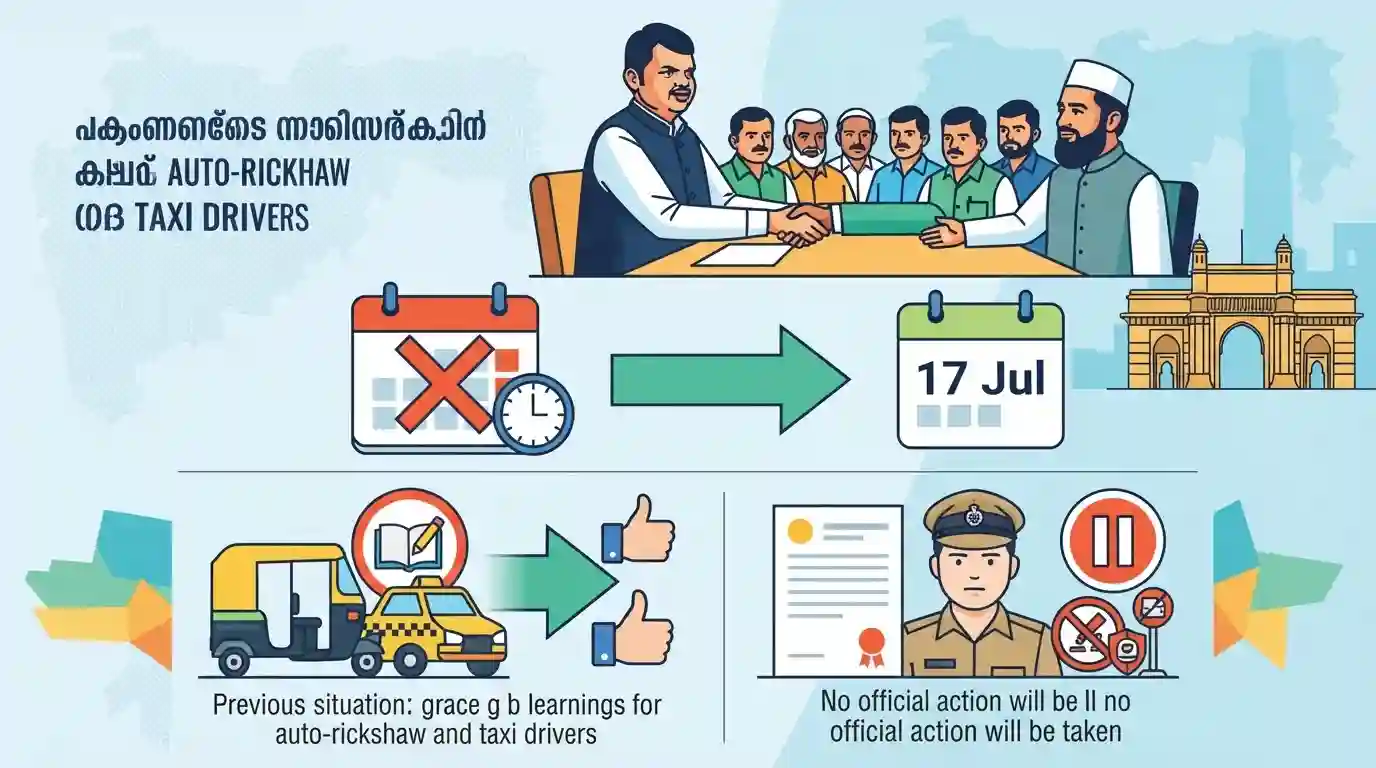
The Maharashtra government, led by Chief Minister Devendra Fadnavis, has extended the deadline for autorickshaw and taxi drivers in the state to learn basic Marathi by one year. No official action will be taken against them for failing to meet the language prerequisite during this period. The decision came after union representatives led by Haji Arfat met with the CM to request more time while affirming their willingness to comply with the language guidelines.
Key Points
- The Maharashtra government has extended the deadline for autorickshaw and taxi drivers to acquire basic Marathi language skills by one year.
- No penal or regulatory action will be taken against the drivers during this one-year extension period for failing to meet the language requirement.
- The decision was announced by Maharashtra Chief Minister Devendra Fadnavis following a discussion in Mumbai.
- The extension was granted after a delegation of driver unions, led by Haji Arfat, met the Chief Minister to express their willingness to learn Marathi while requesting additional time to comply.
- The policy represents a significant intersection of local public transport regulations (licensing and permits) and state policies promoting the regional language.
Important Terms
Maharashtra Official Languages Act, 1964

State legislation enacted to adopt Marathi in the Devanagari script as the official language of Maharashtra for administrative and legislative transactions.
UPSC context
MPSC GS-II (Polity); tests regional language policies, state legislative authority, and constitutional provisions.
Maharashtra Motor Vehicles Rules
Rules framed under the Motor Vehicles Act to regulate vehicle licensing, commercial permits, driver badges, and regional transport guidelines within Maharashtra.
UPSC context
MPSC GS-II and RTO Exams; tests delegated legislation, state transport administration, and permit compliance.
Maharashtra Transport Department
The state executive wing responsible for executing transit laws, issuing public passenger vehicle permits, and enforcing transport safety and licensing rules.
UPSC context
MPSC GS-II (State Administration); tests executive structures, departmental roles, and policy implementation.
Autorickshaw and Taxi Drivers' Unions
Organized labor bodies representing commercial transport operators, acting as pressure groups to negotiate permit rules, compliance deadlines, and driver welfare.
UPSC context
MPSC GS-II (Pressure Groups); tests non-state actors and civic lobbying in regional policy.
Maharashtra Government
The state-level governing authority comprised of the legislative, executive, and judicial organs that formulate and implement public and administrative policies in Maharashtra.
UPSC context
MPSC GS-II (State Government); tests executive functioning, cabinet decisions, and federal administrative powers.
Prelims Trap
The Parliamentary Committee on Official Language monitors and reviews the implementation of regional languages in state administrations.
Under Article 344, this committee only reviews the progressive use of Hindi for Union purposes, not regional state languages like Marathi.
Static Concepts Connected
What are the constitutional rules governing State Official Languages under Article 345?
- Legislative Power: The State Legislature may by law adopt any one or more languages in use in the State, or Hindi, as its official language.
- Default Language: Until the State Legislature decides otherwise, English continues to be used for official purposes within that State.
What is the composition of the Committee of Parliament on Official Language?
- Strength and Ratio: Consists of 30 members, with 20 from the Lok Sabha and 10 from the Rajya Sabha.
- Election Method: Members are elected by both Houses using proportional representation by means of a single transferable vote.
- Core Mandate: Tasked exclusively with reviewing the progressive use of Hindi for official Union purposes.
Cross-Topic Patterns
Language mandates vs Article 19(1)(g)
State language rules for commercial licenses test the balance between regional identity promotion and the fundamental right to practice any profession across India.
Concurrent List & Motor Vehicle Rules
Entry 35 of the Concurrent List allows state governments to frame local rules under the central Motor Vehicles Act to regulate public transport.

MPSC may test the constitutional limits of state-mandated language rules for public services against Article 19(1)(g) and Article 345.
Linked PYQs · 3
Linked PYQs · 3
- 2026MPSC_PRELIMSGS1
Match the correct pairs of the following articles of the Constitution of India with the subject. Subject (a) Language to be used in the complaint for redressal of grievances (b) Facilities for education in mother tongue at primary level (c) Special officer for linguistic minority communities (d) Directive for development of Hindi Language Articles (i) 350 A (ii) 351 (iii) 350 (iv) 350 B Code: (a) (b) (c) (d)
- 2014MPSC_PRELIMSGS1
In the Legislative Assembly the official work is carried out in which language ?
- 2026MPSC_PRELIMSGS1
Arrange the classical languages of India in an appropriate order as per their recognition. (a) Telugu (b) Sanskrit (c) Pali (d) Odia (e) Tamil
