Digital Addiction Among Children and State Policy Interventions
Source:Indian Express ↗
Why It Matters
This development is highly relevant for UPSC as it directly ties into concerns about the socialization of children in the digital age (GS1), the role of state policy and commissions like NCPCR in protecting vulnerable sections (GS2), and the ethical dilemmas posed by social media and internet expansion (GS4). It provides a concrete example of a state-level policy response to a modern socio-technological crisis.
Summary
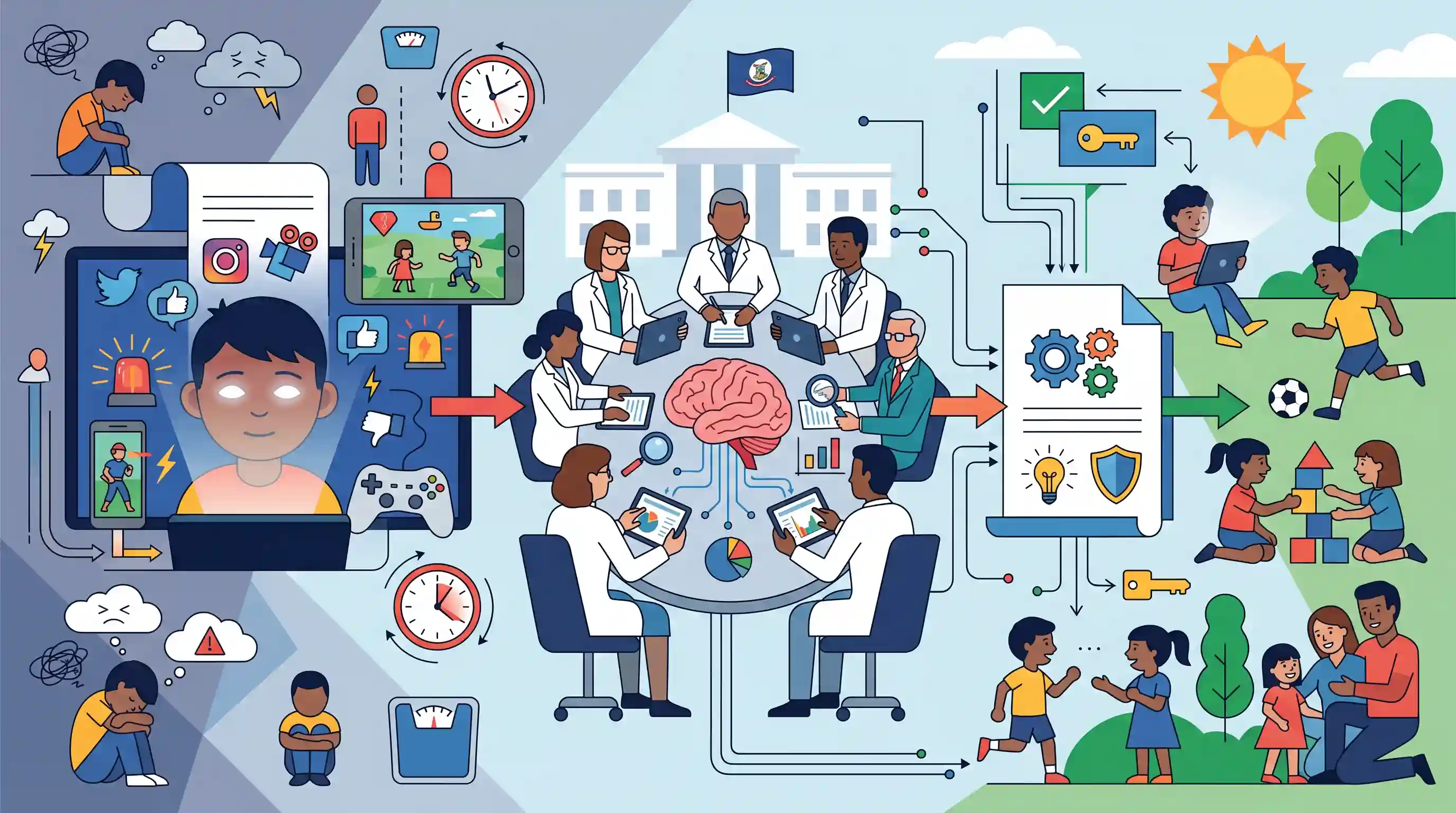
The Maharashtra government has established an expert committee to examine the growing issue of digital and screen addiction among children. Tasked with studying the impact of social media, mobile gaming, and prolonged screen time on the mental and physical well-being of youth, the panel is expected to submit a comprehensive report by the next legislative session. This proactive governance step aligns with global and national concerns over regulating children's internet usage and aims to inform future state policies regarding digital health and child protection.
Key Points
- The Maharashtra government has constituted an expert committee to investigate the rising trend of digital and screen addiction among children and teenagers.
- The panel will evaluate the psychological, physical, and social impacts of excessive social media consumption and mobile gaming on minors.
- A detailed report, likely including policy recommendations and regulatory measures, is expected to be submitted by the next legislative session.
- This initiative underscores a growing policy emphasis on digital health and child protection, mirroring global efforts to safeguard vulnerable youth from the harms of unregulated digital spaces.
Important Terms
Digital Addiction

Compulsive and excessive use of digital devices (gaming, social media) that impairs a child's cognitive, emotional, and social development.
UPSC context
GS II (Social Justice/Health) and GS IV (Ethics); tests understanding of modern lifestyle-based behavioral health challenges.
Child Rights
Fundamental entitlements of minors to protection and healthy development, including digital safety and privacy under the Right to Life (Article 21).
UPSC context
GS II (Vulnerable Sections); tests knowledge of statutory bodies like NCPCR and legislative protections like the POCSO Act.
Mental Health
A state of emotional and social well-being where individuals realize their potential and cope with life’s stresses, recognized as a human right.
UPSC context
GS II (Social Sector-Health); focuses on policies like the Mental Healthcare Act 2017 and Tele-MANAS.
Digital Wellness
The intentional practice of maintaining a healthy relationship with technology to ensure long-term physical, mental, and emotional well-being.
UPSC context
GS IV (Ethics) and GS III (IT); examines the balance between technological progress and human development.
Social Sector Interventions
Proactive governance measures—such as expert panels or schemes—aimed at improving public welfare and managing risks for vulnerable populations.
UPSC context
GS II (Governance/Social Justice); evaluates the state's capacity to address emerging socio-technical challenges.
Prelims Trap
WHO's ICD-11 classifies general 'internet addiction' and 'excessive screen time' as recognized mental health disorders.
WHO specifically recognizes 'Gaming Disorder' in ICD-11, not generalized internet addiction. Furthermore, medical studies differentiate 'addictive use trajectories' from mere 'total screen time'.
Static Concepts Connected
What is the Constitutional division of powers regarding digital health and child protection?
- Public Health: Entry 6 of the State List (List II) covers public health, giving states the mandate to manage digital de-addiction and healthcare responses.
- Union Controls IT: Entry 31 of the Union List (List I) covers telecommunications and the internet, limiting a state's ability to directly regulate social media platforms.
- Article 39(f) DPSP: Article 39(f) mandates that children are protected against exploitation and given opportunities to develop in a healthy manner.
How are online games regulated for child safety in India?
- IT Rules 2023: The IT (Intermediary Guidelines) Amendment Rules 2023 mandate intermediaries to not host games that cause psychological or physical harm to children.
- Self-Regulatory Bodies (SRBs): The rules proposed establishing independent SRBs to verify permissible online real-money games, though their implementation has faced delays.
Cross-Topic Patterns
Federalism in Digital Regulation
States initiating digital health panels highlight a jurisdictional grey area: public health is a State subject, but internet and telecommunications regulation strictly belongs to the Union.
Ethics of the Attention Economy
Links GS-4 (Corporate Ethics) with GS-2, exploring how tech companies use dark patterns and dopamine-driven design to fuel 'gaming disorder' and maximize engagement among vulnerable minors.

A 2026 Mains question will likely bridge 'gaming disorder' with intermediary liability and federal tensions over internet regulation.
Linked PYQs · 4
Linked PYQs · 4
- 2023MainsGS1
Child cuddling is now being replaced by mobile phones. Discuss its impact on the socialization of children.
- 2025MainsGS2
The National Commission for Protection of Child Rights has to address the challenges faced by children in the digital era. Examine the existing policies and suggest measures the Commission can initiate to tackle the issue.
- 2025MainsGS4
In the present digital age, social media has revolutionised our way of communication and interaction. However, it has raised several ethical issues and challenges. Describe the key ethical dilemmas in this regard.
- 2020MainsGS4
‘The current internet expansion has instilled a different set of cultural values which are often in conflict with traditional values.’ Discuss.
