Coldrif Syrup Ban and Drug Regulatory Gaps in Pediatric Medicines
Source:The Hindu ↗
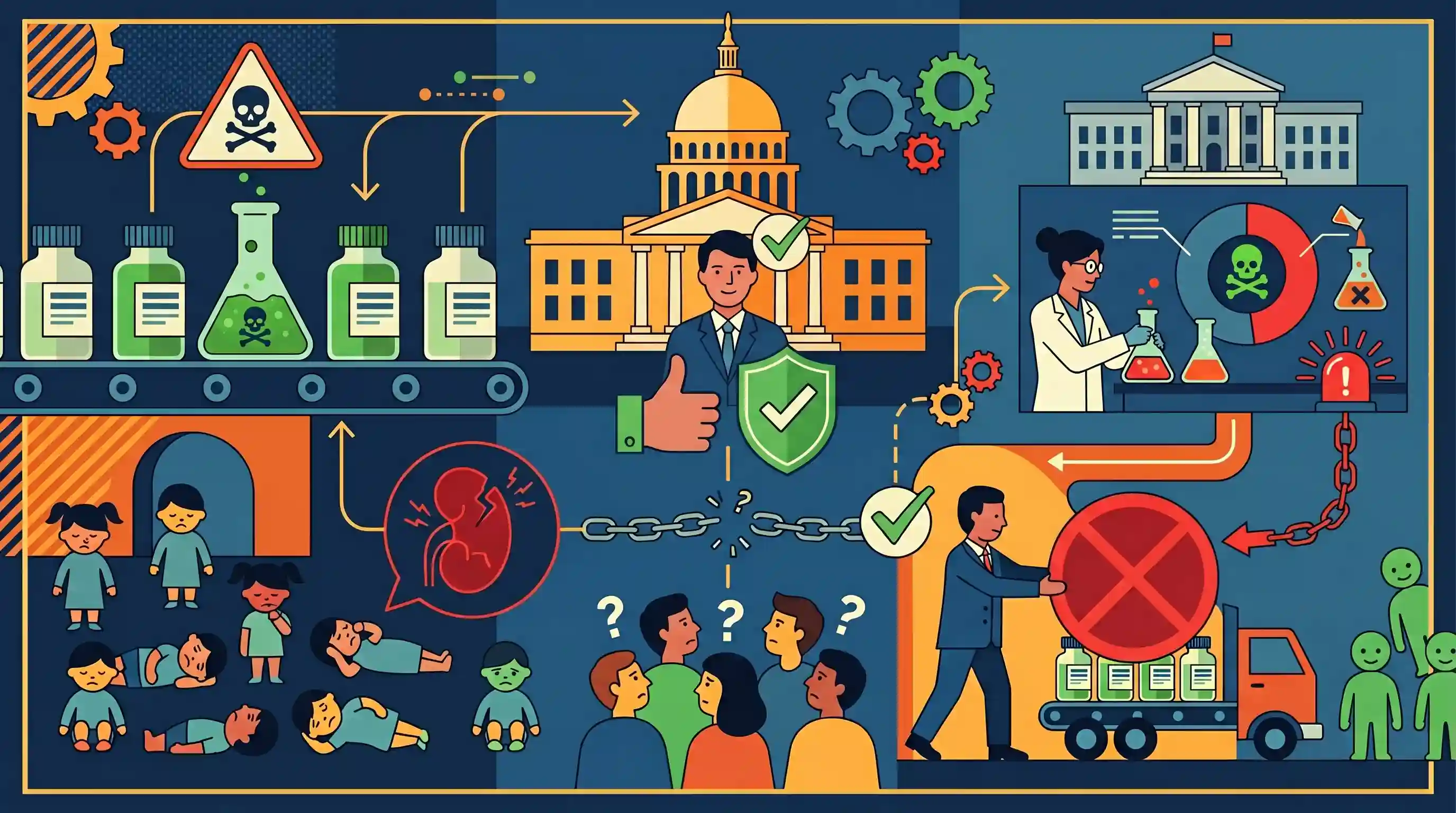
Why It Matters
The issue highlights systemic vulnerabilities in India's pharmaceutical quality control and the fragmentation between state and central drug regulatory bodies. It demonstrates the direct public health impacts of regulatory failures, particularly the recurring danger of diethylene glycol (DEG) adulteration in pediatric medicines.
Summary
The Madhya Pradesh government has banned the sale of 'Coldrif Syrup', manufactured by Sresan Pharmaceuticals, following the deaths of nine children in Chhindwara from suspected renal failure. While the Union Health Ministry had initially cleared the drug of containing lethal solvents, a subsequent report from a Tamil Nadu laboratory found the syrup to be adulterated with 48.6% diethylene glycol (DEG). The Madhya Pradesh Food and Drug Administration enforced the ban based on the Tamil Nadu report to prevent further casualties, underscoring ongoing concerns about pharmaceutical safety and regulatory oversight in India.
Key Points
- The Madhya Pradesh government banned 'Coldrif Syrup' after it was linked to the deaths of nine children in Chhindwara due to suspected renal failure.
- The syrup, manufactured by Tamil Nadu-based Sresan Pharmaceuticals, was found to contain 48.6% diethylene glycol (DEG) according to a Tamil Nadu lab report.
- The state-level ban highlights conflicting safety assessments, as the Union Health Ministry had initially ruled out the presence of DEG in the implicated batch.
- The incident exposes critical gaps in India's drug quality control, centre-state coordination in pharmaceutical regulation, and the recurring issue of DEG adulteration in pediatric medicines.
Important Terms
Diethylene Glycol (DEG)

A toxic, colorless, and odorless industrial solvent used in antifreeze and brake fluids. It is sometimes illegally used as a cheap substitute for pharmaceutical-grade solvents, leading to acute renal failure.
UPSC context
GS Paper 2/3: Public Health and Science. Essential for understanding pharmaceutical adulteration crises and chemical safety standards.
Central Drugs Standard Control Organisation (CDSCO)
India's national regulatory body for pharmaceuticals and medical devices. Operating under the Ministry of Health and Family Welfare, it oversees drug approvals, clinical trials, and standards for imported drugs.
UPSC context
GS Paper 2: Statutory and Regulatory Bodies. Key to discussions on healthcare governance and regulatory oversight.
Drugs and Cosmetics Act, 1940
The primary legislation regulating the import, manufacture, distribution, and sale of drugs and cosmetics in India. It ensures products meet prescribed safety, efficacy, and quality standards.
UPSC context
GS Paper 2: Government Policies and Interventions. The foundational legal framework for all drug-related regulatory questions.
State Food and Drug Administration (FDA)
State-level authorities responsible for licensing drug manufacturing units, conducting inspections, and enforcing the Drugs and Cosmetics Act within their respective jurisdictions.
UPSC context
GS Paper 2: Federalism/Governance. Highlights the division of regulatory powers between Centre and States in health.
Pharmacovigilance
The science of detecting, assessing, and preventing adverse effects or any other drug-related problems. In India, this is spearheaded by the Pharmacovigilance Programme of India (PvPI).
UPSC context
GS Paper 3: Science and Technology. Relevant to drug safety monitoring and post-marketing surveillance mechanisms.
Prelims Trap
"The Central Drugs Standard Control Organisation (CDSCO) is the sole authority that issues manufacturing licenses for pharmaceutical syrups."
State Food and Drug Administrations (FDAs) grant manufacturing licenses and monitor existing drugs. CDSCO approves new drugs and sets standards, not local manufacturing licenses.
Static Concepts Connected
Why is Diethylene Glycol (DEG) lethal when consumed in medicines?
- Industrial Use: It is an industrial solvent used in antifreeze, often illegally substituted by MSMEs for safe pharmaceutical-grade solvents like propylene glycol or glycerin to cut costs.
- Toxicity Mechanism: Upon ingestion, the liver metabolizes DEG into highly toxic compounds, primarily oxalic acid.
- Health Impact: These metabolites cause fatal acute kidney injury (renal failure) and severe neurological complications, especially vulnerable in children.
How is pharmaceutical regulatory authority divided between the Centre and States?
- CDSCO (Centre): Responsible for approving new drugs, regulating clinical trials, setting drug standards, and controlling the quality of imported pharmaceuticals.
- State FDAs: Responsible for issuing manufacturing and sales licenses, inspecting facilities, and enforcing quality control for existing drugs within their jurisdiction.
- Statutory Backing: Both agencies draw their regulatory and penal authority from the Drugs and Cosmetics Act, 1940.
Cross-Topic Patterns
'Pharmacy of the World' vs. DEG scandals
Domestic pediatric deaths mirror recent international tragedies involving Indian syrups in Gambia and Uzbekistan, threatening India's GS3 pharma export competitiveness and 'Pharmacy of the World' standing.
Federal friction in drug regulation and testing
Conflicting lab safety reports between the Union Health Ministry and Tamil Nadu highlight GS2 federal challenges in establishing uniform national health enforcement and testing protocols.

A 2026 Prelims question will likely combine Diethylene Glycol toxicity mechanisms with the jurisdictional limits of CDSCO vs State FDAs.
Linked PYQs · 3
Linked PYQs · 3
- 2024MainsGS2
In a crucial domain like the public healthcare system the Indian State should play a vital role to contain the adverse impact of marketisation of the system. Suggest some measures through which the State can enhance the reach of public healthcare at the grassroots level.
- 2015MainsGS2
For achieving the desired objectives, it is necessary to ensure that the regulatory institutions remain independent and autonomous. Discuss in the light of the experiences in recent past.
- 2021PrelimsGS1
Bisphenol A (BPA), a cause of concern, is a structural/key component in the manufacture of which of the following kinds of plastics?
