Madhya Pradesh advances forest tourism and cheetah relocation plan
Source:indianmasterminds ↗
Why It Matters
Crucial for MPPSC State Service Prelims under Madhya Pradesh geography, protected areas, wildlife sanctuaries, and major conservation projects like the Cheetah reintroduction.
Summary
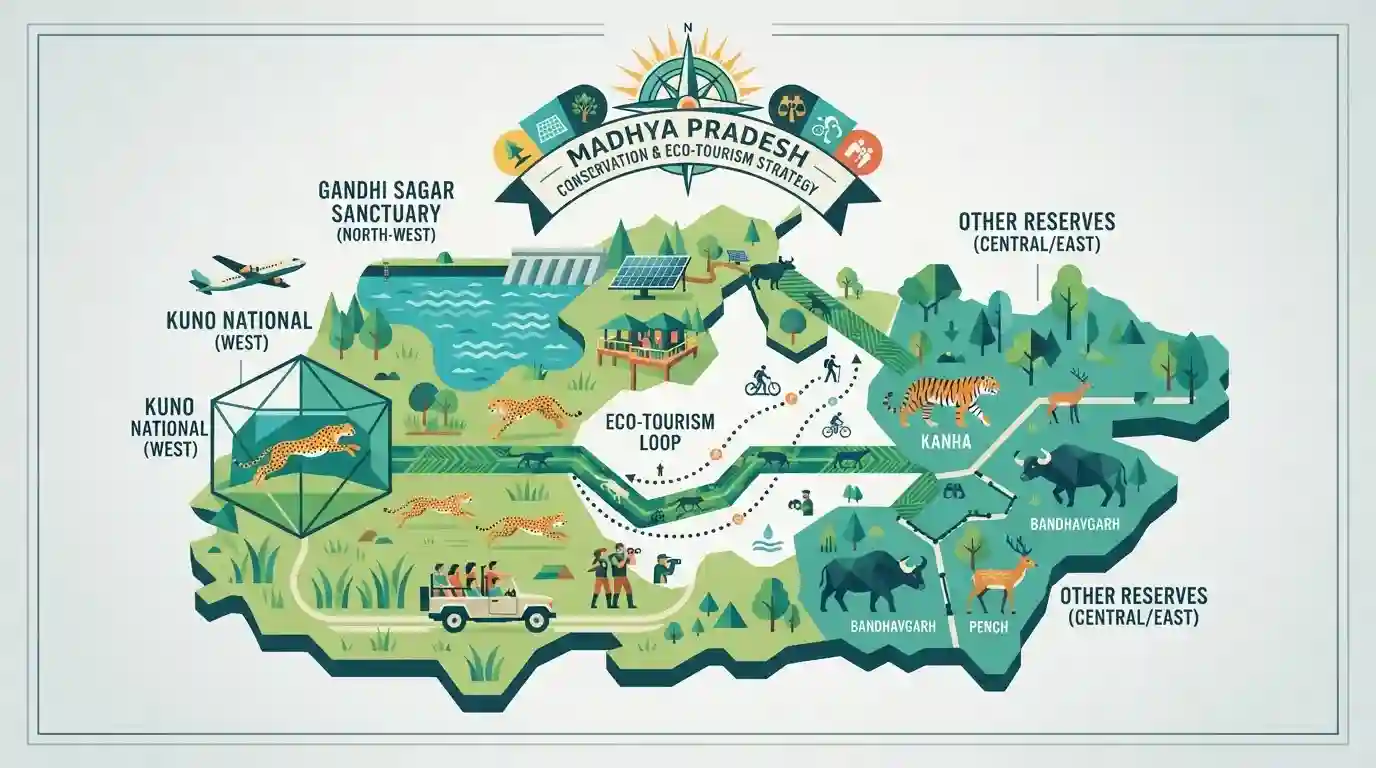
The article discusses Madhya Pradesh's comprehensive strategy regarding forest tourism, wildlife conservation, and the ongoing cheetah relocation plan across key reserves like Kuno National Park and Gandhi Sagar Sanctuary, highlighting the state's leadership in ecological restoration and tourism management.
Key Points
- Madhya Pradesh continues to spearhead wildlife conservation initiatives, prominently featuring the Cheetah Relocation Project at Kuno National Park and Gandhi Sagar Sanctuary.
- The state focuses heavily on merging forest tourism with ecological preservation to boost local economies and protect endangered wildlife species.
- Strategic administrative planning is underway by the Madhya Pradesh forest administration to expand habitats and manage secondary release sites for cheetahs.
Important Terms
Cheetah Relocation Plan

India's landmark transcontinental wildlife project initiated to reintroduce the extinct cheetah species into the wild, primarily hosted in Madhya Pradesh across Kuno National Park and Gandhi Sagar Sanctuary.
UPSC context
MPPSC Paper III (Environment, Biodiversity and Wildlife Conservation); tests knowledge of national conservation projects and ecological restoration in Madhya Pradesh.
Kuno National Park
A premier protected area located in the Sheopur and Morena districts of Madhya Pradesh, chosen as the primary initial release site for the historic transcontinental cheetah reintroduction project.
UPSC context
MPPSC Paper I (Geography of Madhya Pradesh) and Paper III; tests important national parks, sanctuaries, and wildlife geography.
Gandhi Sagar Sanctuary
A prominent wildlife sanctuary situated in the Mandsaur and Neemuch districts along the Chambal River, developed as the second major home and habitat for cheetah relocation in Madhya Pradesh.
UPSC context
MPPSC Paper I & III; tests key protected areas, river sanctuaries, and emerging wildlife tourism hubs in MP.
Prelims Trap
Kuno National Park is the only designated release and monitoring site for the Cheetah Relocation Project in Madhya Pradesh.
Aspirants often confuse Kuno National Park as the sole and exclusive cheetah site in India, missing that Gandhi Sagar Sanctuary is being developed as a secondary release site.
Static Concepts Connected
What are the key national parks and wildlife sanctuaries associated with big cat conservation in Madhya Pradesh?
- Kuno National Park: Kuno National Park is located in the Sheopur and Morena districts, historically chosen for the Cheetah Relocation Project.
- Gandhi Sagar Sanctuary: Gandhi Sagar Sanctuary is situated on the northern boundary of Mandsaur and Neemuch districts, acting as a secondary cheetah habitat.
- Tiger State Status: MP is famously known as the Tiger State of India, housing major reserves like Kanha, Bandhavgarh, Pench, Panna, and Satpura.
Cross-Topic Patterns
Eco-Tourism and Rural Economy Linkage
Eco-tourism initiatives in MP wildlife sanctuaries directly intersect with sustainable tribal livelihood schemes and decentralized rural development goals under the state economy.
Wildlife Projects and CAMPA Financing
National wildlife conservation projects like Project Cheetah overlap with interstate corridor planning and central-state funding allocations under CAMPA.

Cheetah relocation sites (Kuno & Gandhi Sagar) and MP wildlife sanctuaries are hot-spot static-cum-current match targets for MPPSC prelims.
Linked PYQs · 3
Linked PYQs · 3
- 2023MPPSC_PRELIMSGS1
Which type of forests are not found in Madhya Pradesh ?
- 2024MPPSC_PRELIMSGS1
Which of the following pairs is false? Sanctuary District
- 2016MPPSC_PRELIMSGS1
'Dhupgarh' the highest peak of Madhya Pradesh, is located in
