UK India Cultural Ties Strengthened Through Diaspora and Soft Power
Source:The Hindu ↗
Why It Matters
Cultural diplomacy and soft power are increasingly vital tools in India's foreign policy toolkit. Understanding the role of the diaspora and cultural exchanges helps aspirants answer questions on bilateral relations and non-traditional aspects of diplomacy, particularly concerning major partners like the U.K.
Summary
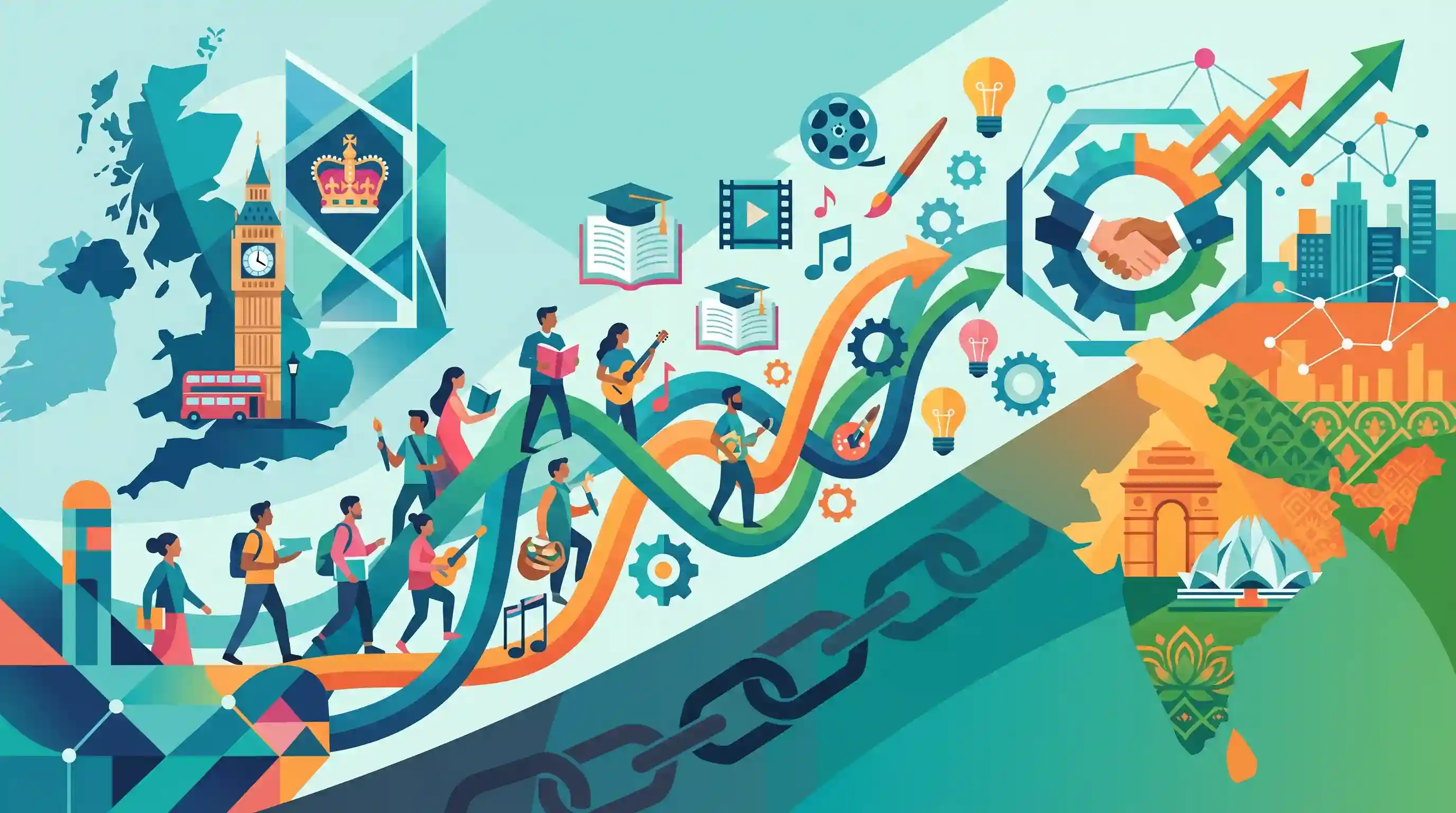
The article highlights the significance of cultural relations as a driving force in the evolving U.K.-India partnership. It emphasizes the role of soft power and the massive Indian diaspora in the U.K.—often referred to as a "living bridge"—in strengthening mutual ties. Moving beyond colonial history, the contemporary focus is on fostering collaborations in education, arts, and creative industries, which not only deepens societal connections but also acts as a catalyst for economic and strategic cooperation between the two nations.
Key Points
- Cultural relations and soft power are emerging as crucial pillars in the modern U.K.-India bilateral partnership.
- The Indian diaspora in the U.K. serves as a 'living bridge', facilitating deeper societal, economic, and cultural connections between the two nations.
- Both countries are focusing on expanding their ties beyond historical, colonial-era linkages toward contemporary collaborations in arts, literature, education, and film.
- Enhanced cultural diplomacy can build greater mutual trust and understanding, creating a favorable environment for broader strategic and trade agreements, including the proposed Free Trade Agreement (FTA).
Important Terms
2030 Roadmap for India-UK Relations

A 10-year strategic framework signed in 2021 to elevate India-UK bilateral ties to a 'Comprehensive Strategic Partnership' across trade, defense, climate, and health.
UPSC context
GS Paper II: International Relations; tests strategic frameworks and institutional mechanisms of bilateral engagement.
Living Bridge
A concept representing the 1.8 million-strong Indian diaspora in the UK, whose cultural and economic contributions form the backbone of the bilateral relationship.
UPSC context
GS Paper II: Indian Diaspora; evaluates the role of diaspora in soft power and foreign policy.
Young Professionals Scheme (YPS)
A reciprocal program allowing up to 3,000 degree-holders (aged 18-30) from India and the UK to live and work in each other's countries for two years.
UPSC context
GS Paper II: Policies/Politics of Developed Countries; focuses on migration and mobility agreements.
Indian Council for Cultural Relations (ICCR)
An autonomous body under India's Ministry of External Affairs that promotes cultural diplomacy through exchanges, scholarships, and maintaining cultural centers abroad.
UPSC context
GS Paper II: International Institutions; relevant for questions on India's soft power and cultural diplomacy.
British Council
The UK’s international organization for cultural relations and educational opportunities, acting as a lead agency for bilateral artistic and educational partnerships with India.
UPSC context
GS Paper II: International Relations; relevant for examining non-state actors in bilateral soft power diplomacy.
Programme of Cultural Cooperation (POCC)
A 2024 agreement to deepen India-UK collaboration in creative industries, focusing on digital culture, exhibitions, and sustainability.
UPSC context
GS Paper II: Bilateral Agreements; tests knowledge of recent specific sector-based international treaties.
Prelims Trap
The UK-India Young Professionals Scheme provides a direct pathway to permanent residency.
The scheme allows 18-30-year-olds to live and work in the UK/India for up to two years, but it does not offer a direct path to permanent residency or citizenship.
Static Concepts Connected
What is the mandate and structure of the ICCR?
- Establishment: Founded in 1950 by independent India's first Education Minister, Maulana Abul Kalam Azad.
- Nodal Ministry: Operates as an autonomous body under the administrative control of the Ministry of External Affairs (MEA).
- Core Function: To actively formulate and implement policies pertaining to India's external cultural relations and project India's soft power abroad.
How does India project 'Soft Power' in International Relations?
- Cultural Diplomacy: Leveraging heritage like Yoga, Ayurveda, Buddhism, and cinema globally through targeted campaigns and bilateral programs.
- Diaspora Diplomacy: Utilizing the vast overseas Indian population as a 'living bridge' to build favorable public opinion and political influence in host nations.
- Development Assistance: Offering non-coercive capacity building, such as the ITEC program and vaccine diplomacy (Vaccine Maitri), to Global South nations.
Cross-Topic Patterns
Diaspora Mobility & FTA Negotiations
U.K.-India FTA talks frequently hinge on visa regimes. India pushes for relaxed mobility for its IT professionals (Mode 4 services), which directly clashes with domestic U.K. immigration politics.
Creative Economy & Demographic Dividend
India's $35 billion creative economy employs 8% of its workforce. Promoting cultural exports links GS2 (IR and Soft Power) directly to GS3 (Employment and Intellectual Property).

Expect a GS2 Mains question linking the 'Living Bridge' diaspora diplomacy to the broader India-UK FTA and the 2030 Roadmap.
Linked PYQs · 3
Linked PYQs · 3
- 2023MainsGS2
Indian diaspora has scaled new heights in the West. Describe its economic and political benefits for India.
- 2020MainsGS2
Indian diaspora has a decisive role to play in the politics and economy of America and European Countries'. Comment with examples.
- 2015MainsGS2
Terrorist activities and mutual distrust have clouded India-Pakistan relations. To what extent the use of soft power like sports and cultural exchanges could help generate goodwill between the two countries? Discuss with suitable examples.
