Nobel Prize in Physiology or Medicine Research Significance
Source:The Hindu ↗
Why It Matters
Important for understanding contemporary developments in medical science, biotechnology, and the real-world translation of foundational research recognized by global awards like the Nobel Prize.
Summary
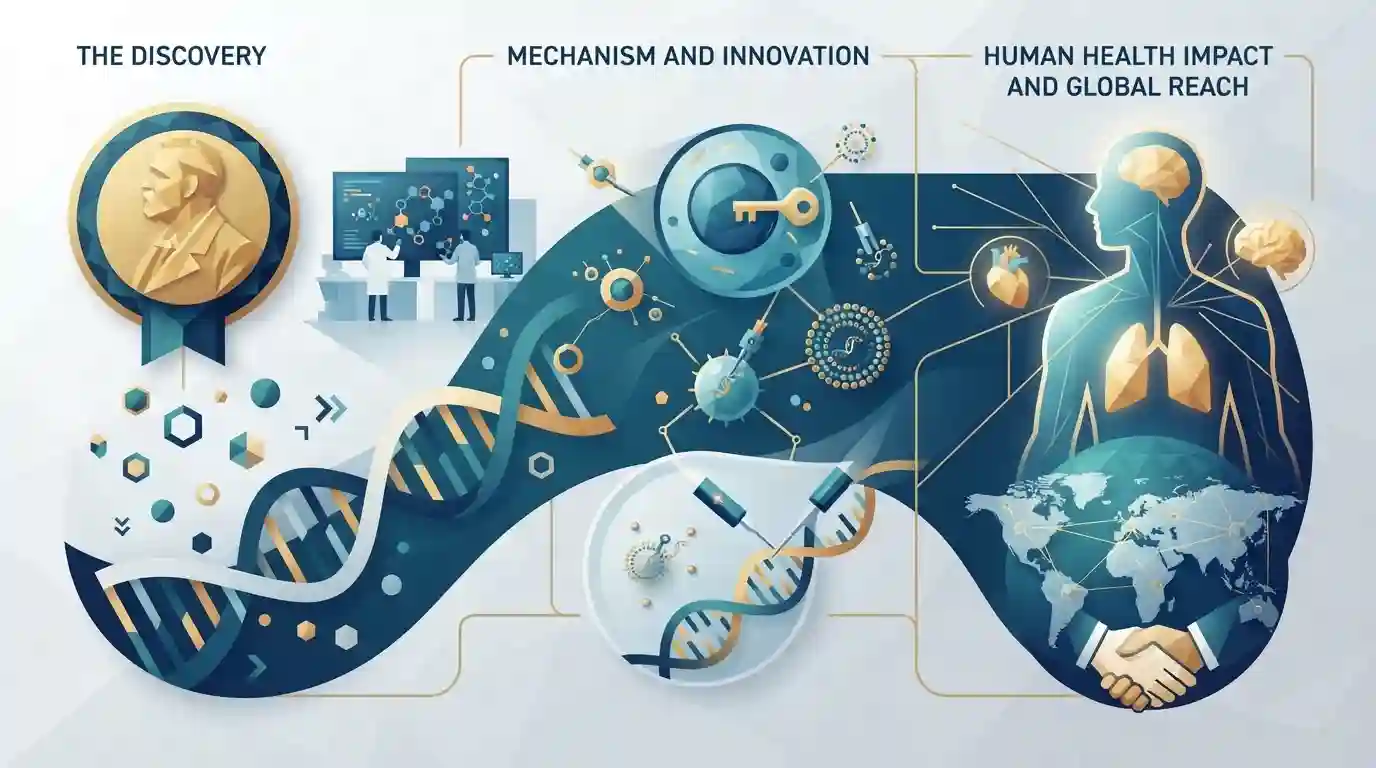
The editorial discusses the awarded discoveries and significance of the 2026 Nobel Prize in Physiology or Medicine, shedding light on breakthrough medical research and its profound implications for human health and biotechnology.
Key Points
- The editorial discusses the significance and implications of the 2026 Nobel Prize in Physiology or Medicine, focusing on breakthrough scientific discoveries.
- Highlights the role of fundamental biomedical research and its long-term translational impact on healthcare and human physiology.
- Emphasizes the value of recognizing pioneering science that expands the boundaries of medical knowledge and clinical applications.
Important Terms
Optogenetics

A revolutionary scientific technique that combines optics and genetics to control the electrical activity of specific neurons in living tissue using light.
UPSC context
UPSC Prelims/Mains S&P (Medical and Health Innovations, Bio-technology) - testing awareness of cutting-edge neural control technologies and Nobel breakthroughs.
Channelrhodopsin
Light-gated ion channel proteins found in single-celled algae that enable light to trigger electrical impulses in cells, serving as the foundation for optogenetics.
UPSC context
UPSC Prelims S&T (Biotechnology/Neuroscience) - tests understanding of biological tools and proteins used in advanced genetic engineering.
Nobel Assembly
The body comprising fifty professors from the Karolinska Institute responsible for awarding the Nobel Prize in Physiology or Medicine.
UPSC context
UPSC Prelims International/Scientific bodies - tests general awareness regarding prestigious international academic awards and scientific committees.
Karolinska Institute
A prestigious medical university in Sweden housing the Nobel Assembly, renowned globally for its medical research and selection of medicine laureates.
UPSC context
UPSC Prelims (World Institutions/Geography/Science) - frequently cited in global scientific excellence and medical prize contexts.
Static Concepts Connected
What is optogenetics and how do light-gated ion channels function in neuroscience?
- Channelrhodopsin: Light-Sensitive Proteins: Uses microbial proteins (like channelrhodopsins) that change shape and open ion channels when illuminated with specific wavelengths of light.
- Viral Vectors: Targeted Delivery: Genes for these proteins are introduced into specific neuronal populations using viral vectors so only target cells respond.
- Precision Control: Millisecond Control: Permits researchers to excite or inhibit exact neural circuits with light pulses, establishing direct causal links to behavior.
Cross-Topic Patterns
Optogenetics + Molecular Neuroscience + Gene Editing
Optogenetics combines optical physics with molecular neuroscience, illustrating how breakthroughs in basic physics/optics immediately unlock neurology and gene-therapy applications.
Basic Research + Biotech IP Commercialisation
The commercialization of university-level algae protein discoveries into neuro-tools highlights the critical nexus between public-funded basic research and biotech intellectual property.

Optogenetics + channelrhodopsin + neuronal control mechanism likely to be tested via a direct statement-based prelims question.
Linked PYQs · 2
Linked PYQs · 2
- 2021MainsGS3
What are the research and developmental achievements in applied biotechnology? How will these achievements help to uplift the poorer sections of the society?
- 2020MainsGS3
What do you understand by nanotechnology and how is it helping in health sector?
