Rampur Lavi Fair and Trans Himalayan Trade Traditions
Source:The Hindu ↗
Why It Matters
The article highlights the deep-rooted cultural and economic history of trans-Himalayan trade fairs like the Lavi Fair, which is essential for understanding regional heritage, tribal dynamics, and historical connectivity in northern India.
Summary
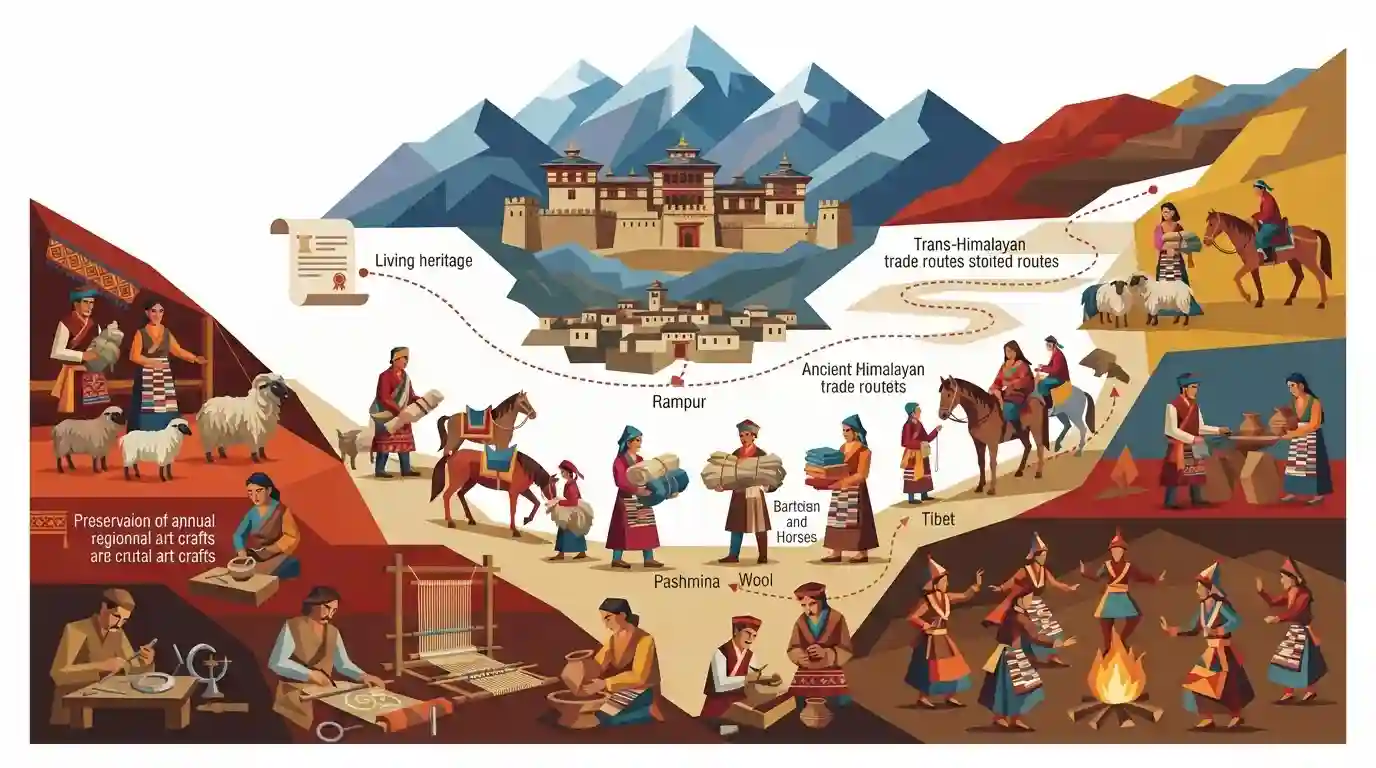
Rampur's annual Lavi Fair in Himachal Pradesh represents over three centuries of trans-Himalayan trade, cultural exchange, and indigenous economic traditions. Originating from a historic treaty between the Bushahr kingdom and Tibet, the fair historically functioned as a vital commercial nexus for pastoralists and merchants exchanging pashmina, wool, and horses. Today, it stands as a crucial living heritage event preserving regional art, crafts, and mountain community identity.
Key Points
- The Lavi Fair in Rampur, Himachal Pradesh, is a historic trade fair dating back over 300 years, originating from a 17th-century treaty between the Bushahr princely state and Tibet.
- Historically served as a major commercial hub for trans-Himalayan trade, connecting India with Tibet, Ladakh, and Central Asia via traditional mountain routes.
- Famous for trading niche Himalayan products, including pashmina wool, horses, dry fruits, and the indigenous Kinnauri woolen shawls.
- Reflects the socio-cultural integration, economic interdependence, and heritage preservation of tribal and mountain communities in the Western Himalayas.
Important Terms
Lavi Fair

An annual traditional fair held in Rampur, Himachal Pradesh, originating from a 17th-century trade treaty between the Bushahr kingdom and Tibet, historically famous for trans-Himalayan commerce in pashmina, wool, and horses.
UPSC context
UPSC GS Paper I: Indian Art and Culture – Fairs and Festivals, and Himalayan trade heritage.
Bushahr-Tibet Treaty
A historic 17th-century agreement between Raja Kehri Singh of the Bushahr princely state and Tibet that laid the foundation for trans-Himalayan commerce and the annual Lavi Fair.
UPSC context
UPSC GS Paper I: History and Culture – historical treaties, regional kingdoms, and Himalayan trade routes.
Raja Kehri Singh
A prominent 17th-century ruler of the princely state of Bushahr who entered into a landmark trade and friendship treaty with Tibet, expanding regional influence and establishing the Lavi Fair.
UPSC context
UPSC GS Paper I: Medieval/Modern Indian History – regional rulers, princely states, and border diplomacy.
Static Concepts Connected
What are the significant historical trade fairs and routes connecting India with Central Asia and Tibet?
- Trans-Himalayan Routes: Silk Route legacy, facilitating exchange of silk, spices, and horses across high-altitude passes.
- Bushahr-Tibet Treaty: Lavi Fair origins, rooted in a 17th-century treaty between the Bushahr kingdom and Tibet.
- Mountain Economy: Niche commodities, such as pashmina wool, dry fruits, and Chamurthi horses.
Cross-Topic Patterns
Himalayan trade routes and historical treaties
The Lavi Fair originated from a 17th-century treaty between the Bushahr princely state and Tibet, illustrating how historical Himalayan trade routes underpinned regional geopolitics long before modern borders.

Expect a matching or statement-based question linking the Lavi Fair, Bushahr kingdom, and trans-Himalayan trade history with Himachal.
Linked PYQs · 4
Linked PYQs · 4
- 2017PrelimsGS1
Consider the following pairs: Traditions Communities 1. Chaliha Sahib Festival - Sindhis 2. Nanda Raj Jaat Yatra - Gonds 3. Wari-Warkari - Santhals Which of the pairs given above is/are correctly matched?
- 2022PrelimsGS1
Consider the following States: 1. Andhra Pradesh 2. Kerala 3. Himachal Pradesh 4. Tripura How many of the above are generally known as tea-producing States ?
- 2018PrelimsGS1
Consider the following pairs: Tradition State 1. Chapchar Kut festival Mizoram 2. Khongjom Parba ballad Manipur 3. Thang-Ta dance Sikkim Which of the pairs given above is/are correct?
- 2019MainsGS1
How can the mountain ecosystem be restored from the negative impact of development initiatives and tourism?
