Lancet Report on Climate and Health Threats in India
Source:Indian Express ↗
Why It Matters
It provides empirical data and analysis on systemic health vulnerabilities in India, making it critical for answering questions related to health sector reforms, sustainable development, and climate-induced public health crises in GS Paper II and III.
Summary
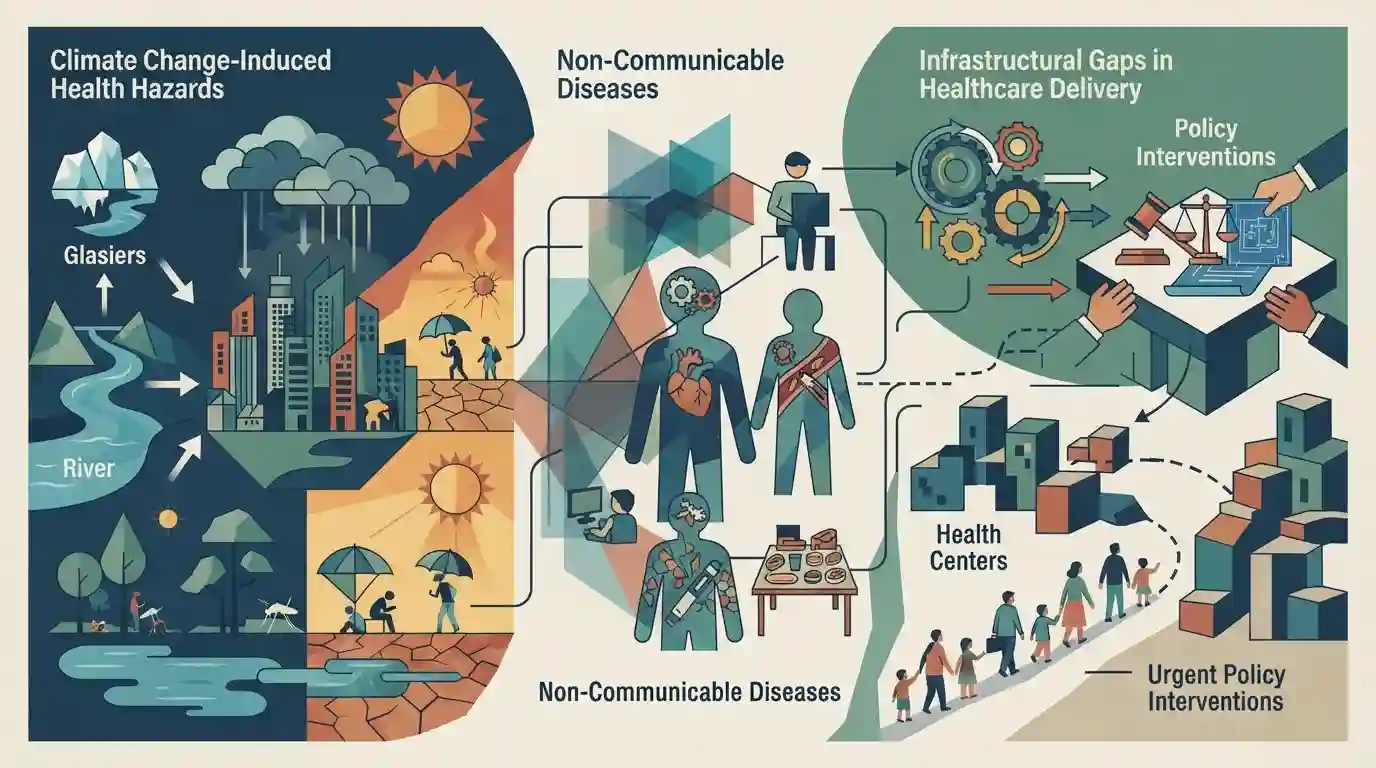
The Lancet published a report detailing major health threats facing India, with a strong focus on climate change-induced health hazards, non-communicable diseases, and infrastructural gaps in healthcare delivery, necessitating urgent policy interventions.
Key Points
- The Lancet released a report highlighting critical health threats confronting India, intersecting with environmental, socioeconomic, and systemic challenges.
- Climate change impacts, including extreme weather events, rising temperatures, and shifting vector-borne disease profiles, pose severe public health risks in India.
- The report emphasizes the burden of non-communicable diseases (NCDs) alongside persistent challenges in primary healthcare infrastructure.
- Highlights the necessity for policy interventions integrating climate resilience into healthcare delivery systems.
Important Terms
The Lancet

A prestigious international general medical journal that publishes peer-reviewed research, commissioning global reports on critical public health issues like climate change, non-communicable diseases, and health systems.
UPSC context
UPSC GS Paper II (Health Policy and Governance): Evaluates global health reports, evidence-based policy formulation, and public health infrastructure deficits in India.
Prelims Trap
The Lancet report, released as an official advisory by the World Health Organization...
The Lancet is an independent international peer-reviewed medical journal, not an organ or specialized agency of the United Nations (like WHO).
Static Concepts Connected
What are the core components of India's National Action Plan on Climate Change (NAPCC)?
- Missions: Eight national missions including Solar, Enhanced Energy Efficiency, Sustainable Habitat, Water, Himalayan Ecosystem, Sustaining the Himalayan Ecosystem, Agriculture, and Strategic Knowledge for Climate Change.
- Health Focus: Health integration has gained emphasis under subsequent policy updates to address vector-borne and heat-related vulnerabilities.
Cross-Topic Patterns
Climate Health + Labor Productivity + Economy
Rising temperatures reduce working hours and outdoor productivity, impacting agricultural and informal sector growth alongside direct public health outcomes.
Vector-Borne Diseases + Federal Health Infrastructure
Expanding geographic transmission of malaria and dengue links ecological shifts to state-level public health preparedness and rural healthcare budgets.

Lancet climate-health reports often feature in prelims statements linking temperature rise to vector-borne shifts and labor loss. Expect a match.
Linked PYQs · 2
Linked PYQs · 2
- 2021MainsGS2
“Besides being a moral imperative of a Welfare State, primary health structure is a necessary precondition for sustainable development.” Analyze.
- 2020MainsGS2
Critically examine the role of WHO in providing global health security during the Covid-19 pandemic.
