Project Cheetah translocation and India Botswana wildlife diplomacy
Source:Indian Express ↗
Why It Matters
It covers India's flagship wildlife reintroduction initiative (Project Cheetah), international wildlife diplomacy, and conservation challenges concerning genetic diversity and habitat management in protected areas like Kuno National Park.
Summary
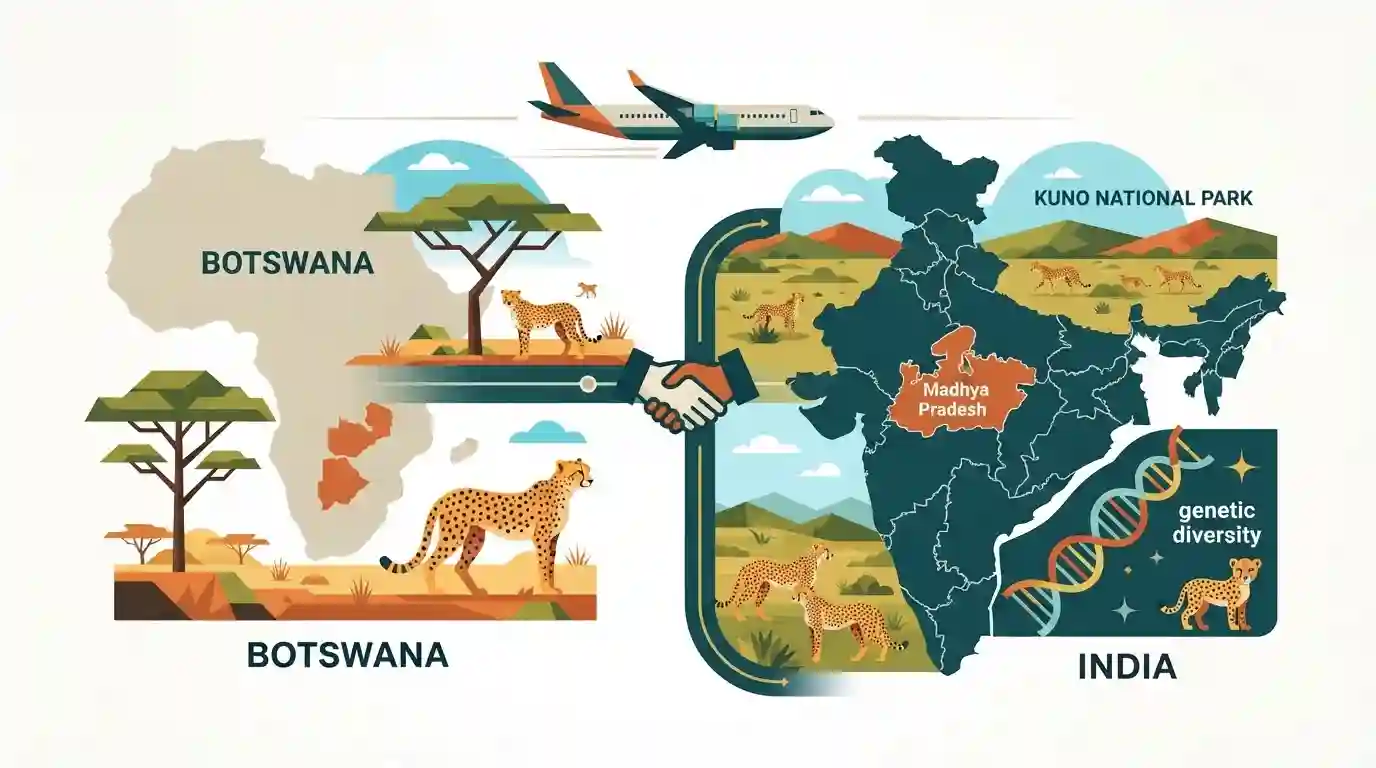
India is in discussions with Botswana to source cheetahs for Project Cheetah, aiming to bolster the wild cheetah population and improve genetic diversity at Kuno National Park in Madhya Pradesh. This international cooperation highlights India's ongoing efforts in inter-continental large wild carnivore conservation.
Key Points
- India is exploring sourcing cheetahs from Botswana as part of the ongoing Project Cheetah initiative.
- The collaboration aims to augment the cheetah population and genetic diversity in Kuno National Park, Madhya Pradesh.
- Discussions involve international cooperation between India and African nations for wildlife conservation and translocation programs.
- Project Cheetah marks the world's first inter-continental large wild carnivore translocation project.
Important Terms
Project Cheetah

India's ambitious initiative to reintroduce cheetahs into the wild, marking the world's first inter-continental translocation of a large carnivore, implemented at Kuno National Park and Gandhi Sagar Wildlife Sanctuary.
UPSC context
UPSC Prelims/Mains - Environment and Ecology: Tests knowledge of biodiversity conservation, species reintroduction, and national wildlife projects.
Kuno National Park
A premier protected area located in Madhya Pradesh chosen as the primary recipient site for the historic reintroduction of cheetahs under Project Cheetah.
UPSC context
UPSC Prelims - Geography/Environment: Tests location-based awareness of national parks, wildlife sanctuaries, and key protected habitats in India.
Botswana Government
An African nation engaging in bilateral wildlife diplomacy and conservation cooperation with India to source and translocate cheetahs for boosting genetic diversity.
UPSC context
UPSC Prelims/Mains - International Relations and Environment: Tests understanding of international cooperation in wildlife conservation and biodiversity management.
Prelims Trap
Project Cheetah is implemented directly by the Ministry of Culture without any wildlife statutory body involvement, focusing solely on domestic translocations.
Aspirants often assume Project Cheetah is India's first-ever wildlife reintroduction or that NTCA only handles tigers; in reality, NTCA is the nodal agency for Project Cheetah as well.
Static Concepts Connected
What are the key legal provisions and institutional frameworks for wildlife conservation in India?
- Wildlife Protection Act: Enacted in 1972, it provides the legal framework for the protection of flora and fauna, establishing national parks, wildlife sanctuaries, and hunting bans.
- NTCA Nodal Role: Statutory body under the Ministry of Environment, Forest and Climate Change responsible for tiger and major carnivore conservation oversight.
- CITES Appendix I: International agreement regulating global trade in specimens of wild animals and plants to ensure their survival is not threatened.
Cross-Topic Patterns
Wild Animal Translocation + CITES Regs
Inter-continental translocations test Wildlife Protection Act provisions alongside CITES rules on international movement of endangered species.

Project Cheetah's genetic bottlenecks + NTCA's nodal role + alternative sites (Gandhi Sagar) make a prime multi-statement prelims Q.
Linked PYQs · 1
Linked PYQs · 1
- 2017PrelimsGS1
Recently there was a proposal to translocate some of the lions from their natural habitat in Gujarat to which one of the following sites?
