Kuki Zo Groups Boycott Tribal MLAs Joining Manipur Government
Source:The Hindu ↗
Why It Matters
Provides a live case study of how deep ethnic divisions and sub-nationalism challenge state authority, internal security, and the peace-building process in Northeast India, critical for GS2 (Polity) and GS3 (Internal Security) syllabus areas.
Summary
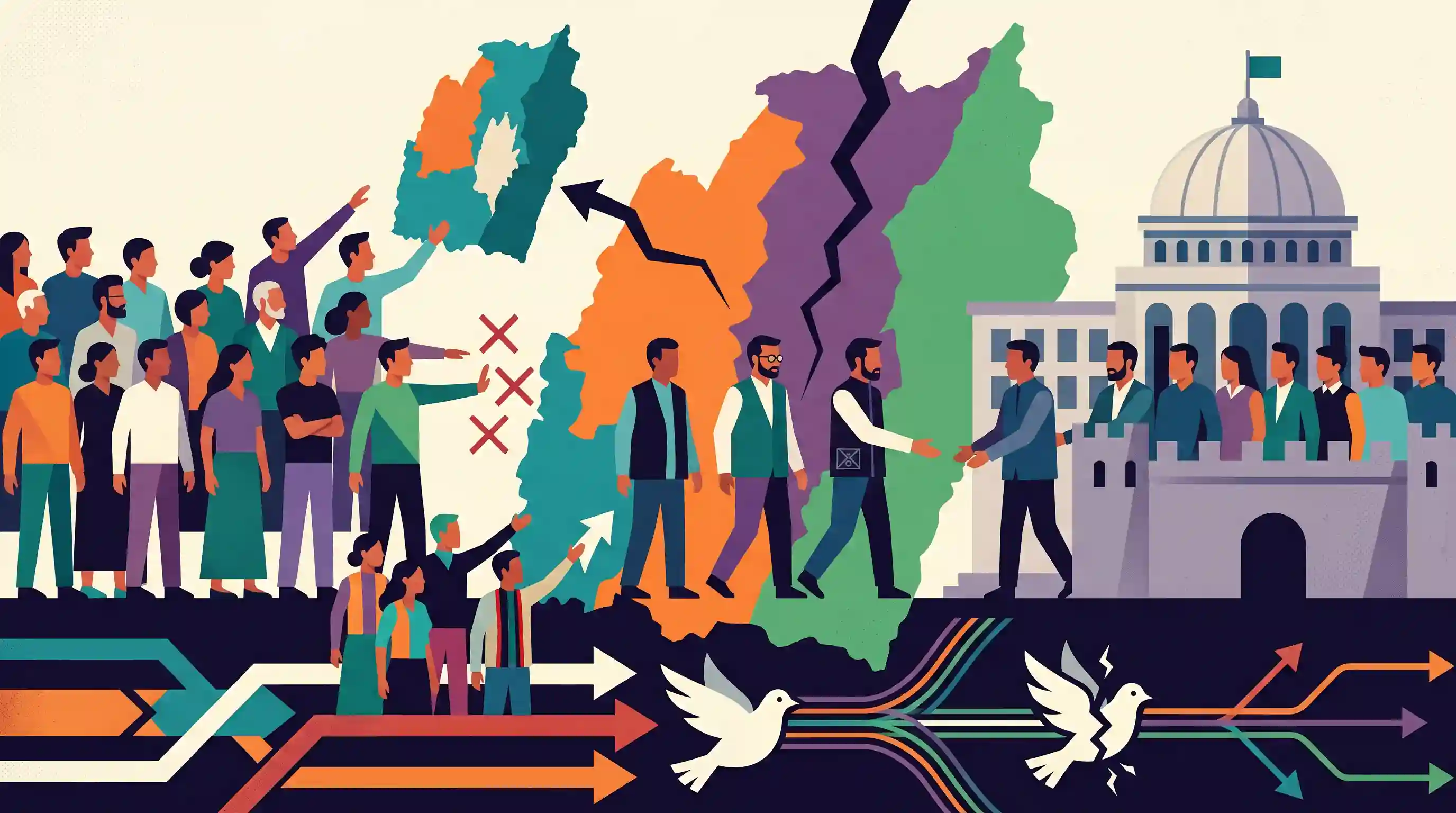
Kuki-Zo civil society groups in Manipur have initiated a social boycott against three tribal MLAs, including recently appointed Deputy Chief Minister Nemcha Kipgen, for joining the new Meitei-dominated state government. The Kuki-Zo Council views their participation as a betrayal of the community's demand for a separate Union Territory-like administration. Conversely, the Thadou Inpi Manipur supported the appointments, exposing deepening intra-tribal fractures and resentment over "Kuki-centric" narratives. The developments reflect the persistent political and ethnic polarization hindering peace efforts in the state.
Key Points
- Kuki-Zo civil society organizations declared a social boycott of three tribal BJP MLAs, including Deputy CM Nemcha Kipgen, for joining the newly formed Manipur government.
- The MLAs are accused of betraying a community resolution that demanded a separate Union Territory-like administration before any participation in the state government.
- Highlighting intra-tribal divisions, the Thadou Inpi Manipur (TIM) welcomed the Deputy CM's appointment and urged a disassociation from "Kuki-centric" separatist narratives.
- The political impasse underscores the enduring ethnic divide between the Meitei and Kuki-Zo communities, continuing to challenge internal security and governance in Manipur.
Important Terms
Suspension of Operations (SoO) agreement

A 2008 tripartite ceasefire between the Centre, Manipur, and Kuki-Zo insurgent groups. It confines cadres to designated camps and mandates adherence to the Constitution while pursuing a negotiated political settlement.
UPSC context
GS III (Internal Security). Tests knowledge of peace-treaty frameworks and conflict resolution in North-East India's insurgency-prone regions.
Kuki-Zo Council (KZC)
An umbrella socio-political organization representing the collective interests of Kuki and Zo tribes in Manipur. It spearheads demands for a separate Union Territory and coordinates communal civil resistance.
UPSC context
GS II/III (Pressure Groups). Analyzes the role of ethnic bodies in political mobilization and federal demands.
Thadou Inpi Manipur (TIM)
The apex body of the Thadou community, Manipur's largest tribe. It asserts a distinct identity from the "Kuki" label, leading to intra-tribal fractures over political representation and government participation.
UPSC context
GS I/II (Social Empowerment). Tests understanding of intra-tribal diversity and its impact on regional political stability.
Separate Administration (UT demand)
A demand by Kuki-Zo groups for a Union Territory with a legislative assembly in Manipur’s hills, citing "state complicity" in ethnic violence and the impossibility of continued coexistence.
UPSC context
GS II (Federalism). Relates to Article 3 (State reorganization) and balancing regional aspirations with territorial integrity.
Article 371C
A special constitutional provision for Manipur that empowers the President to constitute a "Hill Areas Committee" of tribal MLAs to safeguard development and interests in the hill districts.
UPSC context
GS II (Polity). Tests knowledge of "Asymmetric Federalism" and special safeguards for North-Eastern tribal populations.
Prelims Trap
"Manipur's Hill Areas are governed by autonomous district councils under the Sixth Schedule."
Manipur is NOT a Sixth Schedule state (which applies only to Assam, Meghalaya, Tripura, Mizoram). Its tribal Hill Areas are governed by special provisions under Article 371C.
Static Concepts Connected
How does Article 371C protect Manipur's Hill Areas?
- Presidential Authority: The President is empowered to create a special committee of the Manipur Legislative Assembly consisting solely of members elected from the Hill Areas.
- Governor's Report: The Governor is mandated to submit a report to the President annually, or whenever required, regarding the administration of the Hill Areas.
- Union Executive Power: The executive power of the Union extends to giving directions to the State regarding the administration of these Hill Areas.
What constitutional mechanisms allow for the creation of a Union Territory with a legislature?
- Article 3: Empowers Parliament to form a new State or Union Territory by separating territory from any existing State through an ordinary legislative majority.
- Article 239A: Allows Parliament to create a local legislature, a Council of Ministers, or both, for specific Union Territories (like Puducherry) to ensure democratic representation.
Cross-Topic Patterns
SoO Agreements & Federalism
Tripartite ceasefires like the Suspension of Operations (SoO) involve Union and State governments, testing federal synergy when ethnic dynamics fracture the state apparatus and demand separate administration.
Intra-Tribal Identity vs Umbrella Demands
The Thadou-Kuki split highlights how umbrella ethnic movements often face pushback from constituent tribes seeking distinct recognition, echoing similar intra-tribe fractures historically seen in the Naga peace process.

Expect a Prelims question contrasting Article 371C (Manipur) with Sixth Schedule (AMTM) powers, focusing on the Governor's reporting role.
Linked PYQs · 4
Linked PYQs · 4
- 2017MainsGS3
The North-East region of India has been infested with insurgency for a very long time. Analyze the major reasons for the survival of armed insurgency in this region.
- 2025MainsGS3
What are the major challenges to internal security and peace process in the North-Eastern States? Map the various peace accords and agreements initiated by the government in the past decade.
- 2019MainsGS3
Cross-border movement of insurgents is only one of the several security challenges facing the policing of the border in North-East India. Examine the various challenges currently emanating across the India-Myanmar border. Also, discuss the steps to counter the challenges.
- 2022MainsGS2
“While the national political parties in India favour centralisation, the regional parties are in favour of State autonomy.” Comment.
