Kremlin Criticizes US Tariff Pressures on Indian Oil Imports
Source:The Hindu ↗
Why It Matters
Highlights the geopolitical tightrope India walks in balancing its strategic partnership with the U.S. against its energy security needs and historical ties with Russia, illustrating the practical challenges of maintaining strategic autonomy amid great power rivalry.
Summary
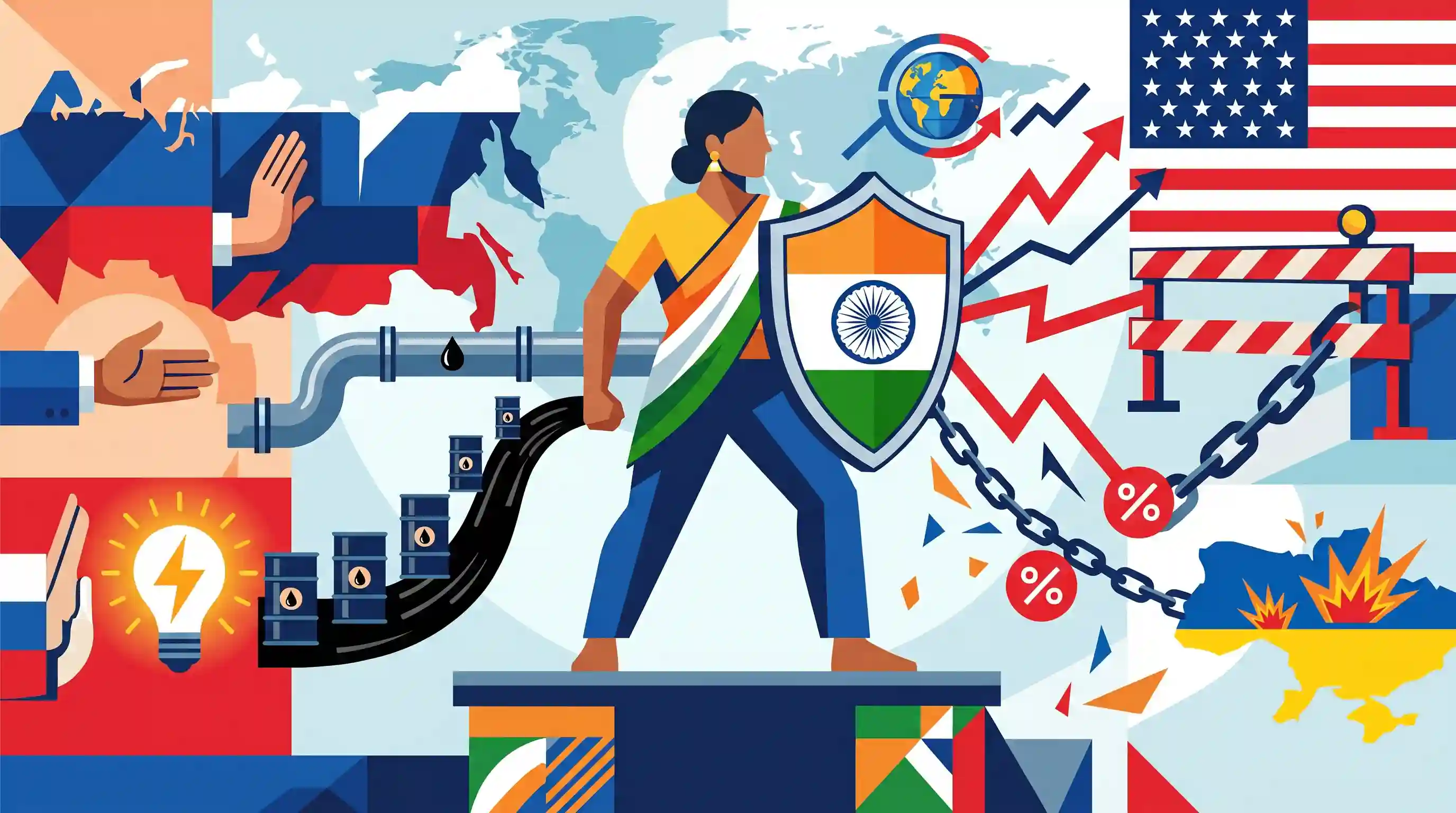
Russia has condemned U.S. President Donald Trump's threats to impose tariffs on India over its ongoing purchase of Russian oil, describing the move as "illegal trade pressure." While Trump plans to penalize nations buying Russian energy exports to force an end to the Ukraine conflict, India has dismissed the threats as unjustified and remains committed to its strategic autonomy and energy security by continuing its oil imports from Moscow.
Key Points
- U.S. President Donald Trump threatened to impose tariffs on India over its continued purchases of Russian oil.
- The Kremlin condemned the U.S. threats as "illegal trade pressure," defending the right of sovereign nations to choose their trading partners.
- Trump warned of new sanctions against Russia and countries buying its energy exports unless Moscow ends the war in Ukraine.
- India dismissed the tariff threats as unjustified, reaffirming its commitment to strategic autonomy and energy security by continuing to purchase Russian oil.
Important Terms
Kremlin

The historic fortified complex in Moscow that serves as the official residence of the Russian President; it is commonly used as a metonym for the Russian government.
UPSC context
Relevant for GS Paper II (International Relations); it identifies the central authority in India-Russia bilateral diplomacy and strategic partnerships.
Strategic Autonomy
A nation's ability to make independent foreign policy and defense decisions based on national interests, free from external pressure or rigid alignment with any specific power bloc.
UPSC context
A core concept for GS Paper II (Foreign Policy); tests India's balancing act between competing global powers like the U.S. and Russia.
Energy Security
Ensuring the uninterrupted availability of energy sources at an affordable price to sustain economic growth while minimizing vulnerability to global supply disruptions.
UPSC context
Critical for GS Paper III (Infrastructure/Energy) and GS Paper II; examines how geopolitics influences India's crude oil procurement and trade deficits.
Reciprocal Tariffs
Taxes imposed by a country on imports from another nation specifically in response to that nation's own trade barriers or perceived unfair practices.
UPSC context
Relevant for GS Paper II (International Relations); focuses on the "Trade War" aspect and the effect of U.S. economic policies on Indian exports.
Secondary Sanctions
Penalties applied by a sanctioning country against third-party nations or entities (like India) that continue to trade with the primary sanctioned target (Russia).
UPSC context
UPSC GS Paper II (International Relations); tests understanding of how the policies of developed countries (U.S.) impact India’s sovereign trade choices.
Strategic Hedging
A middle-ground foreign policy strategy where a state avoids choosing between competing powers to maximize benefits and minimize risks from all sides.
UPSC context
Relevant for GS Paper II; analyzes India's multi-alignment strategy in maintaining ties with both the U.S. (defense) and Russia (energy).
Prelims Trap
"India legally complies with US unilateral sanctions on Russia to avoid secondary tariffs."
India officially does not recognize unilateral sanctions imposed by any single country (like the US) and only complies with UN-mandated multilateral sanctions.
Static Concepts Connected
What is a Special Rupee Vostro Account (SRVA)?
- Definition: An account held by a domestic Indian bank on behalf of a foreign bank, denominated in Indian Rupees.
- Utility: Facilitates direct bilateral trade settlement in INR, bypassing US dollar dominance and SWIFT network vulnerabilities.
- Regulation: Requires prior approval from the Reserve Bank of India (RBI) under the Foreign Exchange Management Act (FEMA).
How do UN sanctions differ from Unilateral Sanctions?
- UN Sanctions: Authorized by the UN Security Council under Chapter VII; universally legally binding on all member states.
- Unilateral Sanctions: Imposed by individual states (e.g., US CAATSA). Not recognized by international law or accepted by India's strategic autonomy doctrine.
- Secondary Sanctions: The extraterritorial application of a nation's domestic laws to penalize third-party nations trading with a sanctioned entity.
Cross-Topic Patterns
Trade Weaponization & WTO Exceptions
Tariff threats for geopolitical coercion link bilateral relations with WTO's national security exceptions (Article XXI of GATT), directly testing global trade rules against sovereign foreign policy.
Energy Security & De-dollarization
Securing affordable Russian crude compels India to accelerate alternative financial plumbing, directly linking national energy policy to rupee internationalization and de-dollarization efforts.

Expect a Prelims question interlinking Vostro accounts, SWIFT bypass mechanisms, and India's stance on UN vs. unilateral sanctions.
Linked PYQs · 3
Linked PYQs · 3
- 2012MainsGS2
How have the US sanctions against Iran affected India's bilateral relations with Iran?
- 2018MainsGS3
How would the recent phenomena of protectionism and currency manipulations in world trade affect macroeconomic stability of India?
- 2025MainsGS2
"Energy security constitutes the dominant kingpin of India's foreign policy, and is linked with India's overarching influence in Middle Eastern countries.” How would you integrate energy security with India's foreign policy trajectories in the coming years?
